It’s time to Get Grounded

“Be like a tree. Stay grounded. Connect with your roots. Turn over a new leaf. Bend before you break. Enjoy your unique natural beauty. Keep growing.”   -Joanne Raptis

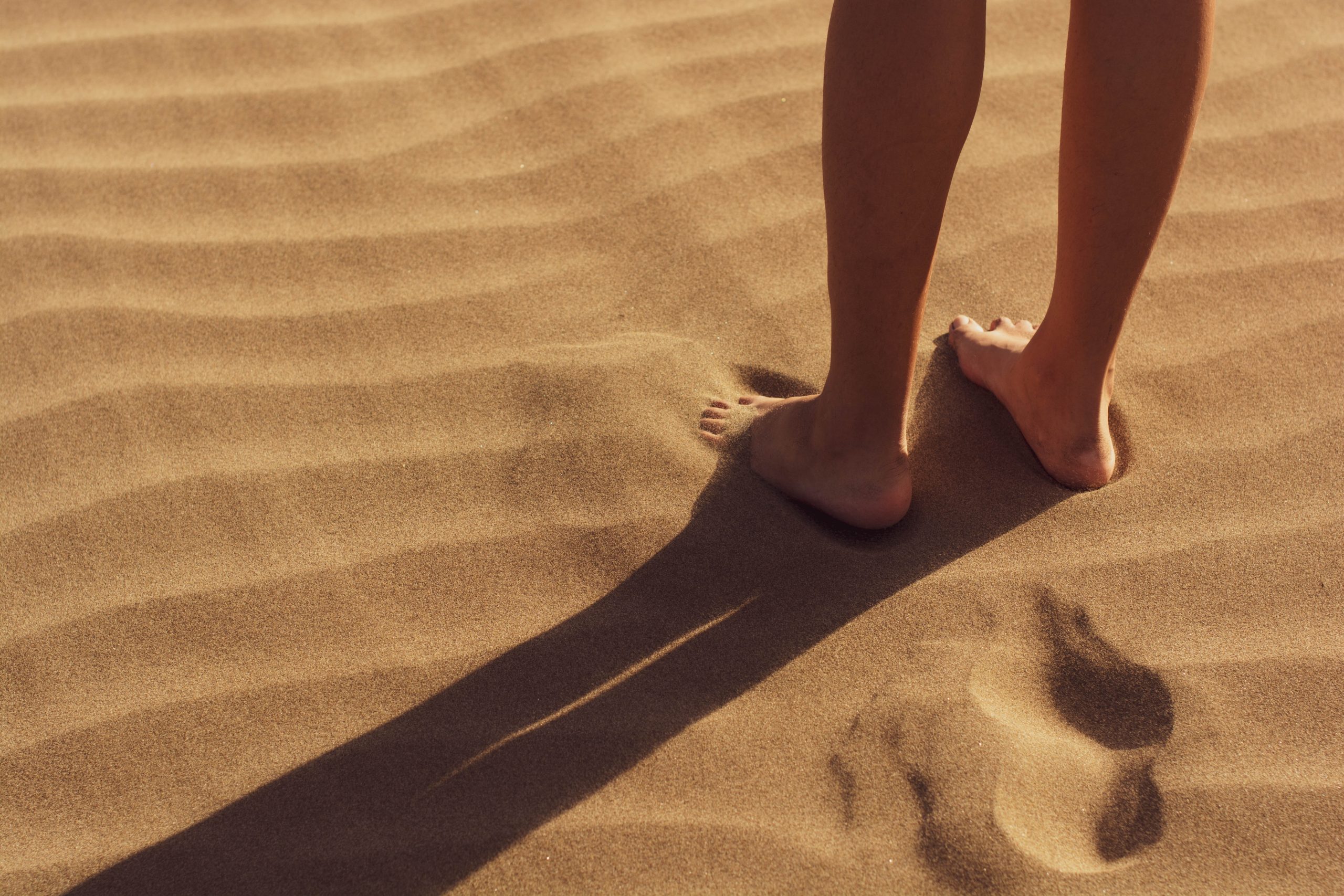
Do you enjoy walking barefoot on the beach or laying out on a grassy meadow? For many, it produces an incomparable sense of calming in the body. Turns out that it really is incomparable and the direct connection to the earth is known as grounding or earthing. Connecting to the ground helps to restore the rhythms of the body to optimal functioning. The earth is negatively charged and the direct connection brings us back into balance, like an antidote against all of the positive charges buzzing around in our busy modern lives.

It is commonly known that appliances need to be grounded to function properly. This means they are connected to a backup pathway for the current to flow into the ground if there is a fault in the wiring system. This electrical grounding protects against overloaded circuits, stabilizes the voltages levels in the appliance, and prevents damage and misfunction.

Like appliances, our bodies function best with regular connections to the ground. The negative charge of the Earth contains electrical charges that have positive effects on the body. Our bodies, after all, operate with electrical circuitry. While being in nature is highly beneficial to our physical and spiritual wellbeing, walking barefoot and sitting or lying on the ground offer the greatest benefits. Swimming in the ocean, lakes, and rivers also fortifies us with this same energy as water is a conductor of electricity. Research continues to be done and we are learning more and more of how this physical connection to the earth is shown to reduce inflammation and support health across a variety of markers including cardiovascular function, muscle and joint comfort, sleep, anxiety, fatigue, weight maintenance, hormone balance, and more.

Native and traditional cultures have always known this, and they revere the connection and the gifts of the Earth. In the book Earthing, author Clinton Ober shares a story from his childhood of a Native American friend’s mom telling him, “Take your shoes off, they make you sick.” For many of us, modern life has greatly interrupted this connection as we walk on concrete often with rubber soled shoes which do not conduct and transmit the electrical charges from the Earth to our bodies.

Even if you are unable to get grounded and be barefoot outside or sit on the ground, you can bring the grounding to you. There are grounding mats available to put your feet on at any time and any place. Grounding sheets are also an option to sleep on and have been shown to be very therapeutic and great for reducing inflammation. These are referred to as grounding mats or earthing sheets and there are many options available with a simple online search.

Grounding is our foundation, our roots; and practicing grounding supports body, mind, and spirit. Well-grounded roots have a greater chance not only to survive, but to thrive.  Sometimes seeds are planted in soil and environments that they are not best suited to and they struggle, they are disconnected from their best source of energy and sustenance. Distraction, difficulty focusing, fight-or-flight, and fear are all indications of being ungrounded. While we can support being grounded in many ways and in particular by establishing strong spiritual roots through regular practice of meditation, yoga, prayer, and walks in nature, literally standing on the ground provides incredible benefits. Barefoot is best as the feet are known to have the highest density of nerve endings in the whole body – up to 1300 per square inch! Grounding is our sense of safety and security, it’s time to get grounded.


21-Day Challenge May 2020

“The goal is not to be better than the other man, but your previous self.” –The Dalai Lama

The 21-Day Best Self Challenge is a lifestyle exploration as part of the journey to growing into the best version of ourselves in body, mind, and spirit. As a participant, you will receive group coaching by means of resource materials, daily emails, multiple videos per week, menu planning support, recipes, membership in a private Facebook Group, and more. Sign up now, we’ll start on Monday!

Join me for a  21-Day Best Self Challenge starting May 4!

I don’t know about you, but with the days and weeks all blending together, I’m ready for a full-on reset to focus on supporting the direction I want to be moving in within the spheres of my body, mind, and spirit. When they “let us out again” (whatever that really means…) from lockdown and shelter in place, I want to be confident that I’m showing up as the best version of myself.

In the spirit of Ecclesiastes 3 from the Old Testament of the Bible (…that was put to song by the Byrds in Turn, Turn, Turn), There is a time for everything, and a season for every activity under the heavens. After several weeks of managing a new reality, perhaps It’s time to re-instate some discipline and routine in our lives and intentionally make choices to create the lives that we truly desire. It’s time to accept where we are in the present moment, assess where we are going, and aspire to succeed.

One of the keys to my sustained success with maintaining a healthy diet is by having periods throughout the year that I really focus on what I’m eating and paying attention to how my body is feeling. I used to do it just once a year in a longer chunk in January, but in recent years, I’ve been doing it several times a year for shorter periods of time. While a four-week or six-week program can seem long, twenty-one days somehow feels a little more manageable with more facility to complete the course. The good news is that 21 days is long enough to make some solid changes in habits and be on the path to even bigger shifts toward your ultimate best self.

Let’s face it, we all know WHAT we need to do – we’ve been reading about it for years at this point. I know that for me for me the more time I spend consciously focused doing what I  believe that I “should” be doing, the more that becomes the default in terms of daily choices related to food, movement, sleep, technology, and more. Knowing what to do isn’t good enough and isn’t going to give any results. What’s lacking for so many of us is actually DOING it. Have you been wanting to make some changes in your diet and lifestyle habits? Are you feeling sluggish after several weeks of lockdown with plenty of comfort food? Want to feel fresh and energized moving into the summer and hopefully some version of socializing? Are you ready to shed what haven’t served you and grow into an even better bolder version of yourself?  Starting May 4, I’m offering a 21-Day Best Self Challenge.

Join me for a  21-Day Best Self Challenge starting May 4!

During the course of the 21 Days, you will receive daily emails exploring a variety lifestyle aspects including movement, diet, technology, sleep, stress, sunlight exposure, and  much more. You will learn the foundational tenants of Primal Health (aligns very closely with Paleo and also referred to as Ancestral Health). This time around, I will also be exploring practices rooted in Ayurveda, Traditional Chinese Medicine (TCM), Native American wisdom, and latest research on supplements, immunity and more. You will have an opportunity to see for yourself how this lifestyle supports vitality and wellness based on science like biochemistry, molecular biology and nutrition and also based on ancient wisdom.

Truth be told, I’ve tried a lot of different diets and plans over the years. I’m grateful for all of the unique experiences because I’ve learned something from each and every one of them along the way and I want to share what I’ve learned. With the current time and global pandemic, we have all been experiencing constant change and adjustments from week to week. We will tap into that energy of presence and explore more frequent revisions though the duration of the program with a lot of space for to adapt and customize rather than follow a set framework to follow for the full 21 days. I will provide resource materials and guide you through goal setting and reflection processes.

This is a great opportunity to try out some new practices for a few days at a time and then upon reflection decide to continue with those practices or try something else – all during the process of the 21-days.

Join me for a  21-Day Best Self Challenge starting May 4!

The 21-Day Best Self Challenge reaches far beyond weight loss and I consider it to be a lifestyle exploration as part of a journey to growing into the best version of ourselves in body, mind, and spirit. This is about feeling good, feeling strong, reducing inflammation, clearing the brain fog, regulating a positive mood throughout the day, reducing stress, feeling rested, having increased confidence, improved insulin sensitivity (potential to reverse pre-diabetes and T2 diabetes), improved memory, hormone regulation, healthy skin, improved GI function, reduced muscle and joint pain, and more. I won’t promise you will have all of this in 21 days, of course, but if any of these ring true for you, there is so much potential to support yourself with a nutrient rich diet and a more mindful perspective on daily routines of movement, sleep and other lifestyle habits.

Join me for a  21-Day Best Self Challenge starting May 4!

In addition to the daily email message and suggested daily goals and intentions, you’ll be a part of a private Facebook Group to share experiences, ask questions, get recipe ideas, and know that you’re not alone in this challenge. This online community is a great way to both give and receive encouragement and accountability with others in the group. The group is private, so you’ll have the freedom to share within the group knowing that it’s a safe space to share both successes and also challenges. Many participants have found that they often same the same struggles and support each other to work through the tough patches. Most importantly, it’s a place to show up for yourself and participate with others. I’ll be posting some of my favorite recipes in addition to how to navigate restaurants and social occasions and answering any questions that you have. And new this year, I’ll have live videos at least twice per week featuring movement routines, recipe making, general info-sessions, and anything else that fits appropriately in this space.

Join me for a  21-Day Best Self Challenge starting May 4!

Here’s what others are saying about past 21-Day Primal Challenges:

“I was surprised at how easy it was to follow the primal challenge. I like carbs, sugar, and wine, but once I made it past the first several days, my body responded and I found it easy (mostly!) to make healthy choices. Sheila’s support and the bite-sized chunks of information meant that I wasn’t overwhelmed up front. It was great to be able to share tips with the Facebook community too. After the 21 days, my stomach felt noticeably less bloated and I had lost several pounds. I felt energetic and unlike other challenges, I wasn’t eager to go back to my old eating patterns because I felt better!”
-Sara, Graduate Student

“I was skeptical at first to try yet another diet…until I lost almost 5 kilo during Sheila’s 21-Day Challenge. I found Primal Health to be an inspired nutrition and lifestyle behavior program that’s easy to slot into your life without drastically changing your daily routine. I’m very grateful for how Sheila has transformed my way of thinking about food by suggesting recipes, menu ideas, and ways to navigate all my food allergies. The best part: I’ve kept the weight off.”
-Susana, Financial Advisor

“I really appreciated this challenge.  I was not able to do it exactly as suggested, but it did give me new ideas for what to eat and how to exercise.  I liked having something new to try every day.  It kept my mind on my health.”
-Christina, Special Education Teacher

Join me for a  21-Day Best Self Challenge starting May 4!

Join us for the challenge starting May 4. My goal is to our biggest group to date and spread the health far and wide. Your body is your vessel for all of things that you love to do in life, and it’s amazing how good you can feel when you are acting on what you already know to be the “right thing to do”. It’s a process and by joining me for 21-days, you’ll have some great tools to be more mindful about so many parts of your daily life that contribute to your overall well-being. Furthermore, this may be the last time that I’m offering the challenge for Free, so if you’ve been thinking about joining, now is the time. To sign up, click on one of the links, or complete for form included below.

Finally, if you know someone who would benefit or be interested in this program, please pass this on so they will have the opportunity to sign up too. Even better, consider doing the challenge together with a friend or family member. You’ll have each other and the Facebook group for an abundance of support and accountability.

Join me for a  21-Day Best Self Challenge starting May 4!

Your Best Self Checklist

Knowing is not enough;
we must apply.
Wishing is not enough;
we must do.
-Johann Wolfgang von Goethe

Today’s post is longer than usual and details how to make a checklist to support your best self each and every day and why it’s so important right now. This list is like your own personal magic potion and it will change from week to week. It’s a combination of ensuring that your basic needs are met while also making space each day in very small increments to move forward with your unique gifts and goals, your talents and desires. While it’s easy to be stuck here with our heads spinning after the last several weeks of experiencing the global pandemic, there is so much energetic potential to harness towards our greatest good. Think of the rare flowers that appear only after a destructive wildfire, the lilacs that blossom only after the deep freeze of winter, or the luxurious wines made from grapes that survive a stressful growing season.

***For the fast track of this post, skip ahead to this symbol to the action section. However, if you can spare an extra couple minutes, it’s worth reading through to capture the full story and concept.

We are in the wake of the Easter holiday this week in which the Christian tradition celebrates the resurrection, the rebirth of Christ following the death by crucifixion. Spring is abundant with symbolism of rebirth from the Equinox and various New Year’s celebrations in March to the first day of the month on April 1, to Easter, to the planting of new seeds and nurturing the seedlings, and other celebrations marking the beginning of the growing season. Rebirth is THE LESSON of spring and it doesn’t have to be limited just to spring. Rebirth can happen anytime; in a new week, a new day, and even in a new hour. We have all experienced the death of the world as we know it and it’s a great time to practice renewal every single day.

We have slowed down from the hectic rapid pace of our lives, but we don’t have to stop completely, we can still move forward. When I was cycling regularly a few years ago, we would go out on long rides every Saturday for rides of 60, 70, up to 100 miles for the day. In the Marin Headlands north of San Francisco there are a lot of hills and steep inclines to navigate during the route each week. Just as we would be cruising along enjoying the scenery, we would suddenly be riding uphill and have to adjust the gears. We did this often to maximize our individual potential in the different terrains. Even at various points in the ascent, we would shift gears according to the degree of steepness. Inevitably, we’d have to move into the lowest gear and focus the efforts to successfully manage the climb. Then it was a matter on carrying on spinning at the newly adjusted pace and accepting that although we were moving forward very slowly, we would eventually reach the top. For some riders, the slope didn’t slow them as much, but for me it was a massive case of the lesson from the Tortoise and the Hare: Slow and steady wins the race and I learned to embrace that. I didn’t stop, I kept moving and I arrived at the destination. The pace didn’t really matter; I knew I would arrive.

While we may not know exactly what the destination is at this point or how long this shelter in place/physical distancing/quarantine will last, we can settle into the fact that it is temporary and it may well be to our benefits to keep moving forward even at an exponentially slower pace than we are accustomed. Because we are in unfamiliar territory and don’t have routines to fall back on, a checklist will provide support to establish the reality that we want to be living in.

I’m not here to deny that things are intense right now. What we are all are witnessing and experiencing is difficult and distressing. And it’s also unusual because it’s the same yet different for each of us. The best way I’ve heard this described is that we are all in the same storm, but in different boats. However you consider it, we are all doing something we’ve never done before. Interesting that so far this year, I’ve written about Getting comfortable being uncomfortable, Taking things once day at a time, and Establishing habits. Well friends, here we are with an opportunity to focus on all of that. At the outset, we approached 2020, both a new year and a new decade, with such excitement and anticipation, it has certainly has unfolded differently than expected. We have to adapt and adjust and we might even create something better in the process.

Now that the initial dust has settled, there’s space to regroup and assess specifically what we need to function our best in mind, body, and spirit each day. There is possibility to move away from fear and come out at the end of this better off than before, but it’s up to us. It’s like the astronauts in Apollo 13 when an oxygen tank failed. We need to determine our current resources and use them to their greatest potential so that we can maintain and even up-level our health, energy, and sanity.  And for those of us looking after children and families, this is even more essential because we have to put on our own oxygen masks first. We will survive this one way or another and each day we get to decide which way we are going to show up, for better or for worse, literally.

The bad news is that it seems that we are all going to be in this teetering situations for a minimum of 3 more weeks and likely even longer, the good news is that this is the basic amount of time to plant the seeds to establish a new habit and even a new routine. Are there ways you can improve your life and wellbeing in 5-15 minute chunks? It’s not really helpful to think with the mindset when things go back to normal because “normal” will never again be as we have known it. Every week things are changing. The best way to navigate the changing landscape of our lives is to have a plan that can adjust to the undulations and tumultuousness of this time. While 3-4 weeks appears to be a best-case scenario, things will become re-established in stages that are likely to go on for several months.

The only thing certain is change. –Heraclitus.

*** Now, the fun part, the checklist. The purpose of the checklist is to have an anchor, a reference point to focus on things that keep you well and in forward motion rather than getting swept away in a wave of negativity or despair. Also because even though we know we should be doing things like drinking plenty of water and reducing screen-time before bed, we aren’t always likely to do them without some accountability and motivation. I started to get caught in that current a couple of weeks ago and I had to find something to bring me back to the shore. Once I realized I needed to Clear the air energetically, I felt ready for more. I made a list of all things I wanted to do each day that would bring out my best self. I kept the expectations relatively low and hoped to do it for ten days and then “we’ll see,” I said to myself. I called the list the April Reset after drinking wine, eating cake, and staying up late during the first weeks of the lockdown. That was all fine then, after having had our world shaken up and dumped right out, but it was time to move on. I put the list in a notebook and drew out the grid to check things off each day. I would do yoga and write in my journal, have gratitude, drink plenty of water, take my vitamins, say affirmations, send a text, voice, or video message to at least one person, go for a walk, practice Italian for 10 minutes, read or listen to a book, do a writing exercise, delete emails, take a nap, listen to music, laugh, take an Epsom salt bath, and floss my teeth (something I always intend to do and have never made a good habit of it.) It’s a full list and it nearly filled up a page. Most of the things on the list could be completed in 5-15 minutes. Once I did something on the list, I got to put a checkmark in the box and I felt a sense of accomplishment.

At the end of the week, I had filled up most of the spaces, but not all of them. That was okay because it was feedback. I took a nap 4 of the 10 days, a bath 5 times. I did zero writing exercises. I noticed that I felt better and the list gave me a sense of purpose. During each day, if I wasn’t sure what to do next, I referred to the list and do something on the list. If I hadn’t laughed yet, I would go online and look for some funny memes or videos to make me laugh because I know that laughing makes me feel good. I noticed that I was spending much less time on social media and mindless checking of news websites. I was still checking on things, but it wasn’t driving my days. I also noticed that during the weekend, I didn’t do some things like yoga and delete emails but I took more naps and baths. I added highlights to those columns to distinguish weekend days from weekdays.

I felt pretty good at the end of ten days, so I made another page to be sure I would continue doing all this stuff on the checklist. Now that I’m starting the third list, I realized that some things are pretty solid now like taking vitamins and drinking plenty of water, so they aren’t on the list anymore. I added morning meditation and some physical therapy exercises for my shoulder that gets tight during stressful situations. I also added watch tv to my list because I tend to keep myself busy right up until it’s time for bed and I recognize that I need to take more time to relax. For now, I have writing exercise on the list even though I haven’t done it yet, but I am hopeful that one day I will sit down be able to focus on a writing exercise. I’m even thinking of what I can add the next list, both drawing and playing a musical instrument are vying for a spot.

The Best-Self checklist is a list of things that nourish your body, mind, and spirit. It’s super self-care. We need super self-care right now because so many new things are expected of us.

Start by thinking about what makes you feel good, calm, and at peace. Write it all down in a list. Maybe you tried some things on the list from last week’s blog and enjoyed them or felt uplifted by them. Also think about times you haven’t felt so well and eventually felt better. What contributed to getting through it? Body, mind, and spirit are all connected, so meditating will help the body and going for a walk can help the mind, they aren’t mutually exclusive. Are you getting the basics? Sleep, nutrition, and plenty of water? Are you keep yourself too busy? Or the contrary – too much time doing nothing? Also, what do you love to do and what goals do you have? I had been enrolled in an online Italian class, and I want to continue learning Italian. Maybe there’s a passion project or growing a garden that you didn’t expect to have time for this year. Practicing an instrument, making a recipe, drawing – creating anything will provide a sense of accomplishment and boost the spirit releasing hormones that enhance physical function. How about something you’ve always been meaning to do that you could start to explore for 10 minutes each day? There is no pressure and it doesn’t matter if you don’t do it, rather, it’s an acknowledgment of something you’d like to have in your life. At the end of the day, life is composed of those little things that we choose to do each day. Choose well!

Once you have these items written on a list, simply put a checkmark next to the ones you do each day. If you like, you can get fancy and draw out a grid, but it’s not necessary. A simple piece of paper will do.

One of the greatest gifts of slowing down in the past several weeks is that it has forced us into the present moment, that elusive slice of time that we struggle to capture while our minds and attention so easily focuses on the past or the future. Each day, each hour, each moment is unique to the last and we don’t know what will happen the next. Having a list of things that bring out the best in you allows you to ask yourself throughout the day, what do I need right now in this moment?

The only thing that is ultimately real about your journey is the step that you are taking at this moment. That’s all there ever is. -Eckhart Tolle

To help you get started, I’ve included a huge list of possibilities for your list. Choose as few or as many as you like, but also be realistic of what would actually be possible in a day within your current reality. After the first 7-10 days you will be better able to assess how much more you can add what makes the most sense moving forward. It will be totally different for each one of us. While some of us need to get dressed each day, others need to be ok with a pajama morning; some of need less time on the sofa, some of us more, it totally individual and needs to be customized to express of your own best self. This list is private, just for you to see. There’s no judgment. If you don’t do it one day or ever, it’s just that, you did something else instead.

We’ve already had 21+ days of shelter in place, long enough to start establishing routines that may eventually become habits. We have slowed down and shifted gears and hopefully are still moving forward even the smallest of steps. Are your current daily activities contributing to progress towards your best self? I know this may sounds harsh, but even in times of challenges, we must rise to the occasion and adapt. We have a choice everyday to be making forward, negative, or neutral progress.

Growth requires movement and often the only way forward is through the exit door. –Alicia Keys

Things that might be included on the list:

  • Get dressed.
  • Take a shower.
  • Take a bath.
  • Do a face mask.
  • Exfoliate.
  • Floss,
  • Wash face.
  • Brush teeth.
  • Make your bed.
  • Apply lotion to dry skin.
  • Put hand cream on when you wash your hands.
  • Use foot cream on heels.
  • Wear a necklace.
  • Wear perfume.
  • Paint your nails.
  • Use essential oils.
  • Take vitamins.
  • Drink only tea (no coffee).
  • Drink decaf coffee.
  • Drink hot water with lemon in the morning.
  • Drink only herbal tea or water after 2 pm.
  • Take a short walk around the block or around the house after a meal.
  • Eat breakfast.
  • Practice IF and skip breakfast.
  • Drink plenty of water throughout the day.
  • Chew gum.
  • Do 1 push-up and add 1 every other day
  • Do 10 squats.
  • Do 10 jumping jacks.
  • Sit on the floor and then get up again (this is something related to maintaining mobility as we age)
  • Do Physical Therapy exercises for hip, shoulder, knee wrist, and so on
  • Do 15 min yoga video and increase by 5 min each week.
  • Dance to your favorite song.
  • Stretch.
  • Use foam roller.
  • Escape in a good book.
  • Listen to music.
  • Play a musical instrument.
  • Practice a language.
  • Laugh.
  • Sing.
  • Look at old photos.
  • Light candles.
  • Send a message to a friend.
  • Call a friend.
  • Turn off all electronics for 20 min and longer.
  • Create a new recipe.
  • Eat dinner on the fine china.
  • Plant seeds.
  • Water the seeds/plants/flowers.
  • Pull weeds.
  • Walk barefoot on the grass.
  • Lay on the ground.
  • Stop and smell the roses, lilies, lilacs, orange blossoms, wisteria, magnolias, jasmine, everything all around the world that is blessing us in full bloom with intoxicating aromas right now.
  • Learn more about history, geology, math, anything.
  • Meditate or pray.
  • Say affirmations.
  • Take several deep breaths.
  • Write in a journal.
  • Create something.
  • Knit or crochet.
  • Sew.
  • Draw.
  • Paint.
  • Write poetry.
  • Write a story.
  • Do a coloring book or print a page to color.
  • Do a jigsaw puzzle.
  • Play family games.
  • Be kind.
  • Be positive.
  • Don’t complain.
  • Help others however possible, even if it’s saying a prayer or a blessing.
  • Tell someone you love him/her.
  • Take a walk.
  • Take a nap.
  • Spend time outside.
  • Watch the clouds.
  • Sit and watch a movie.
  • Stop watching so many movies.
  • Clear out emails.
  • Organize photos.
  • Deep clean one room each week.
  • Do the dishes.
  • Don’t do the dishes.
  • Turn off all screens one hour before bed.
  • Go to bed by 11 (or whatever time is best for you)
  • Allow yourself to feel sad/angry.
  • Cry.
  • Be silly.
  • Have gratitude.


Self-Care during the Holidays

The best way to enjoy the hustle and bustle of the holiday season week after week is to make a commitment to self-care and restorative practices. This is true all year, but especially true when the calendar is suddenly bursting with holiday lunches office parties, family gatherings; not to mention the assortment of traditions that must be adhered to. While it’s exciting and festive, it can also all feel overwhelming.

Restorative practices are ‘filling up the tank’ on the journey through this festive time of year and shouldn’t be considered optional. We must make opportunities to restore our energy to continue at the same pace or we will end up running on an empty tank. When a car drives faster or greater distance, it requires more fuel and more maintenance to carry-on or end up stalled in a ditch. Self-care preferences will vary from person to person. The one caveat is that they won’t work if you don’t do them!

Here are some tips to get through the season in stride:

  1. Mark it on your calendar just like any other commitment. You wouldn’t plan a trip without booking a place to sleep each night and some dinner reservations along the way. Don’t go through the holidays without booking yourself some time for restorative practices.
  2. Identify what works best for you to restore your energy and vitality. Do you like to snuggle up with a mystery novel and a cup of tea? Enjoy a bubble bath? How about meditation, journaling, a massage, working on jigsaw puzzle, playing music, or watch favorite TV with a family member.
  3. Do one thing at a time. Studies show that multi-tasking doesn’t really work and ends up taxing our brains even more in the process of shifting back and forth from one talk to another. The best way to make progress is to go through the list, focus one just one item, and then continue on to the next item.
  4. Stay positive. When you notice that your mood is shifting from the positive enjoyment of the season to feeling burdened, frazzled, or frustrated, that’s a sign that it’s time to schedule in some self-care.
  5. Say “NO”. Know yourself. Does socializing energize you or drain you? If you have more introvert tendencies and are exhausted after parties and big get-togethers, then protect yourself. Plan to make a brief appearance or don’t go at all. Find ways to connect with friends and family in smaller more intimate situations.
  6. Make gratitude a daily practice. Studies show that those with regular gratitude practice are more content with their present life situation. We don’t actually need all that stuff that the retailers tell us that we need anyway. Discover contentment in the present moment.

    Don’t bail on the basics: Sleep, diet, movement, stress management are essential.
  7. SLEEP – There is a natural tendency this time of year to more sleep as the nights get longer and darkness comes earlier. Allow for adequate sleep and even naps when there are a lot of nighttime events that interfere quality sleep. (Click here to read more about sleep.)
  8.  DIET – Ok, this one is super extra tricky during the holidays, but it’s really important. The challenge is magnified because the traditional treats that we enjoy this time of year are specifically related to the comfort and coziness that we feel and often trigger memories of delight from our childhood. (Click here to read more about holiday traditions.) As much as possible, choose nutrient dense foods with plenty of proteins. Avoid too many sweets and highly processed foods. I can’t sugar coat the fact that sugar is the enemy for optimal health and vitality. Consumption of sugar and highly refined products leads to inflammation, so don’t overdo it. Furthermore, since they share the same receptors in the body, when sugar is consumed, it hijacks the vitamin C absorption, weakening the immune system. (Click here to read more about the importance of Vitamin C.) Seasonal fruits like mandarin oranges, figs, and dates are a great way to enjoy some sweetness without contributing to the mal effects of sugary treats.
  9. MOVEMENT – An exercise routine is often the first to go when the going gets tough and the weekly schedule is filled up. You may not be able to manage a one hour zumba class, but don’t ditch it all together. Park further away from the front door and enjoy a longer walk to get the shopping done. Walk around the block after dinner or go for an ice-skating session. Hit the dance floor at the holiday parties. When at home, stand and do some arm circles, twists, jumping jacks when watching tv. Get creative and find a way to squeeze in a few minutes here and there whenever possible. (Click here to read more about movement.)
  10. STRESS – We all know by now that stress is bad, but it’s actually REALLY bad. When we are under continual stress, vital body functions like digestion and restorative sleep are put on hold and don’t work properly. Stress simulates an emergency and in order to allow the ability jump up and flee if necessary. Stress drains electrolytes and nutrients in the body very rapidly.  If you remain under continued stress with deadlines and expectations of the season, be sure you are getting enough electrolytes to support all of the body systems. (Click here to read more about electrolytes and best sources.) Maintaining restorative practices each week will further support reduction of stress levels.

Finally, while you are out and about enjoying the tasty offerings of the seasons, remember that the first restaurants were for travelers. The word restaurant comes from the French word restaurer, which means to restore. It’s simple and thrilling to dive into the variety of activities celebrating the holiday season. It’s also important to remember to refuel and restore ourselves so we can continue to sparkle.


Eating a Banana Helps – Electrolytes are essential

When I was younger I experienced rapid heart palpitations that seemed to be triggered spontaneously and without rhyme or reason. This happened for several years starting as a teen. Everything would be normal, then, suddenly my heart would be racing up to 200 beats per minute for as long as two hours. I went to the doctor and had several tests done. I even had to do an overnight EKG with a cassette recorder strapped to my body in an attempt to record an incident. Unfortunately, nothing happened during the recording. In the end, I was told that nothing was wrong, sometimes this just happens, but people have reported that “eating a banana helps”.

I now understand clearly that I was deficient in electrolytes, causing my heart to beat erratically. The doctor was right and eating bananas did help because they are a dense source of potassium, but he didn’t seem to have any idea why. Other foods can help too, and the foods that I craved and preferred during that time were all high in potassium. My body intuitively understood what it needed.

Electrolytes are salts and minerals found in the blood that conduct electrical impulses in the body including sodium, potassium, magnesium, chloride, and calcium. They are essential mirconutrients for a number of bodily functions. The circulatory system is sometimes even be referred to as the heart’s electrical system. When someone’s heart stops, we use electrical stimulation to start it up again. This stuff is important!

Each electrolyte has a particular role and books have been written about them individually, so here’s a brief overview. In general, fruits and vegetables in the diet are great sources of electrolytes.

Sodium or Salt is so important historically that people were once paid in salt, that’s the origin of the word salary. Sea salt and Himalayan salt have the highest mineral content. Salt controls body fluids retention, blood pressure, and muscle functions. Sodium also helps to balance other electrolytes in the body. If you drink too much water without enough sodium/salt, you will potentially flush out important minerals.

Potassium plays an important role in cardiac conduction, bone health, and muscle contractions. Low potassium can be easily remedied by adding potassium rich foods to the diet. Best food sources of potassium are bananas, squash, papaya, leafy greens, oranges, melon, prunes, dates, avocado, kiwi, and coconut water.

Magnesium contributes to nerve and muscle function, supports healthy blood sugar levels, contributes to optimal immune function, helps keep the heartbeat steady, and allows muscles to relax. It can be found in dark chocolate, pumpkin seeds, legumes, nuts, and some fatty fish. Epsom salt baths are also a great source of magnesium absorbed through the skin.

Calcium, as many of us already know, is essential for strong bones and teeth, managing nerve impulses, influences muscle contractions, and plays a role in preventing blood clots.

Chloride helps maintain fluid balance and pH balance in the blood and cells of the body. It is found in sea salt, sodium chloride, and in higher concentrations in seaweed, rye, tomatoes, lettuce, celery, and olives.

Phosphate participates in bone and teeth repair, nerve functions, and healthy muscle contractions. It can be found in high protein products such as meat and dairy and also nuts and whole grains.

In order for electrolytes to do their job, hydration is critical. Be sure to drink plenty of water throughout the day, especially during the hot summer months. Spring water is a great choice because it has it’s own mineral content including important electrolytes. The label on the bottle with show the mineral compositions.

Low levels of potassium, magnesium, and calcium often lead to symptoms and imbalances. It’s important to recognize that the electrolytes need to be balanced and we need all of them. This is especially true of calcium and magnesium in relation to each other and can also be true between sodium and potassium. For example, if there’s too much calcium in relation to magnesium, the muscles will have strong contractions, but have less ability to relax which unknowingly puts us in a continual stress response. This is why it feels so good to soak in an epsom salt bath to relieve sore muscles. Excess calcium can also lead to calcifications in the body, which can occur as fibroids, kidney stones, or benign cysts or tumors.

Symptoms of electrolyte imbalance can include and are not limited to:

  • Rapid or irregular heartbeat
  • Nausea
  • Lethargy
  • Fluid retention
  • Chest pains
  • Muscle cramps
  • Headache
  • Fatigue
  • Weakness

There are specific dietary causes of electrolyte imbalance, and there are also many lifestyle and general health factors that contribute to electrolyte depletion. If you have a lot of stress for example, you will benefit from paying attention to electrolyte intake and replenishing them frequently.

Electrolytes depletion can come from:

  • Stress
  • Low-level emotions such as shame, guilt, apathy, fear, anger, grief
  • Intense physical activity
  • Drinking alcohol
  • Poor diet high in processed foods
  • Antibiotics
  • Illness
  • Sweating
  • Vomiting or diarrhea
  • Constipation
  • Eating disorders

If you suspect you may have an electrolyte imbalance, a simple blood test will inform of any deficiencies. If you have severe symptoms and concerns, it would be advisable to discuss this with your doctor. In my case, when my heart would start racing and I followed the informal advice of the doctor to a banana, I would get immediate feedback as my heartbeat regulated quite quickly, although there are plenty of other options to choose from.

Electrolytes are essential for the body’s optimal function and are continually being depleted. Replenish these important nutrients by eating lots of fruits and vegetables, drinking plenty of water, and using high quality salt. Avoid processed foods and commercial electrolyte drinks that are highly processed and full of sugar. Balanced electrolytes will contribute to maintaining optimal bodily functions and attaining good overall health.


21-Day Primal Challenge

It’s that time of year again that I feel ready for a reset. One of the keys to my sustained success with maintaining a healthy diet is by having periods throughout the year that I really focus on what I’m eating and paying attention to how my body is feeling. I used to do it just once a year in a longer chunk in January, but in recent years, I’ve been doing it several times a year for shorter periods of time. While a four-week or six-week program can seem daunting at the get-go, twenty-one days somehow feels a little more manageable and able to complete the course. The good news is that 21 days is long enough to make some changes in habits and be on the path to even bigger shifts toward your ultimate best self.

Let’s face it, we all know what we need to do and I know for me the more I spend focused time doing what I “should” be doing, the more that becomes the default in terms of daily choices related to food, movement, sleep, technology, and more. Knowing what to do isn’t good enough and isn’t going to give any results. What’s lacking for so many of us is DOING it. Have you been wanting to make some changes in your diet and lifestyle habits? Are you feeling sluggish after a long winter with plenty of comfort food? Want to feel fresh and energized for the long days of summer? Starting May 1, I’m offering a Free 21-Day Primal Challenge.

Join me for a Free 21-Day Primal Challenge starting May 1!

During the course of the 21 Days, you will receive daily emails exploring a variety lifestyle aspects including movement, diet, technology, sleep, stress, sunlight exposure, and  much more. You will learn the foundational tenants of Primal Health (aligns very closely with Paleo and also referred to as Ancestral Health). You will have an opportunity to see for yourself how this lifestyle supports our vitality and wellness based on science like biochemistry, molecular biology and nutrition; and is not really a “fad diet” after all. There’s a reason athletes, actors, CEOs, and celebrities and opting for primal, paleo, and keto diets (you’ll learn more about the nuances of these during the challenge.) Even the Queen of England is said to “sometimes go paleo”. While the Queen is not on a low-carb diet, she avoids starches when dining alone. “No starch is the rule,” said McGrady. “No potatoes, rice or pasta for dinner. Just usually something like grilled sole with vegetables and salad.” (Link to article here.

Truth be told, many years ago a close friend of mine was on a similar Paleo challenge with her gym. That got me curious. I went to the library and got a book to learn about it. Once I read about it, I decided that I couldn’t make all of those eliminations in my diet and I promptly returned it. As time went by, this diet kept coming onto my radar until eventually our family had some mental health issues that needed to be supported and we decided to give it a try. Fast forward to now, I’m certified as a Primal Health Coach and spent the last few years researching and learning why this works and how we can continue to improve our vitality each and every day. I have a vision to share what I’ve learned so others can experience to vast array of benefits available to us all.

This program reaches far beyond weight loss and I consider it to be a lifestyle program. This is about feeling good, feeling strong, reducing inflammation, clearing the brain fog, regulating a positive mood throughout the day, reducing stress, feeling rested, improved insulin sensitivity (potential to reverse pre-diabetes and T2 diabetes), improved memory, hormone regulation, healthy skin, improved GI function, reduced muscle and joint pain, and more. I won’t promise you will have all of this in 21 days, of course, but if any of these ring true for you, there is so much potential to support yourself with a nutrient rich diet and a more mindful perspective on daily routines of movement, sleep and other lifestyle habits.

Join me for a Free 21-Day Primal Challenge starting May 1!

In addition to the daily email message, you’ll be a part of a private Facebook Group to share experiences, ask questions, get recipe ideas, and know that you’re not alone in this challenge. This online community is a great way to both give and receive encouragement and accountability with others in the group. The group is private, so you’ll have the freedom to share within the group knowing that it’s a safe space to share both successes and also challenges. Many participants have found that they often same the same struggles and support each other to work through the tough patches. Most importantly, it’s a place to show up for yourself and participate with others. I’ll be posting some of my favorite recipes in addition to how to navigate restaurants and social occasions and answering any questions that you have.

Join me for a Free 21-Day Primal Challenge starting May 1!

Here’s what others are saying about the 21-Day Primal Challenge:

“I was surprised at how easy it was to follow the primal challenge. I like carbs, sugar, and wine, but once I made it past the first several days, my body responded and I found it easy (mostly!) to make healthy choices. Sheila’s support and the bite-sized chunks of information meant that I wasn’t overwhelmed up front. It was great to be able to share tips with the Facebook community too. After the 21 days, my stomach felt noticeably less bloated and I had lost several pounds. I felt energetic and unlike other challenges, I wasn’t eager to go back to my old eating patterns because I felt better!”
-Sara, Graduate Student

“I was skeptical at first to try yet another diet…until I lost almost 5 kilo during Sheila’s 21-Day Challenge. I found Primal Health to be an inspired nutrition and lifestyle behavior program that’s easy to slot into your life without drastically changing your daily routine. I’m very grateful for how Sheila has transformed my way of thinking about food by suggesting recipes, menu ideas, and ways to navigate all my food allergies. The best part: I’ve kept the weight off.”
-Susana, Financial Advisor

“I really appreciated this challenge.  I was not able to do it exactly as suggested, but it did give me new ideas for what to eat and how to exercise.  I liked having something new to try every day.  It kept my mind on my health.”
-Christina, Special Education Teacher

Join us for the challenge starting May 1. My goal is to our biggest group to date and spread the health far and wide. Your body is your vessel for all of things that you love to do in life, and it’s amazing how good you can feel when you are acting on what you already know to be the “right thing to do”. It’s a process and by joining me for 21-days, you’ll have some great tools to be more mindful about so many parts of your daily life that contribute to your overall well-being. Furthermore, this may be the last time that I’m offering the challenge for Free, so if you’ve been thinking about joining, now is the time. To sign up, click on one of the links, or complete for form included below.

Finally, if you know someone who would benefit or be interested in this program, please pass this on so they will have the opportunity to sign up too. Even better, consider doing the challenge together with a friend or family member. You’ll have each other and the Facebook group for an abundance of support and accountability.

[ctct form=”516″ show_title=”null”]

Summer Strong: Fun and Functional Movement

This article was first featured in April 2019. I’ve made some revisions and the current version includes updated links for the 2021 session. Use the code RESTORATIVELIFE and save $20 of either a 6-week session, or the whole season.

Now that spring is in full swing and you’ve packed away (hopefully) the long johns and the heavy jackets, time to look ahead to summer adventures. This week I am featuring a spring training program called Summer Strong to guide you to have the most fun and be the most prepared to participate for all all kinds of activities this summer. The new session starts April 19, so don’t delay.

Now that things are opening up again, you may be considering what’s next? While we are all excited to get out and about again, I will continue to do my workout at home because it saves so much time. No need to pack a bag and travel to the gym and back. I’ve always liked working out at home starting with the videos in the 1980s and then moving onto DVDs and now it’s easier than ever with all of the recordings online. The Summer Strong program really showed me that virtual workouts can be more than maintenance and can offer a real progression in strength and capabilities. 


Sarah Histand is a personal trainer extraordinaire and mental health counselor. I met Sarah a couple of years ago and as a fellow health and wellness advocate, we hit if off right away. Soon after we met she started her online training programs just as I was in the process of an international relocation. It was perfect timing for me to give it a try as I was finding it challenging to maintain my usual workout schedule during the transition. I was also gearing up for a weeklong backpacking trek Sarah’s home state of Alaska and I needed to be prepared for hiking on Alaska trails while carrying a 15-20kg (35-45lb) backpack. I took a leap of faith that this program would be the answer and I stuck to the schedule. These three short workouts each week really paid off. When the time came, I felt so strong carrying my backpack and that really did made the week so much more enjoyable!

There are so many reasons that I love the Summer Strong program.

  • First of all, it focuses on functional fitness. For each of the moves in the workout, Sarah reminds us of a real life purpose. This literally came alive for me on the backpacking trip last summer. I had to step across water or up onto a rock with my pack on. I had practiced this in the workouts and been told specifically that this would prepare me for these situations. It was all amazingly seamless.
  • Secondly, Sarah is so inspiring and her energy is contagious. Her main job has been as a mental health counselor and she really brings that to the table in these sessions. Feeling sluggish or unprepared to carry on with the program? Sarah is full of insights and mantras to keep you on the straight and narrow and successfully follow-through with the six-week plan you set out to complete. 
  • And there’s more! In addition to the workouts each week, there are nutrition and mindset modules. Sarah shares practical tips that are both easy to integrate and flexible according to various dietary preferences.
  • There are tons of bonuses including exercises for specific strengthening such as ankles or wrists and partnerships with other leaders in fitness. 
  • Sarah is in Alaska and I started training with her from California. Now I’m in the UK and I have friends from all over working out “together”. It’s a fun way to stay connected with friends and family who don’t live nearby,
  • Finally, Summer strong is for EVERYBODY. Even if you tend to stay close to home and want build strength and add some more movement to your week. Through this series of workouts that can be done in a small space at home according to your own schedule, Sarah builds on unique personal mobility and there are plenty of modifications for all levels. I’ve done workouts from home a lot and consider in more maintenance than really making huge progress and to be honest, I had my doubts how much could be possible in an online program, but she is expertly shares variations from those just getting started in a fitness program to those who are looking for a greater challenge and everything in between. After participating her the winter Ski Babes program, I was stronger than ever before on the slopes.
  • Besides all of this great value, Summer Strong is FUN. You get a sticker chart with gold stars in the mail to track your progress and there are dance move rewards at the end of each workout. So, you’ll be ready to bust a move at the dance club after a long day of activities! New session starts on Monday, April 19,  so you can get started right away.
  • Use the code RESTORATIVELIFE and save $20 of either a 6-week session, or the whole season.


If you’ve been thinking of getting back into a fitness routine, take a minute to see if Summer Strong will be good for for you. It’s just 35-45 minutes 3 times per week and you will be building up to be strong for your summer activities. I don’t know yet what in store this summer and how far I’ll be extending my adventures. Before the pandemic, Summer strong supported me to prepare for backpacking in Alaska carrying my gear along the way. In 2019 we were hiking, river rafting, and surfing in Costa Rica. It felt great to keep up with our 15, 17, & 19 year olds

Whatever you are preparing for and even if you just want to build your strength and work on extending your range of motion from where you are, I know this program won’t let you down. What are you preparing for?

Forget Exercise – MOVE MORE!!

“Sitting is the new smoking.” Have you heard that expression lately? When I see so many people spending hours watching Netflix and YouTube videos while having meals delivered to their door, it reminds me of the scenes in the Pixar film Wall-E just sitting with their feet up, a milkshake in one hand, and a remote control in the other. It turns out that high levels of inactivity contribute to poor physical, emotional, and mental health and there’s an easy fix – simply move more.

Exercise is like a healthy diet. We all know we need to do it, and it easily ends up turning into some sort of chore and part of our to-do list. Did you know that someone who hits their gym quota just to spend the rest of the time sitting at a desk or driving or other sedentary activities can still be at heath risk for inactivity? It’s about having consistent periods of movement through the day. We are at a point that many of our daily habits and routines do not incorporate sufficient movement to promote optimal cellular function as well as mental and emotional wellness. It didn’t happen by accident, but it’s time to pay attention. Considering the idea of increased physical activity all day long rather than just isolated periods specifically dedicated to exercise will get us off to a good start.

Not only are we not moving, our movements tend to be quite limited, activating only a small set of muscles and postures. For example, these day, most of us don’t even have to turn our bodies and necks when reversing the car because we have cameras rear view cameras in the car to look at instead. Move more literally means more kinds of movements too, not just more of what we’re already doing. When was the last time you sat on the floor? Sitting on the floor and standing up from sitting on the floor engages a whole set of movement patterns in your body. It may be uncomfortable, but that’s just because we don’t do it often enough. Movement includes wrist and ankle rolls while laying in bed, moving your head from side to side in the shower, side stepping to the kitchen, spinning in circles and shaking your booty to your favorite tunes. Movement is crawling on the floor with your small child. It’s reaching, kneeling, hanging, squatting, twisting, jumping, pushing, pulling, balancing, and anything you can imagine. Fidgeting is movement too, so if you’re a fidgeter, then go for it! It’s actually much easier than we make it out to be when the gold standard has been sessions at the gym for so long.

In a 2012 study entitled, “Lack of Exercise is Major Cause of Chronic Disease” The Comprehensive published in the Journal of Physiology, researchers cite lack of exercise as a major cause of chronic disease. This includes heart disease, diabetes, obesity, fatty liver disease, cancer, insulin resistance, metabolic syndrome, osteoporosis, osteoarthritis, stroke, pain, constipation, and even anxiety and depression. Notice that this is not limited to physical health problems.; mental and emotional health is equally at risk in relation to lack of movement. In this study, inactivity was cited as the PRIMARY cause of 35 different conditions. Physical activity and movement are related to strength, balance, and flexibility. Movement is good for us any way you look at it. My favorite quote from the study is: “Physical activity is the primary prevention of physical inactivity.” This really means that it’s not enough to know that we need to do it, we actually have to do it – get out there and MOVE!

Movement increases focus, attention, clarity, and even creativity. When I was in graduate school a few years ago, it was the first time that I consciously recognized that I could think much better when moving. Sitting at my desk with all my books and notes just wasn’t making the ideas flow. I expect this may be the case for many of us. Have you ever gone for a walk and been filled with ideas or inspiration? Or had unexpectedly interesting and deep conversations while hiking? Even now, a huge part of my writing process is heading out for a walk to allow my ideas to percolate and develop before sitting down with my notebook. That may explain my history of “productive procrastination”. Those times when I would have a need to clean the whole house prior to writing a paper or doing a project. The movement in combination with the clearing of the space allows room for ideas to flow. Apparently, Charles Darwin did this too. He created a path around his property known as the Thinking Path. He would even go to the degree of evaluating how many circuits he would need to do to solve a particular problem. The harder the problem, the more walking it would require. This is particularly interesting because it’s contrary to our typical defaults today. When our problems get harder, we tend to spend less time moving and more time at the office. Is it possible that we’ve gotten it all mixed up?

In addition to Darwin, there’s plenty of historical wisdom connected to physical activity. Hippocrates is known to have said, “Walking is a man’s best medicine” around 450 B.C. and also related both food and physical activity to health in equal parts. In ancient India, it was believed that a sedentary life disturbed equilibrium in the body. Additionally, Benjamin Franklin believed that rigorous physical activity and fresh air led to the prevention of disease. He is known to have worked out with dumbbells to increase both heart rate and body temperature for the purpose of maintaining vital health, a great example to follow.

We know we need to move more, now what? One way is to consciously choose things that are inconvenient. This can be challenging when we are bombarded by messages that convenience is the answer to our problems. Walk 5-10 minutes to pick up some lunch instead  of using a delivery app on your smart phone. Cut vegetables instead of buying them already cut. Take the stairs instead of the escalator. Not to say that all modern conveniences are inherently bad, they can allow for more time to spend with family or other things in our life that we enjoy. However, it’s important to be mindful and consider these trade-offs and how they are impacting our overall movement levels. Also, we need to stop making time an excuse and just do it. In my opinion, the question of time also involves reflecting on our relationship with technology. Technology is supposed to save us time, yet it ends up consuming much more than we anticipate; yet another contradiction in this discussion. For many of us, the next step is to set an intention and make a commitment. This is a necessary step to create focus. Then make a plan and get started. Intention and commitment are the key to keeping that plan.

If you are physically capable, just start moving more in any way you find most fun and interesting and that feels good. Some may have reduced strength and flexibility or health issues that limit available movement. In this case, do whatever is available to you. Move your head, neck, arms, and fingers in all different directions. It’s even important to move our eyeballs in different directions or they too can lose flexibility. Even in a seated position, you can put on some good music on and shake your head and shoulders, wiggle your toes, and make movements to the beats, and get your hands and arms in the air too. For those who are able, really go for it! Remember that movement should feel good and be fun too. Make it social and include family and friends to enjoy and receive all the health benefits of more movement.