The Gift of Jetlag

Every cloud has a silver lining. That’s also true for most situations in life, even the dreaded jetlag has hidden treasures within the blur of it all.

Jetlag used to be my least favorite part of travel, a nuisance and an interruption to getting into the local action. In the last few years, I’ve learned to embrace it and its fleeting nuances.

Traveling east is the worst, even Matthew Walker shares this in his book Why We Sleep and explains that it has to do with it being easier on our circadian rhythms to simply extend a day (travel west) than to totally disrupt it (travel east). Depending on the distance of travel and location on the globe, it’s typical to arrive at an arbitrary time on a different day having had a very truncated and uncomfortable “night’s” sleep on the flight. Furthermore, time in the pressurized cabin tends to confuse the digestive system. I often arrive home exhausted and unable to make a decision or have a coherent conversation about most things. I don’t even know if I’m hungry or not or want to sleep or unpack or… And then if I want to sleep, should I sleep or should I try to stay awake a little longer? There’s no right answer here, I’ve tried it all and like most things, “it depends.”

Despite this fairly reliable forecast for what to expect with jetlag, the silver lining is actually pretty special. Whether traveling east or west, you can expect a high probability waking up very early in the morning or even in the middle of the night as I often do. Lying awake in bed and hoping to go back to sleep is likely to be pointless, especially if your body was quite adjusted to the previous time zone because the melatonin hormone receptors need time to adjust to the new rhythms of day and night. This is a temporary state and once we have been in the new location for some time, an estimated one day per hour of time zone traveled, we will be adjusted to the local time. That’s to say, enjoy it while it lasts.

We go through security before the flight itself and are in a secure protected space and separated from so-called threats and the usual connections of daily life during the trip. I like to consider the adjustment days or jetlag period as an extension of that transit and a time when I’m not required to follow the rules and routines of ordinary life. As much as this is possible, it takes the pressure of and allows what may be annoyances to transform into something special.

The gifts of jetlag that I have experience include:

  • Wide awake in the dark night – as I mentioned, there’s nothing that can be done about this. It’s kind of a mystical and mysterious time that we aren’t usually awake and alert to experience. It’s incredibly quiet and peaceful whether inside or outside.
  • A cup (or several) of tea – this probably started from our regular trips to Ireland (traveling east) when we could count on a kettle and a tea set up in the hotel rooms.
  • Strange mix of clarity, confusion, and curiosity – this partially depends on if I’m leaving home or coming back home, but since I’m out of my usual routine, there seems to be space for new and interesting ideas come up or I gain perspective on something that hasn’t been quite clear.
  • Eat a meal at an unusual hour – I don’t usually eat late at night or very early in the morning, but during the period of jetlag when the rules don’t apply, it’s ok to enjoy something to eat when the need arises.
  • Dawn – We are usually awake at dusk but how many of us experience dawn regularly? It’s an incredibly sacred time of the day. It is known that birds wake up and sing around 42 minutes prior to sunrise. As recounted in Kelly Turner’s book Radical Remission, this time of morning has a higher concentration of oxygen in the air than anytime of day due to the first light triggering photosynthesis. When I am awake at this hour due to jetlag, I make it a point to get outside. I’m sure the extra boost of oxygen is super beneficial after being enclosed in the airplane cabin for several hours. It’s a multi-sensory experience listening to the birdsongs and watching the shifting colors in the sky and the surroundings as nighttime becomes day.
  • Sunrise – This is the best gift of jetlag. Whether it’s a cityscape, a beach, a desert, a forest, or just the local neighborhood, the sunrise is an experience to behold that we most often don’t experience simply because we are more focused on getting on with the work of the day. I promise you won’t regret a couple of days to be in the present moment of the early morning and enjoy the splendor and beauty of the sunrise.

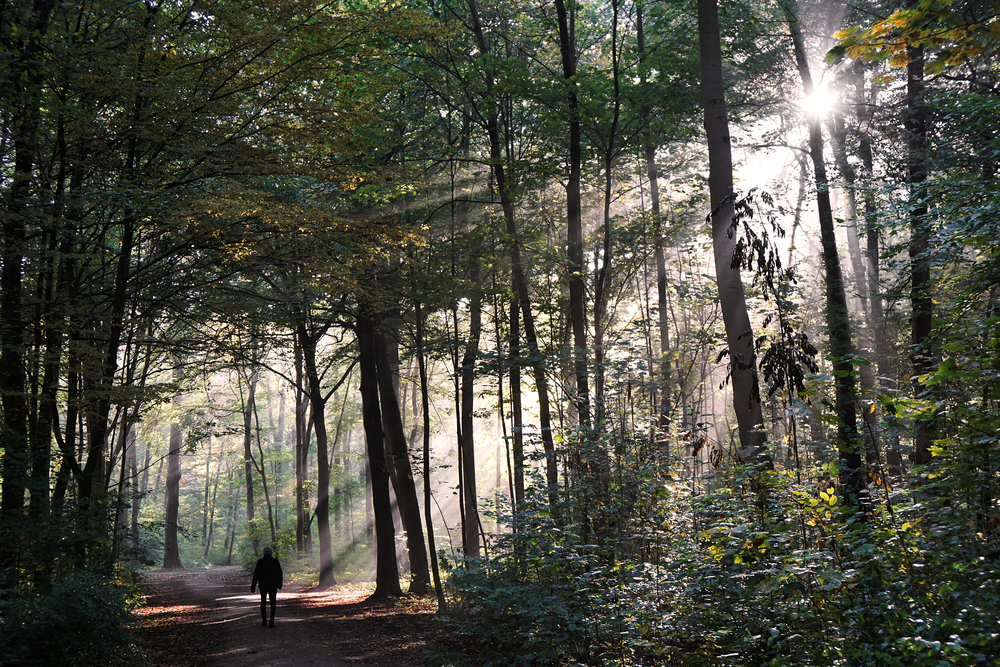
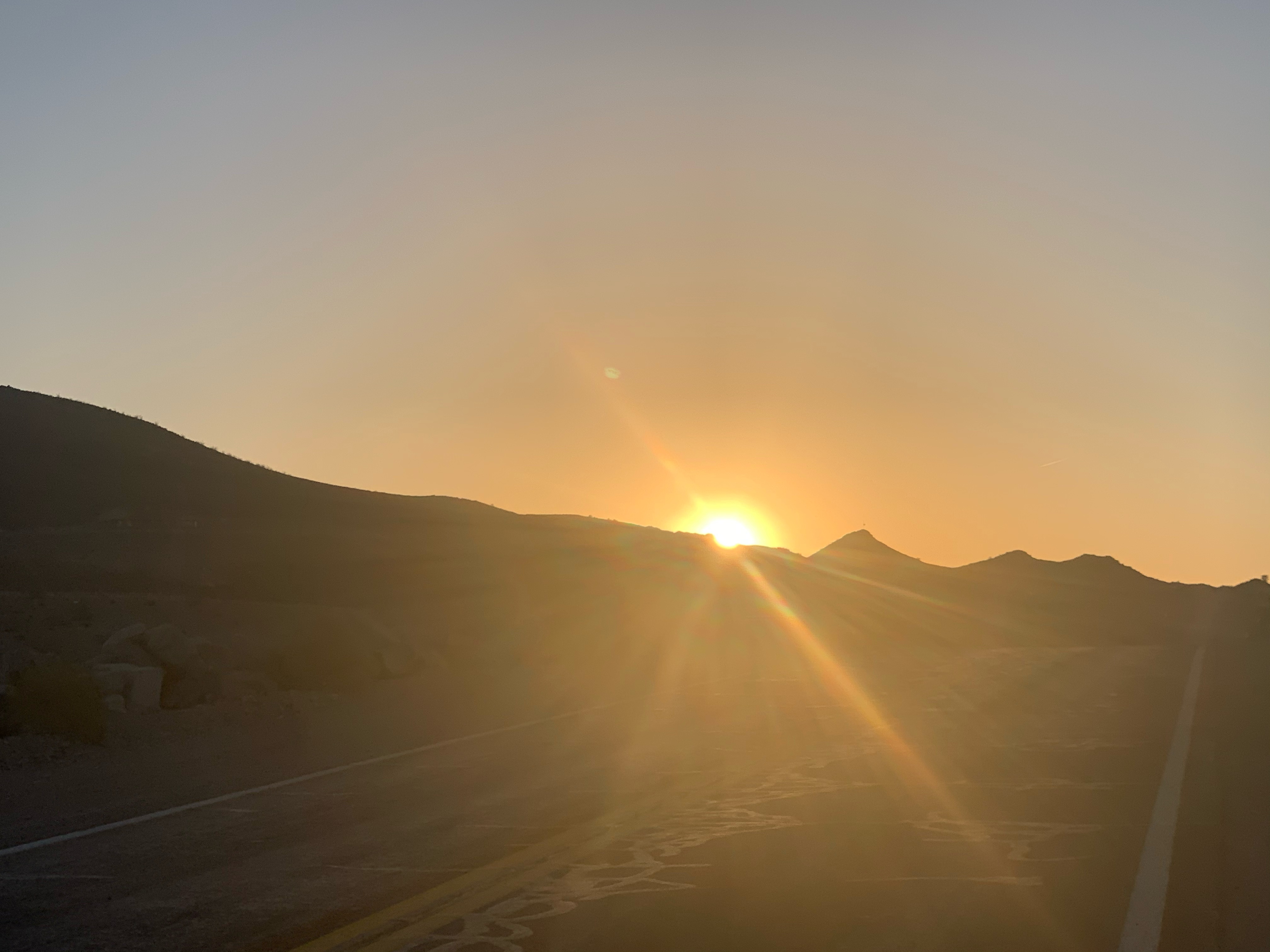
The image for this post was taken on a dawn/sunrise walk I took on my first morning in the Arizona desert last month having arrived from London the previous day.
 

On the Other Side

“Sometimes you can’t see what you’re learning until you come out on the other side.”
-Wonder Woman (from Wonder Woman 1984 movie)
I’m going to celebrate the 3rd Anniversary of the Restorative Life Blog with a special personal update. If you are unfamiliar with the background of where we started, refer to Welcome to Restorative Life from May 2018. At that point, we were about ten years into our journey of mental and behavior health challenges that evolved into physical health problems as a result of psychiatric medications. We had been through a lot and there were a myriad of times that we turned that proverbial corner and thought we were there.
If we had listened to others, we may not have made it to the other side. At one point, we ended up on a path that was leading to a totally different destination. It was very much a choice that we didn’t accept that script or story that was being laid out for our son’s future. I knew deep down that there had to be another solution, another way to heal and calm his very active brain. There were a lot of dark moments and dark seasons. The dim glow that our faith and belief provided was enough light to persevere and keep moving forward, I called it a nugget of hope and kept it with me always. Sometimes the climbs were very steep and seemed impossible, but as long as I remained faithful, that nugget of hope was there for me. Eventually the light became brighter and steered us in the right direction.
Like any parents, my personal story became woven in with my children’s lives and their presence has gifted me me with a multitude of lessons and experiences. The Restorative Life Blog posts are inspired by those lessons and things that I have learned along the way that I often wished I had known sooner. But that’s the point, we all have our lessons to learn and we can share them with the hope to ease someone else’s journey and fill their pockets with that nugget of hope.
Of course, that nugget of hope grew into a toolbox of resources fortified by words of encouragement. One of the saying that got me through time and time again was:
“It’s going to be ok in the end, if it’s not ok, it’s not the end.”
It’s all ok now and incredibly, miraculously, we have reached “the other side”. Without getting into unnecessary detail and with respect for his privacy, my son is now 17 years old. He’s been completely off medication since 2019 and he’s thriving at a local school in North London with a bright future ahead of him. This could not have happened without changing his diet to reduce inflammation and allow the body to perform its extraordinary adaptations. Now that he is completely healed, he no longer needs to follow a special diet, but he does understand the relationship between sugar and the brain and how what he eats directly relates to how he feels.
It’s interesting to be on the other side. Our life was intimately tethered to some very difficult struggles for a long time. During some periods, those struggles attached to our identity in uncomfortable ways, and as we moved through and reached new milestones, we had to take some time to get steady and grounded in the new territory each step of the way. Even the best laid plans did not prevent obstacles from appearing along the way. We had to regroup often and acquire new tools to continue moving forward. And here we stand on the other side liberated from the heaviness and burden of struggles with a nugget of hope and lessons ready to move on to the next journey ahead.

New Moon Bath Recipe

The new moon is time of renewal. With the dark moon, the landscape is un-illuminated creating a blank canvas for the coming two weeks. You can still celebrate a new moon bath with this recipe that I discovered many years ago and still use it each month.
This New Moon Bath enhances the release of that which no longer serves you and prepares you to be filled with new blessings to come:
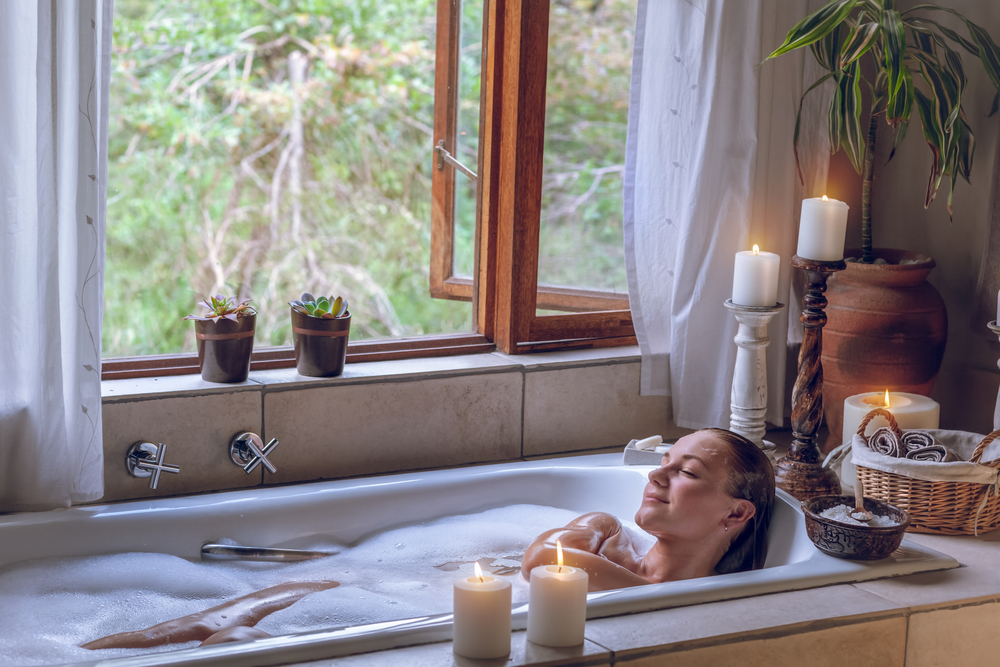
  • Fill the bathtub with very warm water.
  • Add 1-2 cups of Epsom salts
  • Add 5 drops each of the following essential oils: Lavender, Clary Sage, Lemongrass, and Grapefruit
  • While soaking, close your eyes and imagine the salts and the oils supporting the release of toxins, clearing the debris and restoring your energy.
  • Take several deep breaths with complete exhalations.
  • Soak 20-30 minutes
  • Once you have finished your bath, pat yourself dry instead of rubbing with the towel so that some of the salt and oils remain. Then, take a few minutes to write in a journal and set an intention for what you want to create and invite into your life the next two weeks. ***Don’t skip this step, having cleared your energy, you want to be sure that it is being filled up with the energy that you want in your life.***
  • Can’t do a bath on the exact date? No problem, you can still get all the benefits of the new moon energy up to two days before or two days after the new moon each month.
  • Don’t have a bathtub? Add a few drops of essential oil to a hot shower, take several deep breaths inhaling the aromas and making complete exhalations to support the release.
  • Smile and give gratitude for taking the time for self-care and for the feeling of renewal.

Why Being Bad is Good For You

“Life begins at the end of your comfort zone.” — Neale Donald Walsch

In college, one of my best friends was studying for a fashion degree. During our final semester, in the spring of 1997, she suggested I join her in a millinery class to learn hat making. I’d done a little sewing — I knew my way around a sewing machine, could replace a button, fix a seam. As a lover of fashion, and having been constantly intrigued by her classes over the previous four years (so different to my own), it seemed like the perfect ending to my college years — fun and a bit frivolous. How hard could it be?

Turns out that admiring hats is very different from making them — it was, in fact, the opposite of fun or frivolous. No matter how many notes I took, questions I asked, or help I requested, a huge disconnect occurred between what I dreamt up and what I watched my hands form. Somehow I made it through eight weeks, and, mostly due to my friend’s intervention with needle and thread, eked out a passing grade.

But of all my college classes, I might remember FASH405 the fondest. It remains one of the most excruciating but beneficial courses I’ve ever taken, because it reinforced lessons more important to me than bespoke hat making:

  • humility;
  • how to laugh at myself;
  • the world didn’t end because I wasn’t perfect at everything I set my hand to.

We are naturally drawn to things we are good at and enjoy. But while playing to our strengths may be comforting, it’s also one-sided. Focusing on new tasks — in particular, ones we’re not at ease with or good at — can be the ones that accelerate true growth for adults. And the lessons learned may be far removed from the original skill we set out to master.

Hobbies are a perfect way to let go of the stress of our day-to-day lives, free of the “must dos” of work, parenting, chores, or other responsibilities. They, like any new challenge, literally rewire new pathways in our brains — making us more intelligent overall. Yes, even a C- in millinery helped make me smarter. The same can be true of picking up a guitar, even if you’ll never be inducted into the Rock and Roll Hall of Fame; or taking acting classes, even if the only Academy Award speech you’ll ever give is in front of your bathroom mirror. We reap the rewards of pursuing a hobby — relaxation, being present, finding flow, adding enthusiasm and zest to our regular lives — whether we’re good at it or not.

It’s really about relishing the journey more than the destination and letting go of the maxim that satisfaction depends upon perfection or even monetization. I’ve practiced yoga for more than 20 years but still can’t get both feet off the ground in crow, nor execute a headstand. I love to craft but no one who’s seen my projects has ever wanted to buy them off me. But I enjoy both hobbies immensely and can’t imagine my life without them. They help me find balance and express myself creatively. I may be “bad at them,” but they still feel pretty good, and, crucially, I’m still learning and progressing bit by bit. 

Willingness to do something poorly also allows me to sympathize with others who struggle with what comes naturally to me. In that same hat-making class, I helped another senior write a description of her final project. She looked at me the same way I’d looked at her whipstitch her velvet beret — like I had mysterious powers. I try to remember that lesson and practice patience with others, remembering that what I find easy — whether that’s baking a cake or playing air hockey — is, in fact, not easy for everyone. We are all blessed with different gifts. By spending time outside our comfort zone, we encounter many different types of talents to admire and even emulate.  

I’ve never returned to hat making, but I held on to my favorite — a straw bucket-style. Over several classes, I’d wet and softened the straw until it became pliable. I stretched it over the wooden hat block, then, when dry and formed, sewed a wide black ribbon around the crown. I carefully stitched in the slim hat band, and, at last, took it up to the professor for grading. I felt sure that finally, in the last week of the semester, I’d made a masterpiece.

The kind but bemused instructor was less convinced. I’d located the straw’s seam front and center, not around back where it should have been. I’d not used the proper stitch on the hat band, and had left a gap between the ribbon on the outside. In her eyes, this English major had failed, again, to grasp basic millinery tenants. 

But in my opinion, that straw bucket is my magnum opus. Unlike every other hat I made that semester, this one matches exactly the picture I had in my head. I love wearing it. I love telling people I made it. Most don’t notice the wonky seams or lack of precision, they just want to know more about what it’s like to make a hat from scratch.

I’ll probably never be a professional milliner or yogi, nor sell my crafts on Etsy. But I hope I’m a wiser, more sympathetic, more clear-eyed adult who can laugh at herself, keep trying new things, and more importantly, enjoy the ride.

I’d call that success.

by Stefin Kohn, Contributing Writer

Resources – 

  • Elizabeth Day is the reigning doyenne of failure. On her podcast, and book of the same name, How to Fail, she talks to both famous and “ordinary” people about what their failures have taught them. Her follow-up book, Failosophy, was published in October 2020.
  • Dr Barbara Frederickson is a towering figure in the world of positive psychology. Listen to her talk about why prioritizing connection over achievement leads to better health and happiness on Episode 341 of the Ten Percent Happier podcast.
  • Still searching for something to fail at? A simple Wikipedia search for “hobbies” renders an incredible wealth of options: From watch repair to embroidery, metal detecting to calligraphy, they’re in alphabetical order and category (outdoor, indoor, sports, educational, etc.). There’s literally something for everyone, and probably a few you’ve never heard of. (Gongoozling anyone?) You’re bound to be bad at one of them. 

Get a positive vibe from negative ions

Children and adults alike struggle with behavioral outbursts and mood dysregulation from time to time. We experienced our share of that when raising our children. Curiously, at a certain point I noticed that after taking a shower their entire affect would resolve even if there had been emotional intensity just before. Was it like the proverbial bucket of water dumped over the head of someone who is being nonsensical? The effect seems to be related to negative ions, and if you’re ever feeling a little “off” a shower is a great place to start.

Negative ions are molecules that are charged with electricity. It’s this charge that gives is vitality, prana as it’s known in yogic traditions, Qi in Traditional Chinese Medicine (TCM), or life force energy. These ionic charges are essential to life and when absent life is depleted. This is very well described in the text of Swara Yoga: The Tantric Science of Brain Breathing by Swami Muktibodhananda in the following excerpt:

The presence of positive and negative ions ultimately affects the entire body mechanism. They influence the nervous system, rate of digestion, and regulation of the endocrine system, which in turn influences the way we think and respond to certain situations in life.

He goes on to describe the natural abundance of negative ions in nature; in forests, and near moving water like waterfalls, rivers, and crashing waves. The “breath of fresh air” that we experience when we get into nature comes from the electric charge of the negative ions. It has the potential to revive us in the same was as jumper cables revive a dead battery of a car. When we are surrounded by negative ions, they literally enter the blood stream and recharge the system.

It’s not just the yogis that offer us this knowledge, scientific research and conventional medicine recognize that exposure to negative ions reduces symptoms of depression, supports cognitive performance, and potentially boost immunity by encouraging antimicrobial activity. Pretty much everyone is in agreement at this point that depletion of negative ions and increase in positive ions in our living spaces negatively impacts physical, mental, and emotional health.

It’s a little confusing because we tend to associate negative with bad and positive with good. In the case it’s the reverse. Negative ions are the good guys and we should all be seeking them out and finding ways to incorporate them into our spaces.

Our modern living spaces tend to be deficient in negative ions largely due to electrical appliances and technology devices that dominate the space. Air-conditioning and even excessive heating, and poor air circulation further depletes negative ions. The website webmd.com informs that “the air circulating in the mountains and the beach is said to contain tens of thousands of negative ions — Much more than the average home or office building, which contain dozens or hundreds, and many register a flat zero.” That’s a pretty massive difference. And alas, they recognize that the shower is a natural ionizer that most everyone has access to, often at home.

Of course getting out in nature often for a super dose of negative ions is always a great idea and Forest Bathing is a great way to experience that. At home, it’s really about balancing the electrical charge in the space which can be done with Himalayan salt lamps, ionizer, humidifier, and even decorative fountains. It’s worth taking the time to install these especially in air-conditioned with a lot of appliances or electronics. And of course, take a shower as often as needed. Once you’ve done that, all you have to do is enjoy the benefits.

It’s important to understand something about negative ions because we are all made of energy. When unwell with sickness or fatigue, the body actually vibrates at a lower frequency, like a light that has been dimmed or that is connected to an unreliable circuit. And just like fixing the circuit better supports the light, increased exposure to negative ions can really accelerate the path to getting your own positive vibe back online.


Forest Bathing Brings Serenity One Step at a Time

“All my life through, the new sights of Nature made me rejoice like a child.” —Marie Curie

During England’s first lockdown in the spring of 2020, I took refuge in a wooded section of a park not far from my home for my daily, government-allowed exercise. Crisscrossing the extensive trails over several weeks, I watched hyacinth bulbs emerge from the ground, inch by inch, and burst into their heavenly scented, ruffled flower. As if in my own personal stop-motion film, I saw leaves unfurl from the trees above, bracingly green and brand new. I kept an eye on a mama duck perched on her nest near a small pond — rejoicing as she, one day, was joined by a brood of fluffy ducklings. Observing the natural world continue its uninterrupted march into springtime and rebirth, even as my life had seemingly ground to a halt, filled me with a deep sense of peace and perspective. 

Though I didn’t know it at the time, I was, in fact, practicing the Japanese art of shinrin-yoku, or forest bathing.

In the 1980s, looking for a way to combat burnout amongst young workers, as well protect national forests, researchers in Japan found that time in nature lowered blood pressure, blood sugar, and cortisol (the “fight or flight” hormone), and increased focus, relaxation and concentration. Thus, shinrin (forest) yoku (bath) — forest bathing — was born. It’s proved such a success that it is now part of the national health program in Japan, and has been adopted by people all over the world. The simple practice of experiencing a forest — or any natural habitat — with all senses has profound physical and psychological benefits for the mind and body.

But what does it mean to bathe in a forest, and, more importantly, why should you?

To begin with, it may be helpful to point out what shinrin-yoku is not. It’s not exercise — at least not in the “feel the burn” definition. Your hike, walk, or jog is not the primary focus of the practice, though you will undoubtedly rack up points on your step counter. But rather than focusing on mileage, or heart rate, shinrin-yoku asks that you wander rather aimlessly — guided by your five senses: the sights, sounds, smells, and even things you are able to touch and taste along the way. You have no destination, nowhere to be, except exactly where you are. Savoring your time in nature with all of the senses available to you is the entire point. It’s an immersive experience to connect you with the natural world. 

Experts say that a two-hour session is ideal to reap the full benefits of shinrin-yoku, but any amount of time will pay dividends in lower heart rate and blood pressure, increased relaxation, and crucially for many of us, time away from technology. Indeed, it may be easier for beginners to start with small chunks of time and build up to a full two hours.

I soon noticed that my walks in the woods afford me more solace than walks I took on city streets, even as empty as they were of the usual hustle and rush of “normal” London. That may well have been down to the oxygen rich atmosphere I was walking in amongst the trees. But it was also likely due to the aromatic compounds released by plants called phytoncides. These chemicals help trees fight off invaders like bacteria, fungi and harmful insects, and, when breathed in by humans, become important infection and inflammation fighters. Some researchers believe these powerful immune-system supporters can aid healing and even increase happiness. 

Additionally, nature, in all its every-changing glory, provides a distraction that helps combat anxiety and depression. In pandemic times especially, it’s easy to get caught in a never-ending cycle of rumination, worry, and speculation. Shinrin-yoku frees up the mind for creativity and provides a link to something bigger than ourselves, allowing us to see how we slot into a larger picture.  

Technically, and fortunately for those without ready access to green space, you don’t necessarily need to practice shinrin-yoku in a forest. You can take advantage of any natural environment — even your back patio — as long as you apply the principles of mindfulness: Slow down, turn off your tech, take big, deep, belly breaths, and notice how the outdoors makes you feel.

How to accomplish this? Be mindful. Listen: to birdsong, to the wind in the trees, to the scampering clatter of a squirrel’s tiny feet. See: the changing beauty of the natural world, the bright green awakening and blossom of spring, the lush exuberance of summer, the fiery blast of autumn, the naked sparkle of winter. Smell: the damp dirt, the tang and rot of the carpet of leaves, the freshness of the air after a rainstorm. Feel: the heaviness of the humidity in the air, the ground beneath your feet, the rough bark of a tree, the soft moss on a fallen log. Taste: the raindrops on your tongue, a sip from a clear stream (or, more realistically perhaps, a refreshing drink from your water bottle).

By tuning in to your five senses, you can expand what advocates of forest bathing call your sixth sense — a state of mind that encompasses equanimity, relaxation and joyful communion with nature. Twelve months and many miles later, as England emerges from another long national lockdown, I watch the magic of new life unfolding once again this spring. During a tumultuous and unsettling year, shinrin-yoku helped bring me back to myself, one step at a time. 

Want to explore more?

  • There are many books exploring shinrin-yoku in more detail. Dr Qing Li, an immunologist at Tokyo Medical School, is a well-respected physician and president of the Japanese Society of Forest Bathing. He authored Shinrin-Yoku: The Art and Science of Forest Bathing.
  • In the UK, both the National Trust and Forestry England have thoughtful web pages devoted to forest bathing. The National Trust’s site includes a list of forests; Forestry England has 360-degree virtual forest tours for those unable to access green space in person.
  • Japan Travel has an extensive list of national forests in which to practice shinrin-yoku in the country it was conceived.
  • In the US, the Forest Service as well as many individual state websites, list forests to bathe in, from the Allegheny National Forest in Pennsylvania to the Olympic National Forest in Washington State.

By Stefin Kohn, Contributing Writer

Cultivate Curiosity as an Adult Learner

“I have no special talent. I am only passionately curious.” — Albert Einstein

Among the 2016 graduating class at South New Hampshire University, one student stood out. It wasn’t because of her perfect 4.0 GPA or the fact she was distance learning from Hawaii, nearly 5,000 miles away from SNHU’s campus. It was a few other numbers that made many sit up and take notice. After 54 years away from college courses, 94 year old Amy Craton graduated with her bachelor’s degree in creative writing and English, making her the University’s oldest graduate. She had stepped away from college in midlife to raise four children, but decided she had more to learn, and, more importantly, that it wasn’t too late. 

“It feels good to graduate, but in many ways I feel I am still on the road; I have more to learn” she told her alma matter. “If you’re thinking about going back to school, do it. You’ll open up a whole new life.” A poet with a special fondness for haiku, Amy hopes her degree will help her realize another dream — publishing a children’s book.

Not all of us are nonagenarian undergrads, but we can still benefit from the significant upticks in health, happiness, quality of life and general satisfaction to be had from learning something new in adulthood. Turns out, following Dale Carnegie’s advice “to be interesting, be interested” can keep your brain and body limber, introduce you to new people and ideas, broaden your worldview and introduce some good, old-fashioned fun. Crucially, it can also expand confidence which can take a hit once we’re no longer full-time workers or parents. 

Picking up a new skill as an adult can challenge ideas and preconceptions about who you are and who you can be. True, you may take continuing education courses as part of your job, and by adulthood, most people have taught themselves how to manage their household and finances. In many ways people continue to learn professionally and practically to grow (or change) their careers or make their lives run more smoothly. But these types of pursuits often fall under the category of “training” or “must dos.”

What about learning for the joy of learning?

Amy’s story illustrates one pathway to that joy — organized, academic, and with a clear end point. Indeed, adult student enrollment at the university level has continued to grow, year over year, since 2008. And for good reason: Adults often bring a focus, determination and a general willingness to put in the effort, along with a sense of purpose and sense of self that many younger students may not. Flubbing the correct pronunciation in your French class may not be a barrel of laughs for anyone, but you’re likely to care less about embarrassing yourself at 56 than you were at 16.

Adults can be free to indulge in their curiosity and passion. Love to paint? Curious about ceramics? Intrigued by the life of a private investigator, medic, garden designer, voice-over actor or (fill in the blank)? A variety of short-term classes can give you a taster without the time or expense inherent in a degree program.

Many adults regret not having learned a foreign language or musical instrument as children. It’s generally accepted that both of these pursuits are trickier to pick up later in life. But that doesn’t mean they’re impossible, and you’ll have something younger students don’t — real-life experience that can help you master all kinds of new tasks. My mom started playing the piano at 63 and, while occasionally frustrated with the difficulty, it gives her a great sense of satisfaction as a music lover. Plus, she has a lot of time to practice, something she definitely didn’t have while she was working full time and bringing up two kids.

And remember that not all learning is academic or requires lessons. Many adults take up a new sport. Though you’ll probably never dance with the Bolshoi if you start when you’re past the average retirement age of a prima ballerina, adults who try running, cycling (including BMX and road racing!), power- and bodybuilding regularly find success in all age groups. Runners, especially, can set records well into their golden years. The benefits of staying active, and setting goals, are enormous. Staying (or getting) in shape keeps the brain pliable and helps the release of important hormones that keep connections fresh and promote the growth of new synapses.

As a longtime advocate of mindfulness meditation (and my mother’s daughter), I practice one of the cornerstone tenants in my daily life: STAY CURIOUS. I taught myself audio recording and editing software when I hosted my podcast Preheated. I took up running in my early 30s and ran four half marathons as well as lots of shorter races over the next decade, before I took up tennis for the first time at 44. I have lots of other fascinations, too, from Second World War history to astronomy, quilting to jam making. While all of these interests may have felt overwhelming and scattered as a young person, they now feel expansive and unlimited. Who do I want to be today, and what do I want to learn?

Maybe I should take a page from Amy Craton. She’s currently studying for her master’s.

Want to indulge your curiosity?

  • Massive Open Online Courses: These online courses are available for anyone to enroll, and cover an incredible range of subjects from Shakespeare to structural engineering. Dabble in a variety or complete a master’s degree. MOOC partners with top universities all over the world, from Purdue to The University of Queensland.
  • London-based City Lit has an extensive array of evening, daytime and weekend courses, lectures, workshops and talks. Learn in person, or chose from thousands of their online offerings, covering everything from acting to anthropology. Taster courses start at just £10.
  • Your local community center, university or community college may offer courses for “mature learners.” Love it? Great! Not for you? No problem. You’re an adult and you get to decide. One of the most satisfying moments of my adult life was walking out of a knitting class when it became abundantly clear I was hopeless (more on that later this month).
  • Alternatively, in our Zoom era, the world has shrunk — you can learn to make donuts with a pastry chef in London even if you live in Milwaukee. Consider expanding your class searches outside of your geographic area. (And consider the courses at Bread Ahead — they’re fantastic.)
  • Don’t forget volunteering! It can be the perfect opportunity to expand your worldview, change your perspective, and meet people from different walks of life — all very important aspects of learning.

by Stefin Kohn, Contributing Writer

Placebo Response: A Powerful Help to Healing

When you’re feeling under the weather, do you swear by a mug of your favorite chicken soup, a binge of a box set, or a long soak in a hot bath to make you feel better?  If so, you’ve harnessed the power of the placebo.

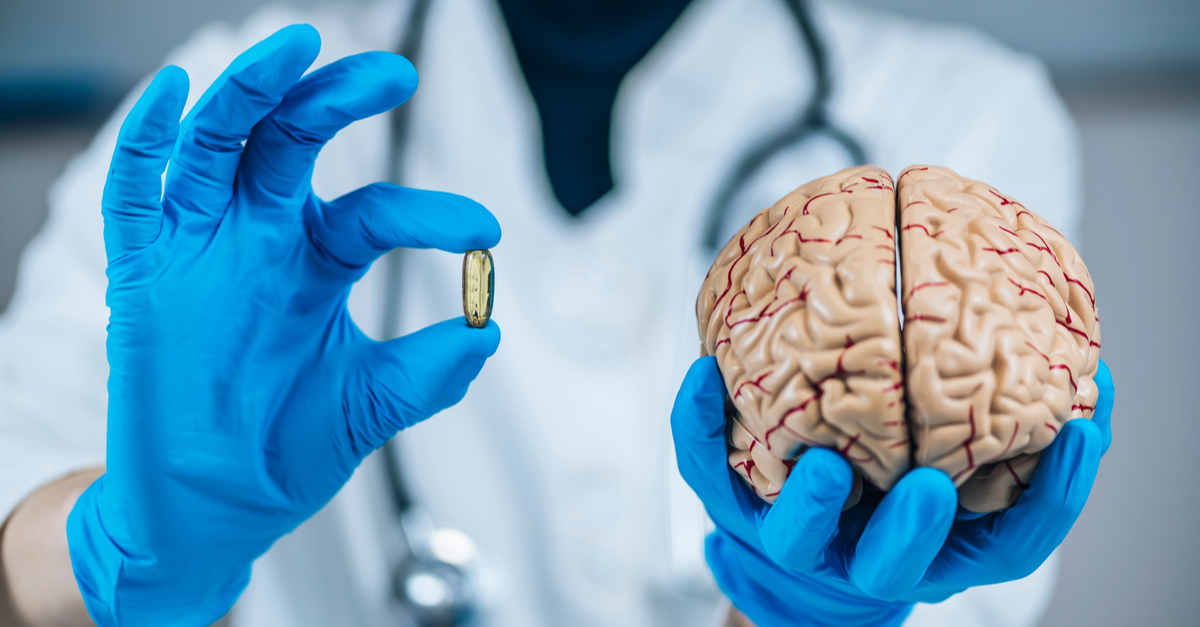
Simply put, a placebo is a treatment without medically recognized properties. Commonly used by pharmaceutical companies during drug trials, placebos have long been the gold standard to ensure an accurate clinical test before a new medication is brought to market. In drug trials, half of the participants receive the new medication and half receive a physically identical but worthless “dummy” pill or saline injection. In a system called “double blind” neither the clinicians nor the participants know who’s receiving what, in order not to influence the outcomes. In this way, researchers can prove (or disprove) that their medication works, and be sure the trial was fair and unbiased.

Beyond the realm of double-blind studies, the placebo effect and response can have powerful implications of their own for healing and therapeutic benefits. The mind is so persuasive that patients can experience strong effects, both positive and negative, while taking a placebo. During the trial for the COVID vaccines, many people reported side effects such as fatigue and headache — even though they had been given a saline injection. On the flip side, some researchers believe the vaccination has been so well tolerated because people need and want it to work so badly. 

The magic of the placebo also comes because people can still experience relief and healing — whether they know they’re receiving the actual medication or not. The placebo effect is a real physio-biological phenomena that arises not just from the taking the dummy pill, but from the social, contextual, and verbal suggestions that are around when it is administered. It may not cure you but it can make you feel better, in part because you feel cared for. Call it a therapeutic sugar pill.

Some may be more receptive and responsive in body and mind to the effects of a placebo than others. Likewise, some conditions seem to respond better to placebos. Research has shown that depression, pain, and chronic insomnia can respond effectively to placebos, sometimes as well as or better than to their “real” pharmacological counterparts. In physical terms, placebos can hasten the release of the body’s natural “feel good” chemicals, lowering heart rate, blood pressure, anxiety, fatigue and pain perception. In psychological terms, patients who believe they will have success with a treatment shift their mindset from pain to relief, a significant and positive boost. Put another way, if a patient thinks and believes that a medication or treatment is going to work, it has a better chance of success. 

An iconic scene in the 1996 movie The Birdcage provides a perfect example. Nathan Lane’s character Albert is overcome with stage fright and begs Hank Azaria’s character, Agador, for a special  “Pirin” tablet. Though Albert thinks he’s popping a tranquilizer, Pirin turns out to be nothing more than garden-variety aspirin with the first two letters scraped off. But does it, along with Agador’s soothing, cure his anxiety? Absolutely.

But saying that placebo power is all in your mind is selling it a bit short. People with diseases that affect the prefrontal cortex (such as Alzheimer’s) often don’t respond to a placebo. Tellingly, MRI scans of patients given a placebo show increased neural activity in this region, the part of the brain responsible for, among other things, behavior, emotions, and the release of the powerful mood-boosting neurotransmitters serotonin, norepinephrine, and dopamine. Changes start in the brain, but they’re really happening, and have a cascading and often transformative effect on the patient’s body. So although the placebo may only be a catalyst, it’s a powerful one.

As Albert experienced, and as new research shows, therapeutic acts literally change the brain’s chemistry. Of course, what constitutes a therapeutic act is highly individual. I may swear that numerous cups of hot tea with lemon shortens my cold. You may find no relief from hot beverages but insist that a spoonful of spicy mustard eases your congestion. Both “treatments” help us feel better, in large part because we believe they will.

However we individually find relief, though, we may be doing so out of a deep-seated evolutionary response. Evolution favors humans with positive expectations. Feeling optimistic about the future, and how you’ll feel in it, helps to reduce anxiety. Alternatively, an expectation that you’ll continue to feel poorly, or that you have no control over your health, only increases stress and accompanying unpleasant physical symptoms. 

Unquestionably, placebos have an important role in helping deliver new, safe and effective drugs. The scientific research studying the placebo effect and response, still in its early stages, may have equally massive implications for helping to treat a variety of conditions. To be sure, conventional medicines and treatments are often the accepted standard for a wide variety of health problems, and there are certainly conditions that won’t ever be cured with positive thoughts and placebos alone. But the next time you need to pop a pill, schedule a surgery, or roll up your sleeve for your COVID jab, expecting the best possible outcome may be a simple, and surprisingly effective, way to increase your success.

By Stefin Kohn, Contributing Writer

Spring Cleanse April 12-16

Hi there friends! I hope you enjoyed a your Spring feasts of Passover and Easter the past couple weekends. Now that we are moving into a new season, it’s time for a little reset week to get Spring and summer off to a great start. I always look forward the sunshine and the tank tops and sundresses and I want to feel good and look good for the season.

Let’s talk about the upcoming 5-Day Spring Cleanse. This year, I’m doing will a 5-Day session in each season to maintain momentum and continuity in our health. Just like a car needs a regular tune-up and our windows need washing a few times a year, our bodies need important maintenance attention too. We get started next week, so be sure to sign up and take advantage of the early bird discount. Sign up by midnight on April 9 to save £20. Use the code SPRING20

YES, SIGN ME UP FOR THE 5-DAY SPRING CLEANSE!

You may be wondering whether the new 5-Day Detox is a good fit for you. Here are some answers to the most common questions  just in case you’ve been wondering about this, too.

How do I know I need to detox?

A few signs of needing a detox are fatigue, low mood, headaches, skin problems, and excess fat, especially in your belly. But the truth is that if you just aren’t feeling that great, a detox can help. We live in an increasingly hectic and toxic environment, and taking time for high-level self-care like a detox can make a huge difference in your energy, mood and even your body shape.

What will happen during the detox?

You’ll get a step-by-step guide of what you’ll need to do every day on this detox. We’ll focus on eating high-nutrient foods like fresh vegetables and fruits, lean proteins, and some whole grains. We’ll cut out processed foods, dairy, and sugar. The first few days you might feel a little off as your body gets used to the new things you’re eating, but by the end of the week you’ll likely feel amazing – scroll down to read what a few past clients have said about the experience:

How do I know it will work for me?

Literally dozens of people have participated in my reset or programs. I’ve had people tell me that they’ve dropped weight, slept better, had more energy, pooped better, felt less grumpy, and even had whiter teeth. I can’t guarantee that it will work, but it’s a safe bet that you’ll see positive improvements after 5 days. And, if you don’t, let me know, and I’ll refund your money.


Here’s what a few people had to say after working with me:

“The recipes were tasty and easy to follow. I know I should eat better and I don’t always have the discipline to do it on my own. The 5-Day Detox was a great jumpstart to get back into healthier food choices, and I’m amazed how good I feel after just 5 days!”
-Amruta, Business Analyst

“I was surprised at how easy it was to follow the plan. I like carbs, sugar, and wine, but once I made it past the first couple of days, my body responded and I found it easy (mostly!) to make healthy choices. Sheila’s support and the bite-sized chunks of information meant that I wasn’t overwhelmed up front. My stomach felt noticeably less bloated and I lost weight. I felt energetic and unlike other challenges, I wasn’t eager to go back to my old eating patterns because I felt better!”
-Sara, Graduate Student

“Sheila has a wealth of knowledge and experience. She is able to think outside of the box and will continue to research and find solutions until an issue is resolved. I look forward to the 5-Day Detox because I know it’s just what my body and my mind need.”
-Jeannette, Sound Engineer

“I was in a rut with some unhealthy eating habits, so the 5 day winter detox came along at just the right time. We can do just about anything for 5 days, Monday to Friday, so it didn’t seem so daunting. With Sheila’s advice and support, I was able to go without the foods that were causing me problems while continuing to feel energised and in control. I finished the week several pounds lighter, feeling empowered and so proud of myself. I don’t think I would have been motivated to follow such a regime on my own, but the group was a good support system. The detox was just the kickstart I needed to get my healthy lifestyle back on track.”
-Marilyn, Community Activist

“I really appreciated this detox.  I was not able to do it exactly as suggested, but it did give me new ideas for what to eat and how to exercise.  I liked having something new to try every day.  It kept my mind on my health.”
-Christina, Special Education Teacher

————————————————————

Sign up by midnight on April 9 to save £20, which means you’ll pay just £59 instead of the £79 retail price. Use the code SPRING20

In case you missed it, when you sign up, you’ll get:

  • A complete suggested meal plan
  • New recipes to celebrate Spring
  • Simple easy to follow recipes that are suitable for the whole family
  • A shopping list so you can hit print and head to the grocery store
  • A detailed daily protocol so you’ll know exactly what to do and when
  • Recommended supplements to take during the detox
  • Easy lifestyle hacks to enhance the detox experience
  • Pre-Detox Training Call
  • Support and daily feedback from our members-only online forum. We’ll definitely be there to tell you to walk away from the cookies.

Get into the Groove of SPRING AND REGISTER HERE.

Let me know if you have any questions, I’m here to help. Do you know someone who’s been wanting to to try a new program, but not sure where to start? This detox is totally suitable for beginners all the way on up to those who have previous detox experience. My goal is to support at many people as possible for this experience and I can only do that with your help, so please share this opportunity with your friends and family members.

Find out more about the 5-Day Spring Cleanse Here.

I hope you will join us, I’m getting excited. Be sure to use the code SPRING20 to get £20 off you registration.

Cheers,

Sheila

P.S. If you’re on the fence, I encourage you to take a chance and sign up for this 5-day cleanse. The foods are filling and yummy, there’s tons and tons of support, and you won’t be miserable or hungry – I promise. And, if you don’t end up having a great experience, just let me know and I’ll refund your money. Give yourself a much-deserved week of self-care and sign up here:

YES, SIGN ME UP FOR THE 5-DAY SPRING CLEANSE!

GUEST BLOG: The Power of Scent

Scent has the power to transport us. Unlike our other senses, the power of scent is linked directly to our brain’s limbic system, the region responsible for memory and emotion, which is why you can instantly travel back to high school, your grandmother’s garden, or anywhere in the world when you catch a whiff of a familiar fragrance.

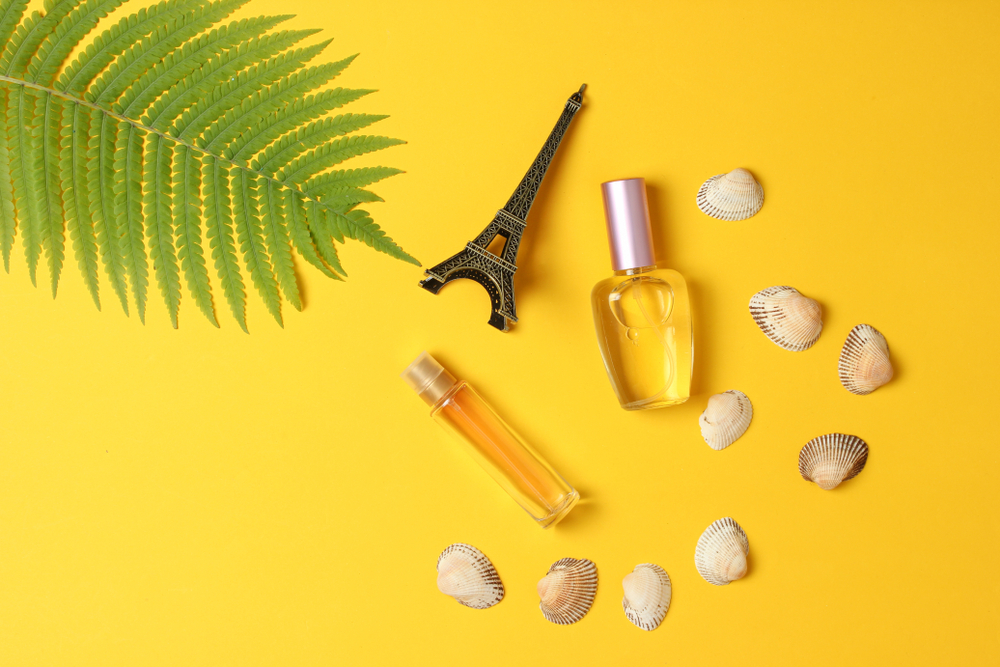
For many years now, I’ve harnessed the ability of scent to enhance making memories, consciously choosing a specific perfume to wear on my travels. Though I rotate between a select few favorites in my “normal” life, traveling provides the perfect opportunity to road test a new scent, and, more importantly, help imprint the memory on my soul in a way that even the best photograph can’t.

At first, I experimented with having one travel perfume that I wore on all occasions away from home. As much as I liked the idea of having a reliable favorite on standby, the imprints became a little fuzzy, as I couldn’t remember which trip the scent was reminding me of. I soon switched to match the scent to the location — wearing Prada in Italy, Dior in France, Burberry in England, for example (a bonus is that many of the big perfume houses have multiple perfumes so you can work your way through them slowly). This is not only an excellent way to honor the host country, and a fun bit of extravagance to help set a suitably “off duty” mood for your wanderings, but also makes remembering choices even easier. (A travel scent journal is something I intend to start to help cement my memories even further.)

Last summer, my family and I escaped pandemic London for a week in Normandy and the Loire Valley in France. I was anxious about our first international trip during a global pandemic though COVID cases were low and the trip was allowed. Both to help comfort me, and represent the areas I would be visiting, I chose YSL Libre, with its top notes of lavender, cosy middle notes of orange blossom, and comforting base notes of warming vanilla. This scent proved perfect — I felt a little more French, and a lot more calm. Back home, with one whiff, I am reminded, not of the panic of pandemic times, but of the healing power of getaways.

There’s no right or wrong way to start making your scent memories, but I enjoy using fragrances I’m unfamiliar with before my trip. Otherwise, I find they come with strings attached. If you ask nicely at most makeup counters, you can walk away with small vials of perfume to help get you started. I find the samples easily last for a week’s vacation, with a little to spare for when you return home.

If you’d rather reference single-note fragrances, Demeter and The Library of Scent have inexpensive “purse sprays” that replicate almost any smell you can think of, quite literally — from Play-Doh to Kitten Fur. The companies offer a wide variety of scents meant to imitate particular foods, drinks, seasons, even destinations, including Ireland, Cuba, and the Great Barrier Reef, among others. If you have been lucky enough to visit these locations, you may find that you agree with these interpretations of the locale. I spritz their Apple Cider spray to remind me of my fall honeymoon in Vermont. Then again, your scent memory of the places you’ve visited may differ wildly from anyone else’s.

In a 2020 article in the Harvard Gazette, “olfactory brander” Dawn Goldworm explained that scent is the only fully-developed sense fetuses have in the womb, and it remains a child’s most vital sense until age 10 when sight takes over. This may explain why scents imprinted in childhood are so important, and lead to a lifelong like or dislike of certain smells that can be hard to override in adulthood. 

During our year-plus of enforced time at home, I’ve never been happier that I have scent memories to help me reminisce and recollect. Through the power of scent, I’ve been transported to more carefree times — reliving walks along a Venetian canal at twilight, a hunt for the city’s best strudel in Vienna, the zesty, citrusy tang and bite of a Moroccan souk — one magical sniff at a time.

Consider:

  • Trying a scented hand cream, body wash, or even hair product. Most come, or can be decanted, into travel sizes;
  • Essential oils — either single notes or ready-made blends– are another option, and you could consider creating your own bespoke combinations;
  • Purchasing a scented product on your travels — the bonus being you have a portable souvenir that you can dip into right away.

Stefin Kohn is an American writer and editor living in London. Her love affair with perfume started with Debbie Gibson’s Electric Youth, circa 1989.