Seed Cycling

“Let food be thy medicine and medicine be thy food.” ― Hippocrates

If you haven’t yet heard of seed cycling, it may not be long. While there are skeptics and those who doubt the power of food to support health, it’s being shared widely on social media and health blogs because people are having good results with it.

Seed cycling uses a variety of seeds to support hormone balance, fertility, and to ease the symptoms of menopause. There is a lot of anecdotal evidence that it reduces problematic symptoms related to the menstrual cycle and the hormone roller coaster that issues. Menopausal and post-menopausal women can still benefit by cycling the seeds according to the moon cycle and referring to the New Moon as Day One. I started seed cycling last year and I continue to do it because I have noticed that over time it has supported restoring and maintaining hormone balance.

**important disclaimer – If you have dealt with breast cancer or if you have a estrogen or progesterone sensitive tumor, consult your physician prior to engaging in seed cycling. I am trained as a health coach and I am not a medical professional.**

How seed cycling works works:

Phase 1: Days 1-14

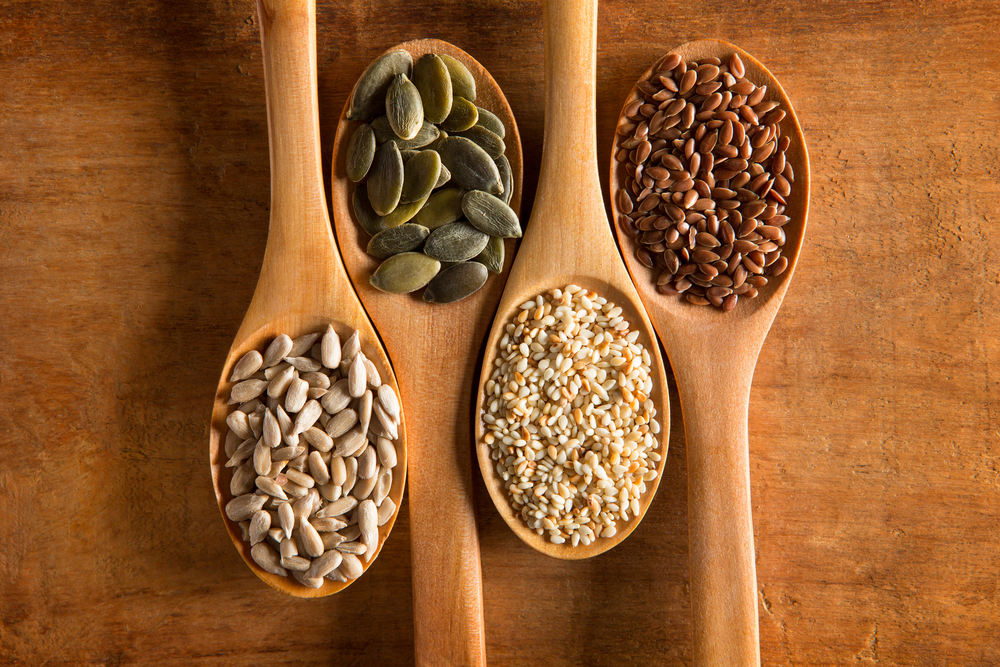
Starting on the first day of menstruation (or on the new moon), consume 1 Tablespoon each of ground flax seeds (linseeds) and pumpkin seeds and added to you meals in any way you chose; smoothies, yogurt, porridge, soup, and so on.

It’s best to grind the seeds fresh each day to get the most nutrition. It is said that the seeds are best ground because it expands the surface area of the seeds allow for greater absorption of the nutritional content. I have a small coffee grinder that I use only for grinding seeds.

Phase 2: Days 15-28

Starting on Day 15, or alternately on following ovulation if that comes sooner, switch to 1 Tablespoon each of ground sesame seeds and sunflower seeds for the remainder of the month.

Why seed cycling works:

It’s all about restoring balance. There are all kinds of hormone mimickers in the environment, especially estrogen that are prevalent in plastics and cosmetic products. They actually become present in the body and send our hormones out of balance with too much estrogen. To make matters worse, excess stress contributes to the depletion of progesterone which coupled with high estrogen leads to the cause of experiencing PMS symptoms such as headaches, cramping, moodiness, acne, weight gain, and is related to low libido and thyroid problems.

During phase one, flaxseeds are the phytoestrogens supporting estrogen balance that is naturally increasing after plummeting just before menstruation while pumpkin seeds contain zinc, which has been shown to reduce cramping.

In phase 2, sunflower seeds and sesame are high in vitamin E, which has been shown to support production of progesterone, which in a healthy cycle rises following ovulation in the second half of the month.

Seed cycling is rooted in deep nutrition and using diet as nutritional therapy. I first heard about Seed Cycling when reading a book called The Metabolic Approach to Cancer by Dr. Nasha Winters and Jess Higgins Kelley which extensively explores how utilizing food is used as medicine to regulate balance in the body to support the elimination of cancerous cells and other diseased cells in the body. Her research exploration is based on the metabolic theory of cancer for which Otto Warbug was awarded a Nobel Prize in the 1920s. While this book explores metabolism it is also recognizes that hormone balance is a key factor in the process of healthy metabolism and essential to complete wellness both in the body and in the mind.

Seed cycling works to support the hormone fluctuations of the menstrual cycle and the phases that occur through the month. It has the potential to reduce symptoms of hormone imbalance and there appears to be no harm in trying it out. While there is certainly a role for strong medications, we must consider that they often come with side effects. It may take a little longer, but in many cases it’s possible to arrive at similar results with appropriate dietary adjustments with almost no risk of negative side effects. Be aware that it may take up to three months for the benefits of seed cycling to to kick in, so be patient and trust the process of your body restoring to balance.

Recommended reading to understand more about the role of food in deeply nourishing our bodies:
Deep Nutrition by Dr. Catherine Shanahan
The Metabolic Approach to Cancer by Dr. Nasha Winters and Jess Higgins Kelley

21-Day Challenge May 2020

“The goal is not to be better than the other man, but your previous self.” –The Dalai Lama

The 21-Day Best Self Challenge is a lifestyle exploration as part of the journey to growing into the best version of ourselves in body, mind, and spirit. As a participant, you will receive group coaching by means of resource materials, daily emails, multiple videos per week, menu planning support, recipes, membership in a private Facebook Group, and more. Sign up now, we’ll start on Monday!

Join me for a  21-Day Best Self Challenge starting May 4!

I don’t know about you, but with the days and weeks all blending together, I’m ready for a full-on reset to focus on supporting the direction I want to be moving in within the spheres of my body, mind, and spirit. When they “let us out again” (whatever that really means…) from lockdown and shelter in place, I want to be confident that I’m showing up as the best version of myself.

In the spirit of Ecclesiastes 3 from the Old Testament of the Bible (…that was put to song by the Byrds in Turn, Turn, Turn), There is a time for everything, and a season for every activity under the heavens. After several weeks of managing a new reality, perhaps It’s time to re-instate some discipline and routine in our lives and intentionally make choices to create the lives that we truly desire. It’s time to accept where we are in the present moment, assess where we are going, and aspire to succeed.

One of the keys to my sustained success with maintaining a healthy diet is by having periods throughout the year that I really focus on what I’m eating and paying attention to how my body is feeling. I used to do it just once a year in a longer chunk in January, but in recent years, I’ve been doing it several times a year for shorter periods of time. While a four-week or six-week program can seem long, twenty-one days somehow feels a little more manageable with more facility to complete the course. The good news is that 21 days is long enough to make some solid changes in habits and be on the path to even bigger shifts toward your ultimate best self.

Let’s face it, we all know WHAT we need to do – we’ve been reading about it for years at this point. I know that for me for me the more time I spend consciously focused doing what I  believe that I “should” be doing, the more that becomes the default in terms of daily choices related to food, movement, sleep, technology, and more. Knowing what to do isn’t good enough and isn’t going to give any results. What’s lacking for so many of us is actually DOING it. Have you been wanting to make some changes in your diet and lifestyle habits? Are you feeling sluggish after several weeks of lockdown with plenty of comfort food? Want to feel fresh and energized moving into the summer and hopefully some version of socializing? Are you ready to shed what haven’t served you and grow into an even better bolder version of yourself?  Starting May 4, I’m offering a 21-Day Best Self Challenge.

Join me for a  21-Day Best Self Challenge starting May 4!

During the course of the 21 Days, you will receive daily emails exploring a variety lifestyle aspects including movement, diet, technology, sleep, stress, sunlight exposure, and  much more. You will learn the foundational tenants of Primal Health (aligns very closely with Paleo and also referred to as Ancestral Health). This time around, I will also be exploring practices rooted in Ayurveda, Traditional Chinese Medicine (TCM), Native American wisdom, and latest research on supplements, immunity and more. You will have an opportunity to see for yourself how this lifestyle supports vitality and wellness based on science like biochemistry, molecular biology and nutrition and also based on ancient wisdom.

Truth be told, I’ve tried a lot of different diets and plans over the years. I’m grateful for all of the unique experiences because I’ve learned something from each and every one of them along the way and I want to share what I’ve learned. With the current time and global pandemic, we have all been experiencing constant change and adjustments from week to week. We will tap into that energy of presence and explore more frequent revisions though the duration of the program with a lot of space for to adapt and customize rather than follow a set framework to follow for the full 21 days. I will provide resource materials and guide you through goal setting and reflection processes.

This is a great opportunity to try out some new practices for a few days at a time and then upon reflection decide to continue with those practices or try something else – all during the process of the 21-days.

Join me for a  21-Day Best Self Challenge starting May 4!

The 21-Day Best Self Challenge reaches far beyond weight loss and I consider it to be a lifestyle exploration as part of a journey to growing into the best version of ourselves in body, mind, and spirit. This is about feeling good, feeling strong, reducing inflammation, clearing the brain fog, regulating a positive mood throughout the day, reducing stress, feeling rested, having increased confidence, improved insulin sensitivity (potential to reverse pre-diabetes and T2 diabetes), improved memory, hormone regulation, healthy skin, improved GI function, reduced muscle and joint pain, and more. I won’t promise you will have all of this in 21 days, of course, but if any of these ring true for you, there is so much potential to support yourself with a nutrient rich diet and a more mindful perspective on daily routines of movement, sleep and other lifestyle habits.

Join me for a  21-Day Best Self Challenge starting May 4!

In addition to the daily email message and suggested daily goals and intentions, you’ll be a part of a private Facebook Group to share experiences, ask questions, get recipe ideas, and know that you’re not alone in this challenge. This online community is a great way to both give and receive encouragement and accountability with others in the group. The group is private, so you’ll have the freedom to share within the group knowing that it’s a safe space to share both successes and also challenges. Many participants have found that they often same the same struggles and support each other to work through the tough patches. Most importantly, it’s a place to show up for yourself and participate with others. I’ll be posting some of my favorite recipes in addition to how to navigate restaurants and social occasions and answering any questions that you have. And new this year, I’ll have live videos at least twice per week featuring movement routines, recipe making, general info-sessions, and anything else that fits appropriately in this space.

Join me for a  21-Day Best Self Challenge starting May 4!

Here’s what others are saying about past 21-Day Primal Challenges:

“I was surprised at how easy it was to follow the primal challenge. I like carbs, sugar, and wine, but once I made it past the first several days, my body responded and I found it easy (mostly!) to make healthy choices. Sheila’s support and the bite-sized chunks of information meant that I wasn’t overwhelmed up front. It was great to be able to share tips with the Facebook community too. After the 21 days, my stomach felt noticeably less bloated and I had lost several pounds. I felt energetic and unlike other challenges, I wasn’t eager to go back to my old eating patterns because I felt better!”
-Sara, Graduate Student

“I was skeptical at first to try yet another diet…until I lost almost 5 kilo during Sheila’s 21-Day Challenge. I found Primal Health to be an inspired nutrition and lifestyle behavior program that’s easy to slot into your life without drastically changing your daily routine. I’m very grateful for how Sheila has transformed my way of thinking about food by suggesting recipes, menu ideas, and ways to navigate all my food allergies. The best part: I’ve kept the weight off.”
-Susana, Financial Advisor

“I really appreciated this challenge.  I was not able to do it exactly as suggested, but it did give me new ideas for what to eat and how to exercise.  I liked having something new to try every day.  It kept my mind on my health.”
-Christina, Special Education Teacher

Join me for a  21-Day Best Self Challenge starting May 4!

Join us for the challenge starting May 4. My goal is to our biggest group to date and spread the health far and wide. Your body is your vessel for all of things that you love to do in life, and it’s amazing how good you can feel when you are acting on what you already know to be the “right thing to do”. It’s a process and by joining me for 21-days, you’ll have some great tools to be more mindful about so many parts of your daily life that contribute to your overall well-being. Furthermore, this may be the last time that I’m offering the challenge for Free, so if you’ve been thinking about joining, now is the time. To sign up, click on one of the links, or complete for form included below.

Finally, if you know someone who would benefit or be interested in this program, please pass this on so they will have the opportunity to sign up too. Even better, consider doing the challenge together with a friend or family member. You’ll have each other and the Facebook group for an abundance of support and accountability.

Join me for a  21-Day Best Self Challenge starting May 4!
Be Well and Get your Nutrients

As I was revising this week’s originally planned post, the global spread of the coronavirus accelerated, and it was declared a pandemic. I found myself relieved to be on a flight returning back home to London amidst flurries of flight cancellations as countries began to close their borders. As I write this, my oldest daughter, along with countless other students in the U.S. and around the world, is packing her apartment to return home from college as classes have been canceled and the remainder of the semester will be completed online.

Nothing feels normal right now and there’s a sense of unease all around. The uncertainty of the situation over the next few weeks is uncomfortable. While there’s an urgency to be well in our bodies, we must remember that full wellness incorporates the body, mind, and spirit. Much of the spread of the virus is out of our individual control, but that doesn’t mean that we must be out of control as well. Remember, that it’s not what happens to us that matters most, but how we react to what happens.

This is a great time to increase restorative practices to combat the anxious energies that are swirling about. Practice taking deep breaths, take a bath, shut off all devices and read a good book (nothing too apocalyptic!), go for a long walk, pray or meditate, do a home spa day, write in a journal or write a letter to a friend, or release energy and have fun with music and dance. The days are getting longer and new life is bursting out everywhere, take a moment to notice the small changes each day. Look for the hidden gifts in the new and unexpected change of pace, they are most certainly there.

Nutrition matters. As long as your able to, continue to eat fresh vegetables as your main source of nutrition. Those who are malnourished are most vulnerable to being infected with any kind of virus. As you may be preparing for the most severe social isolation measures, consider stocking the most nutritious food possible. High consumption of processed foods is linked to reduced immunity, so stick to the most simple options. If you have a dark cool place to store them, root vegetables so last for a while, so it’s good to have plenty of those to have fresh food to add to your meals as long as possible. Buy dry beans to soak and prepare yourself for highest nutritional content. Best options for pantry include: nuts, nut butters, canned tomatoes, artichokes, tuna, salmon, anchovies, olives, coconut milk, olive oil, and of course if you have a freezer, you can include frozen vegetables and plenty of high quality fish, poultry and meat readily available. Be careful of sugar. If you want to have something sweet on hand, dried fruits and dark chocolate are good options to be consumed in moderation. Sugar (including alcohol) feeds most viruses, so if you consume a lot of sugar, you are creating an inviting environment that will be most susceptible to contracting the virus.

For a final practical note, vitamin C, zinc, and vitamin D3 have been shown to be most effective to bolster the immune system for increased response in combating viral threats.

May you and your families be well. Take a deep breath, get plenty of rest, and keep your bodies, minds, and spirits nourished.

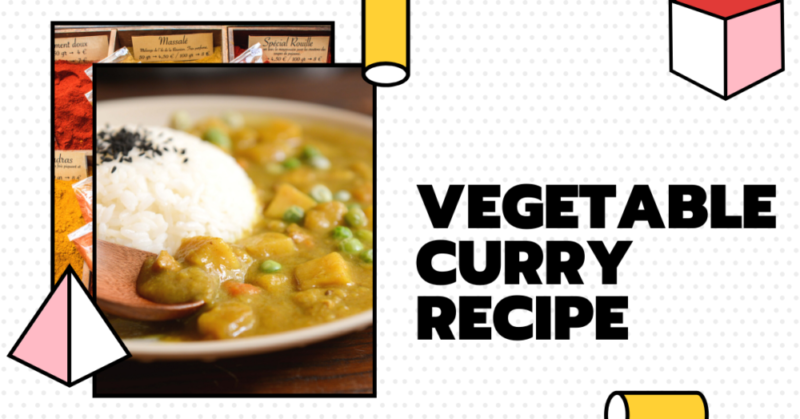
Quick and Easy Vegetable Curry Recipe

Here’s a simple recipe that we like to make when we need a quick tasty meal. The best thing about it is that you can customize it according to whatever veggies you have lying around and it’s vegan so it will work for everyone. If chopping veggies isn’t your thing, then buy a bag a prepared mix veg at the store or get the family helping out.

In this recipe I used onion, carrots, red peppers and green beans. You could just as easily use potatoes, leeks, zucchini, eggplant, peas, broccoli or whatever is available. *Note – if using potatoes or sweet potatoes, it’s best to cook them separately and then add them at the end due to the longer cooking time. Additionally, if you prefer more protein, add some diced tofu or chicken.

Ingredients:
1 Tablespoon Coconut oil
1 small onion sliced
1 garlic clove minced
1 teaspoon grated ginger (optional)
½ cup diced carrots
½ cup broccoli cut into small florets
½ cup sliced red pepper
½ cup green beans
1 can Coconut Milk
1-2 Tablespoons Curry Powder (according to taste)
1 cup of chopped tomatoes (I use canned)
1 cup of Vegetable Broth
1 can of garbanzo beans (optional)
Fresh herbs for garnish – I like cilantro (fresh coriander) or basil
Salt and pepper to taste

Rice, riced cauliflower or quinoa to serve.

Directions:

Prepare rice, riced cauliflower, or quinoa according to directions for serving.

For the curry:

  1. Heat coconut oil in the pan. Add the onions. Stir until coated and cook for 3-4 minutes until they start to soften.
  2. Add the garlic, ginger, carrots and curry powder, continue to sauté. Add a little more coconut oil if necessary.
  3. After 3-4 more minutes, add the red peppers, green beans, coconut milk, and vegetable broth.
  4. Stir it all together and bring to a simmer.
  5. Put the lid on and simmer for about 10 minutes.
  6. Remove lid and add the tomatoes.
  7. Stir all together and check that vegetables and cooked to your liking. Continuing to cook a few more minutes if necessary.
  8. Serve in a bowl with rice, riced cauliflower, or quinoa and garnish with fresh herbs.


How to navigate food at Holiday Parties

Holiday parties are the best and the worst. They’re the best because it’s fun to get dressed up and have fun together with family, friends, colleagues, and neighbors; and the worst because they can be a minefield in terms of food choices which can lead to potential weight gain and generally feeling unwell. There’s also bit of irony here because we are raising our glasses and toasting to our health!

Most food and drinks are not neutral. For the most part, what we consume either provides nourishment or contributes to some type of inflammation. During the holidays, there are so many tempting options, and they tug at our emotional strings because they are associated with comfort foods and childhood.

We need to remember that the tradition of feasting around the winter solstice originated in a time when it would be followed by a period of fasting in the barren winter months. The feasts would literally provide a chance to fatten up to survive the scarcity of food in the winter. Since we no longer suffer this scarcity, we no longer need to or desire to add more pounds in December.

It is well known for centuries and there is well-established research that sugar and starches are fattening foods. Given that’s what’s on the menu, it’s comes as no surprise that the average person in both the US and in the UK can expect to gain 5 to 8 pounds or more during the holidays. Its no wonder we are all forced into diets and detoxes in January.

With so many decadent treats, what’s the best way to get through the holiday parties? Maybe it’s time to break this cycle or at lease minimize the damage. Here are a few things to consider.

  1. One possibility is to eat before you go. Have a nice healthy meal with some protein and veggies before the party. You will be less tempted to nibble.
  2. Bring your favorite healthy holiday dish to share.
  3. Only eat if you are actually hungry.
  4. Avoid cocktails. Stick to dry wines and plain clear liquor and moderate consumption.
  5. Seek out the protein: nuts, meatballs, shrimp, cheese, kebabs, eggs, charcuterie, and such. These will be filling and provide nourishment.
  6. Crunch on the veggies instead of the crisps.
  7. Say no to processed foods and fried foods.
  8. Skip the bread basket. Just skip it.
  9. Avoid desserts that are both sugar and refined flour. Best options for sweets are fresh or dried fruit, cheesecake, custard, dark chocolate, or opt for the cheese plate. If you absolutely cannot resist, limit yourself to one or two bites and really savour them.
  10. Drink plenty of water to stay hydrated.

A few final tips:

  • There may be some events where you are just going to “go for it” and just enjoy without having to think about it. That’s great! Have fun and don’t go back regretting it later.
  • Have a buddy for accountability. Have pride in making best choices and not having to loosen your belt!
  • Don’t eat with abandon the entire month of December just because you already “blew it”. Enjoy the celebrations and scale back for other days and other meals. You will feel much better by the end of the month by enjoying the season mindfully.
  • Skip a meal occasionally. This is a perfect time to practice Intermittent Fasting to allow your body to recover form the indulgences.
  • Include movement in your days and get plenty of sleep.
  • Be present and in the moment and have fun!


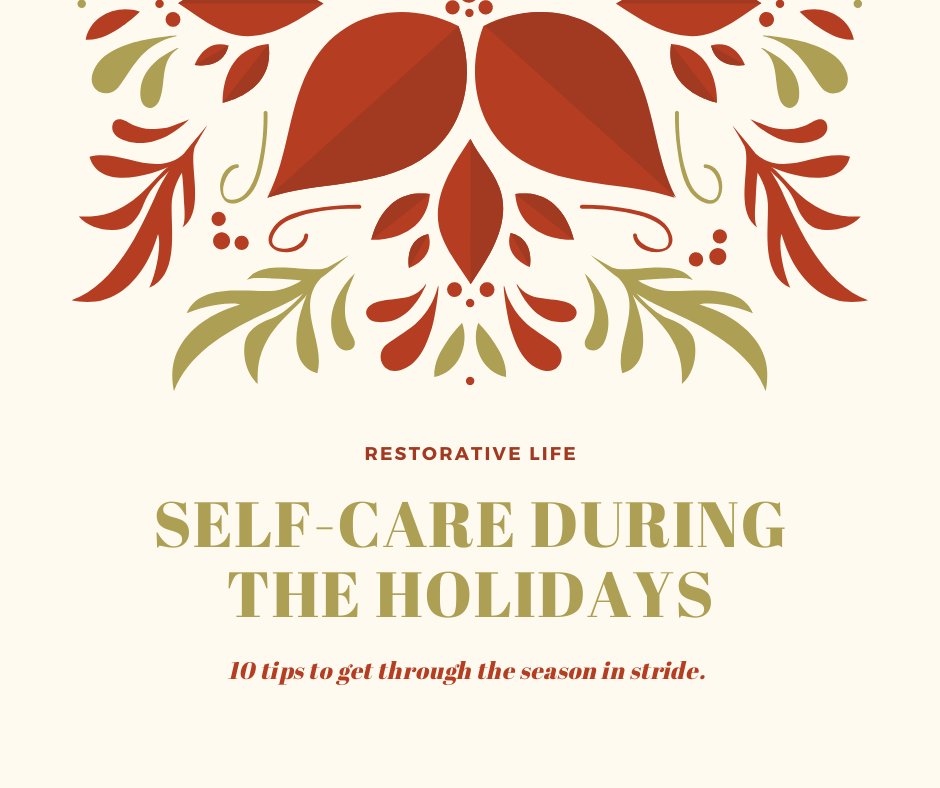
Self-Care during the Holidays

The best way to enjoy the hustle and bustle of the holiday season week after week is to make a commitment to self-care and restorative practices. This is true all year, but especially true when the calendar is suddenly bursting with holiday lunches office parties, family gatherings; not to mention the assortment of traditions that must be adhered to. While it’s exciting and festive, it can also all feel overwhelming.

Restorative practices are ‘filling up the tank’ on the journey through this festive time of year and shouldn’t be considered optional. We must make opportunities to restore our energy to continue at the same pace or we will end up running on an empty tank. When a car drives faster or greater distance, it requires more fuel and more maintenance to carry-on or end up stalled in a ditch. Self-care preferences will vary from person to person. The one caveat is that they won’t work if you don’t do them!

Here are some tips to get through the season in stride:

  1. Mark it on your calendar just like any other commitment. You wouldn’t plan a trip without booking a place to sleep each night and some dinner reservations along the way. Don’t go through the holidays without booking yourself some time for restorative practices.
  2. Identify what works best for you to restore your energy and vitality. Do you like to snuggle up with a mystery novel and a cup of tea? Enjoy a bubble bath? How about meditation, journaling, a massage, working on jigsaw puzzle, playing music, or watch favorite TV with a family member.
  3. Do one thing at a time. Studies show that multi-tasking doesn’t really work and ends up taxing our brains even more in the process of shifting back and forth from one talk to another. The best way to make progress is to go through the list, focus one just one item, and then continue on to the next item.
  4. Stay positive. When you notice that your mood is shifting from the positive enjoyment of the season to feeling burdened, frazzled, or frustrated, that’s a sign that it’s time to schedule in some self-care.
  5. Say “NO”. Know yourself. Does socializing energize you or drain you? If you have more introvert tendencies and are exhausted after parties and big get-togethers, then protect yourself. Plan to make a brief appearance or don’t go at all. Find ways to connect with friends and family in smaller more intimate situations.
  6. Make gratitude a daily practice. Studies show that those with regular gratitude practice are more content with their present life situation. We don’t actually need all that stuff that the retailers tell us that we need anyway. Discover contentment in the present moment.

    Don’t bail on the basics: Sleep, diet, movement, stress management are essential.
  7. SLEEP – There is a natural tendency this time of year to more sleep as the nights get longer and darkness comes earlier. Allow for adequate sleep and even naps when there are a lot of nighttime events that interfere quality sleep. (Click here to read more about sleep.)
  8.  DIET – Ok, this one is super extra tricky during the holidays, but it’s really important. The challenge is magnified because the traditional treats that we enjoy this time of year are specifically related to the comfort and coziness that we feel and often trigger memories of delight from our childhood. (Click here to read more about holiday traditions.) As much as possible, choose nutrient dense foods with plenty of proteins. Avoid too many sweets and highly processed foods. I can’t sugar coat the fact that sugar is the enemy for optimal health and vitality. Consumption of sugar and highly refined products leads to inflammation, so don’t overdo it. Furthermore, since they share the same receptors in the body, when sugar is consumed, it hijacks the vitamin C absorption, weakening the immune system. (Click here to read more about the importance of Vitamin C.) Seasonal fruits like mandarin oranges, figs, and dates are a great way to enjoy some sweetness without contributing to the mal effects of sugary treats.
  9. MOVEMENT – An exercise routine is often the first to go when the going gets tough and the weekly schedule is filled up. You may not be able to manage a one hour zumba class, but don’t ditch it all together. Park further away from the front door and enjoy a longer walk to get the shopping done. Walk around the block after dinner or go for an ice-skating session. Hit the dance floor at the holiday parties. When at home, stand and do some arm circles, twists, jumping jacks when watching tv. Get creative and find a way to squeeze in a few minutes here and there whenever possible. (Click here to read more about movement.)
  10. STRESS – We all know by now that stress is bad, but it’s actually REALLY bad. When we are under continual stress, vital body functions like digestion and restorative sleep are put on hold and don’t work properly. Stress simulates an emergency and in order to allow the ability jump up and flee if necessary. Stress drains electrolytes and nutrients in the body very rapidly.  If you remain under continued stress with deadlines and expectations of the season, be sure you are getting enough electrolytes to support all of the body systems. (Click here to read more about electrolytes and best sources.) Maintaining restorative practices each week will further support reduction of stress levels.

Finally, while you are out and about enjoying the tasty offerings of the seasons, remember that the first restaurants were for travelers. The word restaurant comes from the French word restaurer, which means to restore. It’s simple and thrilling to dive into the variety of activities celebrating the holiday season. It’s also important to remember to refuel and restore ourselves so we can continue to sparkle.


Vitamin C – We need plenty of it for optimal health

Vitamin C – a simple support towards optimal wellness

The season is changing and it’s time to dig out the sweaters and scarves. For many of us it’s also time to pay a little extra attention to bolstering our immune systems and ‘sweater weather’ and ‘cold & flu season’ tend to be synonymous. Most of us learned as kids that vitamin C is good for us when we’re sick. Let’s dig a little deeper. Turns out Vitamin C has the potential to prevent a lot of sickness.

We learned in history class that scores of seaman died of scurvy during the Age of Exploration brought on from vitamin C deficiency. Symptoms of the disease are described in detail in literature and provoked a great deal of suffering. Physical symptoms range from the breakouts on the skin to inflamed gums to the small arteries of the cardiovascular system and oxidative stress from lack of vitamin C leads to a complete breakdown of the central nervous system. The British Navy discovered that citrus fruits could prevent this suffering as early as 1753 which resulted in British sailors being called ‘Limeys’ because they nourished themselves with limes collected during their travels. It wasn’t until 1912 that vitamin C as we know it was discovered and then isolated more than a decade later in 1928. In 1937 a Nobel Prize was awarded for further research related to Vitamin C. The connection between Vitamin C and the common cold drew attention from 1970 and in the late 1980s an inverse relationship was shown between vitamin C and cancer. While most animals’ biology allows that they are able to produce their own vitamin C, humans, other primates, and guinea pigs depend on external sources.

Vitamin C is a water-soluble vitamin found in fruits and vegetables It exists in higher concentrations in citrus fruits, kiwis, bell peppers, and rosehips; however, many fruits, vegetables, and sea vegetables contain some vitamin C. Vitamin C is known to boost immunity and is also responsible for a vast array of cellular functions. It plays an important role in the synthesis of hormones and neurotransmitters. Vitamin C is responsible to combat fatigue, stimulate iron absorption, and maintain healthy gums. It is required for recovery of the muscular and skeletal systems including muscles, bones, tendons, and ligaments and to integrate collagen and vitamin E in skin cell recovery. Furthermore, it accelerates wound recovery and plays an important role in the metabolism of bile and acids which effects blood cholesterol levels and gallstones. Studies have shown that adequate vitamin C may play a role in stroke prevention, decrease risk of developing diabetes, and protect against memory loss and cognitive decline. There is virtually no system in the body that is not supported by vitamin C. For optimal health and wellness, vitamin C is an important piece of the puzzle regardless of specific goals and conditions.

The body is only able to store a certain amount of vitamin C at a one time and it is continually being used while as a part of functions described in the previous paragraph. This metabolism happens at various rates depending on lifestyle circumstances, specifically levels of stress. Many of us already know that increased consumption of vitamin C accelerates recovery and healing from wounds and viruses. Interestingly, Dr. Nasha Winters and Jess Higgins Kelley share in The Metabolic Approach to Cancer that vitamin C is considered the “most important vitamin involved in adrenal metabolism. The more cortisol is produced, the more vitamin C is used by the body, which is why people often get sick after a stressful event.” They advise that vitamin C be consumed several times a day during periods of high stress. This suggests that anyone with unusual amounts of stress in their lives due to parenthood, sports training, job expectations, financial concerns, grief, discontentment, and so much more can lead to vitamin C depletion and physical and mental health consequences.

Upon further investigation, Winters and Kelley explore biochemical pathway of vitamin C. Most recent research has illustrated that Vitamin C and sugar share a common pathway in the body. Therefore, when there is too much sugar being consumed in relation to vitamin C, the vitamin C may not have the opportunity to be absorbed because the sugar will have hijacked that pathway. The conclude that “sugar essentially negates the immune benefit of vitamin C.”

This causes me to wonder if it’s really ‘sweater weather’ and the change in climate that triggers the parallel ‘cold&flu’ season. Is it possible that we are more stressed once summer vacation has concluded and we are back into a more rigorous routine? Instead of the freedom and fresh bounty of summer, we become relegated to packaged snacks while on the go and in the office. How many of us have found ourselves under the weather following indulgent holidays like Halloween, Thanksgiving and Christmas? Imagine the brutal combination of stress and holiday treats and lack of sleep for many students and workers facing deadlines before a holiday.

Stay healthy and keep the immune system strong with vitamin C this season by consuming plenty of fresh fruits and vegetables and limiting intake of sugar and other processed foods. The fresher the produce the greater amount of nutrition it will provide.

A simple Google search will link to lots of interesting information about vitamin C. the following books and articles provide information about Vitamin C and other essential nutrients:
-Deep Nutrition by Dr. Catherine Shanahan
-The Metabolic Approach to Cancer by Dr. Nasha Winters and Jess Higgins Kelley
-https://www.bbc.co.uk/news/uk-england-37320399
-https://www.sciencelearn.org.nz/resources/1690-vitamin-c-history-timeline

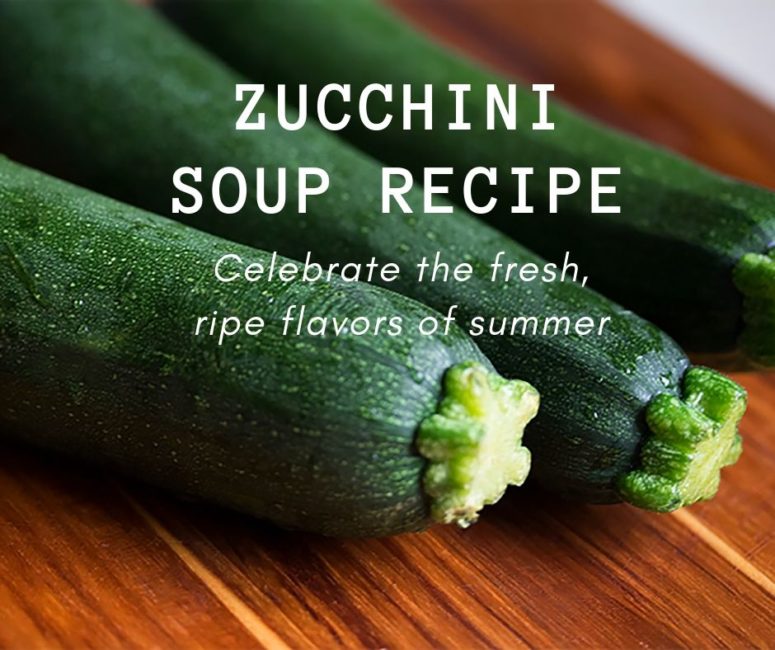
Zucchini Soup Recipe

Summer is here! Time to hit the local farmer’s market and fill up on the bounty of the season. Organic, freshly harvested fruits and vegetables are at the peak of flavor and nutrition!

Celebrate the ripe summer produce with this quick and tasty soup. This recipe was shared with me by a friend in San Francisco nearly two decades ago and remains a family favorite. It is easily modified and customized by adding shallots, spinach, kale, leeks, tomatoes, whatever you want to experiment with and have on hand! It can be served hot, room temperature, or chilled.

Zucchini Soup Recipe

Ingredients:
Olive oil
1 small onion, chopped
2 garlic cloves, chopped
1 medium carrot, chopped
2-3 medium sized zucchini (courgettes), chopped into large pieces
1 Liter Vegetable Broth
1 1/2 Tablespoons pine nuts, toasted

2 Tablespoons fresh Basil, coarsely chopped
Freshly ground pepper
2-3 Tablespoons grated Parmesan Cheese (optional)

Salt and Pepper to taste.

Instructions:

  1. Sauté onion in saucepan with olive oil for 3-5 minutes until it starts to become translucent.
  2. Add the garlic and carrots. Sauté about 3 more minutes.
  3. Add the zucchini and stir.
  4. Add the vegetable broth until slightly covering all the vegetables.
  5. Simmer 12-15 minutes until the zucchini begins to soften.
  6. Remove from heat and let cool for a few minutes.
  7. In batches, add the mixture to a blender and puree together with the pine nuts, basil, parmesan cheese and freshly ground pepper.
  8. Adjust consistency by adding more broth or water.
  9. Once smooth, return to saucepan. Add salt to taste and heat to desired temperature for serving.
  10. Garnish with olive oil and fresh basil.

Share with family and friends and enjoy!


Eating a Banana Helps – Electrolytes are essential

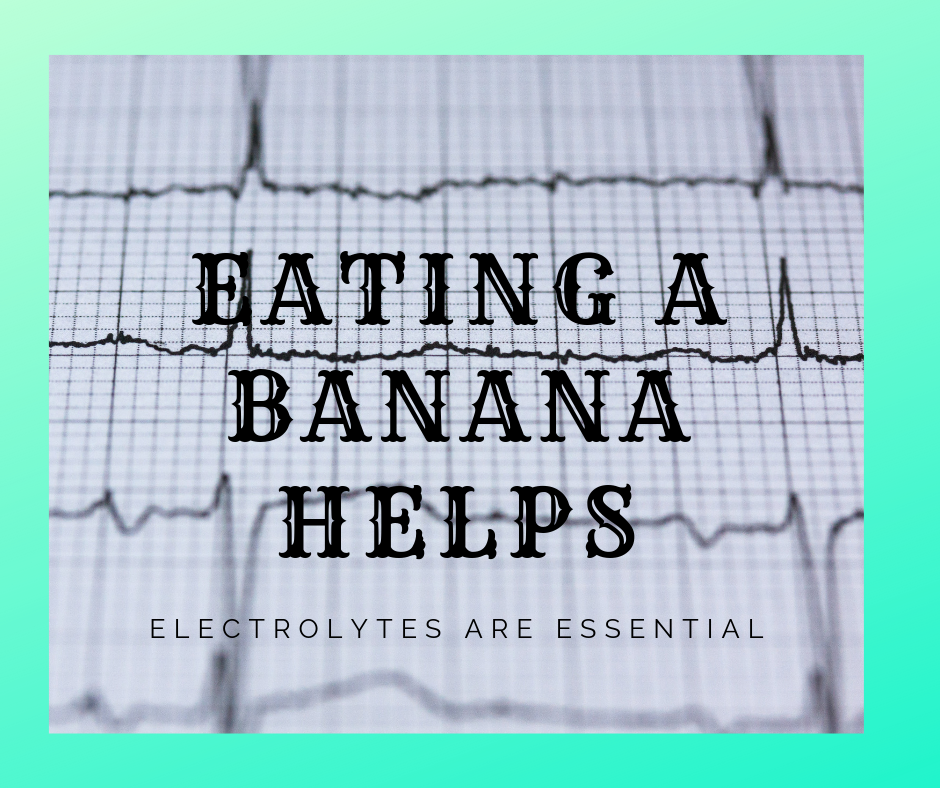
When I was younger I experienced rapid heart palpitations that seemed to be triggered spontaneously and without rhyme or reason. This happened for several years starting as a teen. Everything would be normal, then, suddenly my heart would be racing up to 200 beats per minute for as long as two hours. I went to the doctor and had several tests done. I even had to do an overnight EKG with a cassette recorder strapped to my body in an attempt to record an incident. Unfortunately, nothing happened during the recording. In the end, I was told that nothing was wrong, sometimes this just happens, but people have reported that “eating a banana helps”.

I now understand clearly that I was deficient in electrolytes, causing my heart to beat erratically. The doctor was right and eating bananas did help because they are a dense source of potassium, but he didn’t seem to have any idea why. Other foods can help too, and the foods that I craved and preferred during that time were all high in potassium. My body intuitively understood what it needed.

Electrolytes are salts and minerals found in the blood that conduct electrical impulses in the body including sodium, potassium, magnesium, chloride, and calcium. They are essential mirconutrients for a number of bodily functions. The circulatory system is sometimes even be referred to as the heart’s electrical system. When someone’s heart stops, we use electrical stimulation to start it up again. This stuff is important!

Each electrolyte has a particular role and books have been written about them individually, so here’s a brief overview. In general, fruits and vegetables in the diet are great sources of electrolytes.

Sodium or Salt is so important historically that people were once paid in salt, that’s the origin of the word salary. Sea salt and Himalayan salt have the highest mineral content. Salt controls body fluids retention, blood pressure, and muscle functions. Sodium also helps to balance other electrolytes in the body. If you drink too much water without enough sodium/salt, you will potentially flush out important minerals.

Potassium plays an important role in cardiac conduction, bone health, and muscle contractions. Low potassium can be easily remedied by adding potassium rich foods to the diet. Best food sources of potassium are bananas, squash, papaya, leafy greens, oranges, melon, prunes, dates, avocado, kiwi, and coconut water.

Magnesium contributes to nerve and muscle function, supports healthy blood sugar levels, contributes to optimal immune function, helps keep the heartbeat steady, and allows muscles to relax. It can be found in dark chocolate, pumpkin seeds, legumes, nuts, and some fatty fish. Epsom salt baths are also a great source of magnesium absorbed through the skin.

Calcium, as many of us already know, is essential for strong bones and teeth, managing nerve impulses, influences muscle contractions, and plays a role in preventing blood clots.

Chloride helps maintain fluid balance and pH balance in the blood and cells of the body. It is found in sea salt, sodium chloride, and in higher concentrations in seaweed, rye, tomatoes, lettuce, celery, and olives.

Phosphate participates in bone and teeth repair, nerve functions, and healthy muscle contractions. It can be found in high protein products such as meat and dairy and also nuts and whole grains.

In order for electrolytes to do their job, hydration is critical. Be sure to drink plenty of water throughout the day, especially during the hot summer months. Spring water is a great choice because it has it’s own mineral content including important electrolytes. The label on the bottle with show the mineral compositions.

Low levels of potassium, magnesium, and calcium often lead to symptoms and imbalances. It’s important to recognize that the electrolytes need to be balanced and we need all of them. This is especially true of calcium and magnesium in relation to each other and can also be true between sodium and potassium. For example, if there’s too much calcium in relation to magnesium, the muscles will have strong contractions, but have less ability to relax which unknowingly puts us in a continual stress response. This is why it feels so good to soak in an epsom salt bath to relieve sore muscles. Excess calcium can also lead to calcifications in the body, which can occur as fibroids, kidney stones, or benign cysts or tumors.

Symptoms of electrolyte imbalance can include and are not limited to:

  • Rapid or irregular heartbeat
  • Nausea
  • Lethargy
  • Fluid retention
  • Chest pains
  • Muscle cramps
  • Headache
  • Fatigue
  • Weakness

There are specific dietary causes of electrolyte imbalance, and there are also many lifestyle and general health factors that contribute to electrolyte depletion. If you have a lot of stress for example, you will benefit from paying attention to electrolyte intake and replenishing them frequently.

Electrolytes depletion can come from:

  • Stress
  • Low-level emotions such as shame, guilt, apathy, fear, anger, grief
  • Intense physical activity
  • Drinking alcohol
  • Poor diet high in processed foods
  • Antibiotics
  • Illness
  • Sweating
  • Vomiting or diarrhea
  • Constipation
  • Eating disorders

If you suspect you may have an electrolyte imbalance, a simple blood test will inform of any deficiencies. If you have severe symptoms and concerns, it would be advisable to discuss this with your doctor. In my case, when my heart would start racing and I followed the informal advice of the doctor to a banana, I would get immediate feedback as my heartbeat regulated quite quickly, although there are plenty of other options to choose from.

Electrolytes are essential for the body’s optimal function and are continually being depleted. Replenish these important nutrients by eating lots of fruits and vegetables, drinking plenty of water, and using high quality salt. Avoid processed foods and commercial electrolyte drinks that are highly processed and full of sugar. Balanced electrolytes will contribute to maintaining optimal bodily functions and attaining good overall health.


Intermittent Fasting (IF) for Health and Vitality

What you need to know about Intermittent Fasting

IF, or Intermittent Fasting, is a popular practice these days and with good reason. In case you are new to the game here, intermittent fasting is extending the period of time between meals each day. So instead of eating during a 12-hour window, from 7 am to 7pm for example, the total hours of eating during the day is reduced to 8 hours or less. For most people this means skipping breakfast and eating brunch or lunch later in the morning or midday.

What are the benefits of IF?

There are a multitude of known benefits to gain from practicing IF on a regular basis and more studies are being published each week. Some highlights include:

  • IF promotes caloric efficiency leading to enhanced cellular repair. Too many calories too often accelerate the aging process due to constant and excessive caloric energy needing to be processed. This leaves little to no time for digestive, hormone, and other systems to regulate and repair.
  • IF stabilized insulin levels and can be a tool for preventing and even reserving T2 Diabetes.
  • IF removes waste material from the cells making it great for detoxing.
  • IF gives you more energy leading to more productivity!
  • IF promotes brain health. When the body isn’t occupied with digestion, more resources can be sent to the brain leading to improved focus, better memory, and increased clarity and efficiency.
  • IF reduces sugar craving and hunger sensations. This may not happen instantaneously, but after practicing over time, there will be noticeable changes.
  • IF and longer fasting is being used as a part of cancer treatments as studies show it to slow tumor growth and limits the spread of cancer
  • IF is being studied for protecting against Alzheimer’s Disease and Dementia
  • IF reduces the risk of obesity promotes healthy weight maintenance.

Isn’t breakfast the most important meal of the day?

This is a tricky one because it’s been so ingrained in our collective psyches that breakfast if the most important meal of the day. That is the power of propaganda my friends. Historically, it was always a common practice to do work upon waking and eat the first meal later in the morning or even midday. This began to change during the era of industrialization when people would be away from home all day and would need to consider meals on the go or kept to a strict schedule.

The real culprit of our flawed thinking traces back to cereal companies in the early 1900s. They wanted to increase sales of the newly available processed food and the marketing began encouraging the masses to consume cereals for breakfast (and even for lunch) because “breakfast is the most important meal of the day.” This article published in the Daily Telegraph in August 2018 explains some of the history of breakfasts and how the Kellogg brothers and lifestyle changes stemming from industrialization changed our collective perceptions of its role in our nourishment.

What time should I eat my first meal?

The word breakfast comes from the two parts, Break + fast. Whatever time is the first time that you eat in the day is when you are breaking the fast from the night before. While it’s more common to practice intermittent fasting with a shortened eating window lasting from midday into the evening, it’s also possible to eat from morning to afternoon, as in from 8am-4pm and then skip dinner. It really depends on personal preference and scheduling considerations as to whether it’s easier to skip breakfast or dinner.

How often should I practice Intermittent Fasting?

Some people have great success practicing IF every day and become accustomed to increased energy levels, easily maintained weight regulation, and reduced cravings. For others it works best to practice IF 1-2 times per week. It is recommended to start moderately and build up as your body becomes more used to it.

Additional benefits of IF

Since IF basically means skipping a meal or two, it’s a great economical option for improving overall health. No need to buy expensive supplements or fancy ingredients, simply don’t eat. You’ll get all the health benefits and spend less money.

Furthermore, Looking at the list of known benefits, there’s no reason that everyone shouldn’t be doing IF at least on occasion to support health and vitality. At the end of the day, it’s a very low-risk experiment. Head out in the morning with either a packed meal or a plan to grab food whenever you get hungry. Since everyone is a little different you’ll need to try it to see how it works best for you and your lifestyle and routines.

Where can I get more information on Intermittent Fasting?

IF is so popular that a will get a full download from a simple Google Search and there are even Facebook groups dedicated to Intermittent Fasting. Dr. Jason Fung is considered to be an expert on Intermittent Fasting. He has written several books and articles and also has videos available online to learn more.

When should I start Intermittent Fasting?

Start anytime, but I suggest starting on day that you are very busy and occupied with plenty of tasks. It’s much easier not to think about eating when there is a lot going on and many distractions.