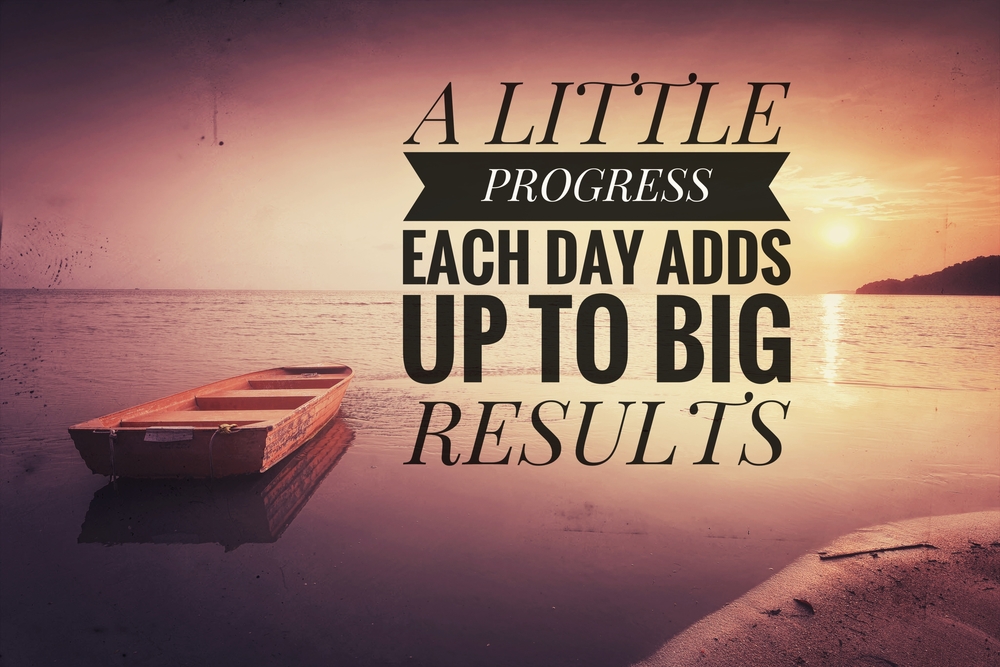
Just one day at a time

One Day at a Time – What’s your mantra?
(3rd in series of working towards achieving New Year’s resolutions. Future additions to this series will be posted the last week of each month as we work our way through 2020 all together.)

We have come to the end of January and moving right along into February and beyond.

How’s it going? Are you on track for your goal? Great!

Off track? Then it’s time to get back on. The great thing is that every time we fall, we have the opportunity to get back up again.

A few years ago, I wanted to improve my skiing abilities and I took a ski lesson. I ended up on a slope that was beyond my level. I became frozen in fear. Steep, off-piste, trees, powder, and a long way to the bottom, everything scary. I became filled with doubt; how would I manage? My instructor sensed my hesitation and the others in the group had already begun to tackle the challenge. She asked me, “Can you do 3 turns?” I thought about it, assessed the terrain immediately in front of me, and replied, “Ok, I think I can manage that.” After successfully completing those three turns, she said, “Now do three more.” And that’s how I did it, three turns at a time. Once I recovered from a fall, I got right back to it. Three turns, then three more turns. I kept that mantra with me for the rest of the day and throughout the week. Then, interestingly and to my great satisfaction, a few days later, I no longer needed that mantra and became more comfortable on the more advanced terrain.

I was able to overcome what felt insurmountable because a well-knowing instructor helped me to break it down into chunks that were possible. It is said that anxiety is rooted in feelings about the future. Most goals are too big to deal with all at once, they have to be made into manageable pieces. We must proceed one day, one hour, one minute, on step, three turns at a time all while facing in direction of the goal and moving forward in confidence. My friend Sarah Miller Histand, an online trainer from Anchorage, Alaska, encourages participants with the mantra Moving is winning. No matter the pace; when you are moving you are winning. Because what’s the alternative? Not moving; staying the same place you have been and making no progress. Sometimes, we have slow way down until we feel more comfortable and are more able to stay on course. A baby starts to stand, then toddle, then walk, and finally accelerate to run. Many times it’s simply the case of wanting too much too fast. Whether you are learning to play a musical instrument, starting a fitness routine, learning a new language, or consuming less sugar we will make progress by showing up every day, even the days when it’s clumsy and messy and we miss the mark. Remember that moving is winning.

In the book The Slight Edge, Jeff Olsen discusses how it comes down to the small choices that we make each day. We can choose to work out or not work out in one day and in that singular moment it won’t really change anything. But remember that a habit is established by doing the same thing repeatedly over and over again. So each day we have the opportunity to establish foundations for “good” or “bad” habits. Really, it’s just a gift to be able to pay attention and to hit the reset button every single day if necessary.

Olsen also elaborates on the power of time. We live in a world that values speed at all costs. Our lives are filled with hi-speed trains, wifi, express delivery, quick fixes, rapid recovery, accelerated programs, non-stop action, and it goes on and on. He uses the geological creation of the Grand Canyon as the ultimate example of the potential of time in one of his many success equations:

Consistently repeated daily actions + time = inconquerable results

It’s true. If you do the same thing every day, over time, there will be some results.

Olsen suggests to aim for a 1% improvement each day from the day before towards a specific outcome in a targeted area of your life. At the end of the week, you can expect a 7% improvement from where you started. Then the next week you start again from that new place and with the potential to increase exponentially in a way similar to compounding interest.

One month down, and 11 more to go in this big and exciting year 2020. It’s a great time to evaluate what has worked and what hasn’t so far. What’s you’re mantra? What are you aiming for this week to get closer to the goal?

Stay focused. Time is on your side and you are on your way one day and one step at a time.
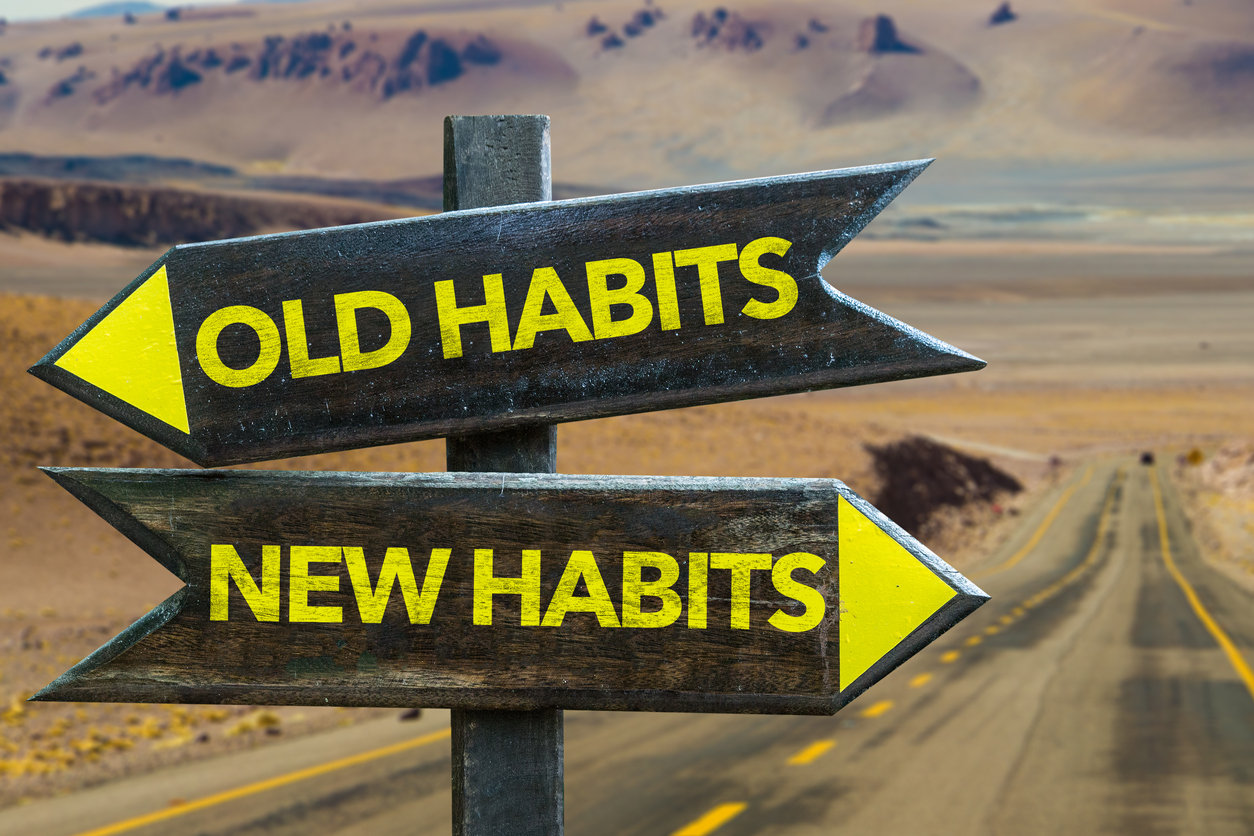


It starts with a habit…

“We are creatures of habit, and leveraging our habitual tendencies is one of the best ways to develop discipline.”  -Ernest Cadorin, The Arrows of Zen

Establishing a new habit or shifting a current habit is a great place to start when making changes to better our lives, but it is so much harder that is seems it should be. Why is it such a challenge? The reason is embedded in the definition itself.

A habit is defined as a “routine behaviors done on a regular basis. They are recurrent and often unconscious patterns of behavior acquired through frequent repetition”.

Our habits started off as learning something new, like driving a car. Eventually, we do it with so often that it happens on autopilot. This capacity allows the brain to focus on something else, which is mostly a good thing. The problem is that is that when have developed a habit that we no longer want, like smoking or eating sweets in the afternoon or getting angry too quickly, then it takes a lot of conscious effort to change it. We have to really pay attention.

A great deal of each day passes according to our habits. Checking our phone for messages, brushing our teeth, getting dressed, putting a spoonful of sugar in the coffee, the route to work, ordering fries with the burger, browsing the news when we should be doing research online, the path through the supermarket, hanging our jacket when we get home, pouring a glass of wine while preparing dinner, and much much more.

Any of these surprise you? Pouring a glass of wine is a habit? Yep, you bet it is. After much repetition, it’s become part of your routine; it’s done without even thinking. When it comes to new habits, you are developing new neuropathways in your brain. Fortunately, you can use what it already there to assist in the shift.

In his book, The Power of Habit, Charles Duhigg describes a Habit Loop. Once a habit has been identified, it can be broken down into a cue, a routine, and a reward.

CUE–>Routine–>Reward

For example, if you have a routine of getting a brownie for an afternoon pick-me up; then the cue is that it’s time for a break from work; the routine is going to the snack bar to buy and eat the brownie; and the reward is the dopamine hit from the sugar in the brownie. In order to successful change the habit, you must interfere with this loop starting with the cue. What if at the indicated break time you took a walk instead and get the reward of some fresh air? You will also need to assess if you are actually hungry at this time and be prepared with a healthy snack like an apple or some nuts to have at your desk upon return from the walk.

What are your habit loops and how will you disrupt them? Here are a few examples: Put your gym bag at the front door so you remember to take it with you for the day; Substitute herbal tea or sparkling water for a glass of wine on weeknights; Instead of watching tv or Netflix after dinner, read a book or take a bath in improve sleep routine; Instead of buying coffee, prepare it at home and add the money to a jar each morning.

Interestingly, a habit is also defined as “a distinctive set of clothing often worn by a religious order”. While it has historically been used in literal context, it can be used figuratively as well. In many of his books including Breaking the Habit of Being Yourself and Evolve Your Mind: The Science of Changing Your Mind, Dr. Joe Dispenza explains how simple things in our daily lives subtlety evolve into major parts of our lives, even a personality can have developed as a habit. Certain behaviors and emotions move into a general mode of operation that happen unconsciously. Fortunately, we are able to change this and in the book he describes how to become the new person you desire to be. Including visualizations and meditations, essentially, you dress or habit yourself as the new person you are becoming and that itself sets into motion the process of change.

As we endeavor to change established routines and habits, we must become conscious. That means paying attention to trigger and to the habit loops that have become entrenched in our daily lives. Change the routine or the reward in the habit loop and you will change the cycle. Studies show that habits take a minimum of twenty-one days to integrate and feel more or less routine. To move into automatic mode, it will require upwards of sixty-six to over two hundred days. What are you shifting this year? Wake up every day and remind yourself, dress yourself it that new habit.

“If you do not pour water on your plant, what will happen? It will slowly wither and die. Our habits will also slowly wither and die away if we do not give them an opportunity to manifest. You need not fight to stop a habit. Just don’t give it an opportunity to repeat itself. (67)”
-Sri S. Satchidananda, The Yoga Sutras


New Year, BEST YOU!

Happy New Year! I hope 2020 is off to a good start for you. In July 2018 I wrote a blog post about titled, “How good are you at being yourself?” Feel free to reference that when focusing on and revising what you aim to accomplish in 2020. In terms of New Year’s Resolutions and the popular expression New Year, New You, I believe it’s important to come into resolutions from a place of acceptance and desire to make incremental improvements working towards a goal, rather than the idea that we aren’t good enough until we achieve this other potential version of ourselves. For the next few weeks, the posts will focus on how to work through challenges that arise as we are trying to make various shifts in our lives, often related to health, wellness, and vitality.

New Year, BEST You!

“If you only walk on sunny days, you will never reach your destination.”
-Paolo Coelho

We make New Year’s resolutions in order to become the best version of ourselves; a new and improved version. We begin January with a vision and declare our hopes and dreams for the New Year.

The top resolutions haven’t really changed much in the last 20 years. They include: lose weight, be more organized, save money, get in shape, quit smoking, eat a healthier diet, learn a new skill or hobby, read more, spend more time with family and friends.

With such aspiration and optimism why do we fail to achieve up to 90% of resolutions and end up making the same one again next year? Most of them have already been abandoned by early to mid-February. What about the rest of the year? The resolution was made for a new year, not a new month. Therein lies the problem. We are expecting to accomplish something big and transformative in too little time. We throw in the towel and declare we have failed even when we are making progress. Ever heard of someone bail on a new diet after successfully losing six pounds just for having eaten one piece of cake? Or quit a new exercise routine because of a business trip or a sick baby during one week?

Would you behave this way with anything else in your life? Imagine some examples: A 10-mile hike that’s meant to take all day; not there by noon, so why bother? Baking a cake; got tired of waiting for it to bake so take it out of the oven and declare that the recipe didn’t work. How about a baby learning to walk? Will she give up after the first wobbly step and fall to the ground? There are infinite examples here and while they sound completely ridiculous, that’s the tendency when it comes to New Year’s resolutions.

Here and now in 2020, I challenge you to change this pattern. How many years have you made a similar resolution to the one you made this year? How’s going so far? Taking the whole year into account, on January 18, you should expect to have reached five percent (5%). Congratulations! If you make it until February 1, that will represent nine percent (9%). Well done. So far, so good. But if you stop there, it will be another fail. If you are a fan of the popular for eighty percent (80%) rule, then stick with it until October 18. Or continue to include the whole year, knowing that the remaining twenty percent (20%) accounts for 73 days of the year which averages to about 6 days per month, and definitely allows for vacations and celebrations and plain old lousy days. That doesn’t sound so impossible, right? It’s more like a marathon than a sprint. Resolutions seek transformation and require a commitment, the long haul.

How important is your New Year’s resolution to you? Is it just a January pastime? Are you willing to work on it the entire year? What will you when you inevitably fall?

We fail at New Year’s resolutions because we don’t allow ourselves to fall.

Learn from those falls and carry on. If those resolutions don’t really matter to you, then throw in the towel and get on with your regular routines. However, If you want to achieve success with those goals and move closer to being the best most vital version of yourself, know that you will do this by achieving one percent at a time. I know you can do it!

“Success is stumbling from failure to failure with no loss of enthusiasm.”
― Winston S. Churchill

Self-Care during the Holidays

The best way to enjoy the hustle and bustle of the holiday season week after week is to make a commitment to self-care and restorative practices. This is true all year, but especially true when the calendar is suddenly bursting with holiday lunches office parties, family gatherings; not to mention the assortment of traditions that must be adhered to. While it’s exciting and festive, it can also all feel overwhelming.

Restorative practices are ‘filling up the tank’ on the journey through this festive time of year and shouldn’t be considered optional. We must make opportunities to restore our energy to continue at the same pace or we will end up running on an empty tank. When a car drives faster or greater distance, it requires more fuel and more maintenance to carry-on or end up stalled in a ditch. Self-care preferences will vary from person to person. The one caveat is that they won’t work if you don’t do them!

Here are some tips to get through the season in stride:

  1. Mark it on your calendar just like any other commitment. You wouldn’t plan a trip without booking a place to sleep each night and some dinner reservations along the way. Don’t go through the holidays without booking yourself some time for restorative practices.
  2. Identify what works best for you to restore your energy and vitality. Do you like to snuggle up with a mystery novel and a cup of tea? Enjoy a bubble bath? How about meditation, journaling, a massage, working on jigsaw puzzle, playing music, or watch favorite TV with a family member.
  3. Do one thing at a time. Studies show that multi-tasking doesn’t really work and ends up taxing our brains even more in the process of shifting back and forth from one talk to another. The best way to make progress is to go through the list, focus one just one item, and then continue on to the next item.
  4. Stay positive. When you notice that your mood is shifting from the positive enjoyment of the season to feeling burdened, frazzled, or frustrated, that’s a sign that it’s time to schedule in some self-care.
  5. Say “NO”. Know yourself. Does socializing energize you or drain you? If you have more introvert tendencies and are exhausted after parties and big get-togethers, then protect yourself. Plan to make a brief appearance or don’t go at all. Find ways to connect with friends and family in smaller more intimate situations.
  6. Make gratitude a daily practice. Studies show that those with regular gratitude practice are more content with their present life situation. We don’t actually need all that stuff that the retailers tell us that we need anyway. Discover contentment in the present moment.

    Don’t bail on the basics: Sleep, diet, movement, stress management are essential.
  7. SLEEP – There is a natural tendency this time of year to more sleep as the nights get longer and darkness comes earlier. Allow for adequate sleep and even naps when there are a lot of nighttime events that interfere quality sleep. (Click here to read more about sleep.)
  8.  DIET – Ok, this one is super extra tricky during the holidays, but it’s really important. The challenge is magnified because the traditional treats that we enjoy this time of year are specifically related to the comfort and coziness that we feel and often trigger memories of delight from our childhood. (Click here to read more about holiday traditions.) As much as possible, choose nutrient dense foods with plenty of proteins. Avoid too many sweets and highly processed foods. I can’t sugar coat the fact that sugar is the enemy for optimal health and vitality. Consumption of sugar and highly refined products leads to inflammation, so don’t overdo it. Furthermore, since they share the same receptors in the body, when sugar is consumed, it hijacks the vitamin C absorption, weakening the immune system. (Click here to read more about the importance of Vitamin C.) Seasonal fruits like mandarin oranges, figs, and dates are a great way to enjoy some sweetness without contributing to the mal effects of sugary treats.
  9. MOVEMENT – An exercise routine is often the first to go when the going gets tough and the weekly schedule is filled up. You may not be able to manage a one hour zumba class, but don’t ditch it all together. Park further away from the front door and enjoy a longer walk to get the shopping done. Walk around the block after dinner or go for an ice-skating session. Hit the dance floor at the holiday parties. When at home, stand and do some arm circles, twists, jumping jacks when watching tv. Get creative and find a way to squeeze in a few minutes here and there whenever possible. (Click here to read more about movement.)
  10. STRESS – We all know by now that stress is bad, but it’s actually REALLY bad. When we are under continual stress, vital body functions like digestion and restorative sleep are put on hold and don’t work properly. Stress simulates an emergency and in order to allow the ability jump up and flee if necessary. Stress drains electrolytes and nutrients in the body very rapidly.  If you remain under continued stress with deadlines and expectations of the season, be sure you are getting enough electrolytes to support all of the body systems. (Click here to read more about electrolytes and best sources.) Maintaining restorative practices each week will further support reduction of stress levels.

Finally, while you are out and about enjoying the tasty offerings of the seasons, remember that the first restaurants were for travelers. The word restaurant comes from the French word restaurer, which means to restore. It’s simple and thrilling to dive into the variety of activities celebrating the holiday season. It’s also important to remember to refuel and restore ourselves so we can continue to sparkle.


Top 10 Essential Oils for the Summer

Summer is quickly moving into full swing with vacations and day trips and summer camps and family gatherings and so much more. Here’s a quick reference of useful essential oils for the warm, active months. Everyone will have their own preferences and these are the top oils that I make sure to pack in my luggage when we are off on summer jaunts. Of course, there are so many great oils to use during the summer, but like everything else, we have to choose carefully and pack the ones that get our families through the basics each day.

Be sure you to medicinal grade oils to get the desired results. Pure, medicinal quality essential oils are complex molecules that carry a great potential for healing.

Any serious medical condition should be treated by a doctor. The oils suggested in the following list have been researched and are commonly used in a variety of healing traditions around the world.

# 1 – On Guard Immunity Blend

This useful blend supports strong immunity, which is essential when traveling on airplanes, swimming in public pools, staying up late, and maybe eating too many treats.

Rub on the bottom of feet in the morning for an immunity boost for the day. Can also diffuse or take 1-2 drops in a small glass of water.

On Guard also comes in as a convenient and non-toxic hand sanitizer and tasty toothpaste.

#2 – Peppermint

Dilute with a carrier oil to promote cooling of the body when it gets too hot outside.

Inhale and rub on the bottom of feet first thing in the morning to minimize jetlag.

Inhale for a burst of energy and to promote alertness to get through the long summer days.

#3 – Lavender

Rub on the temples or back of the neck to promote restful sleep.

Diffuse in a room for calming any time of day.

Use on mosquito bites to decrease swelling and prevent infection.

Dilute with a carrier oil to provide relief from sunburn.

#4 – Melaleuca/Tea Tree

This is a powerful oil containing anti-viral, anti-bacterial, and anti-fungal properties. Uses include for sunburns, exposure to nail fungus during pedicures, natural mild insect repellent, and antiseptic for abrasions.

Dilute with carrier oil and be careful not to apply full strength oil to open wounds.

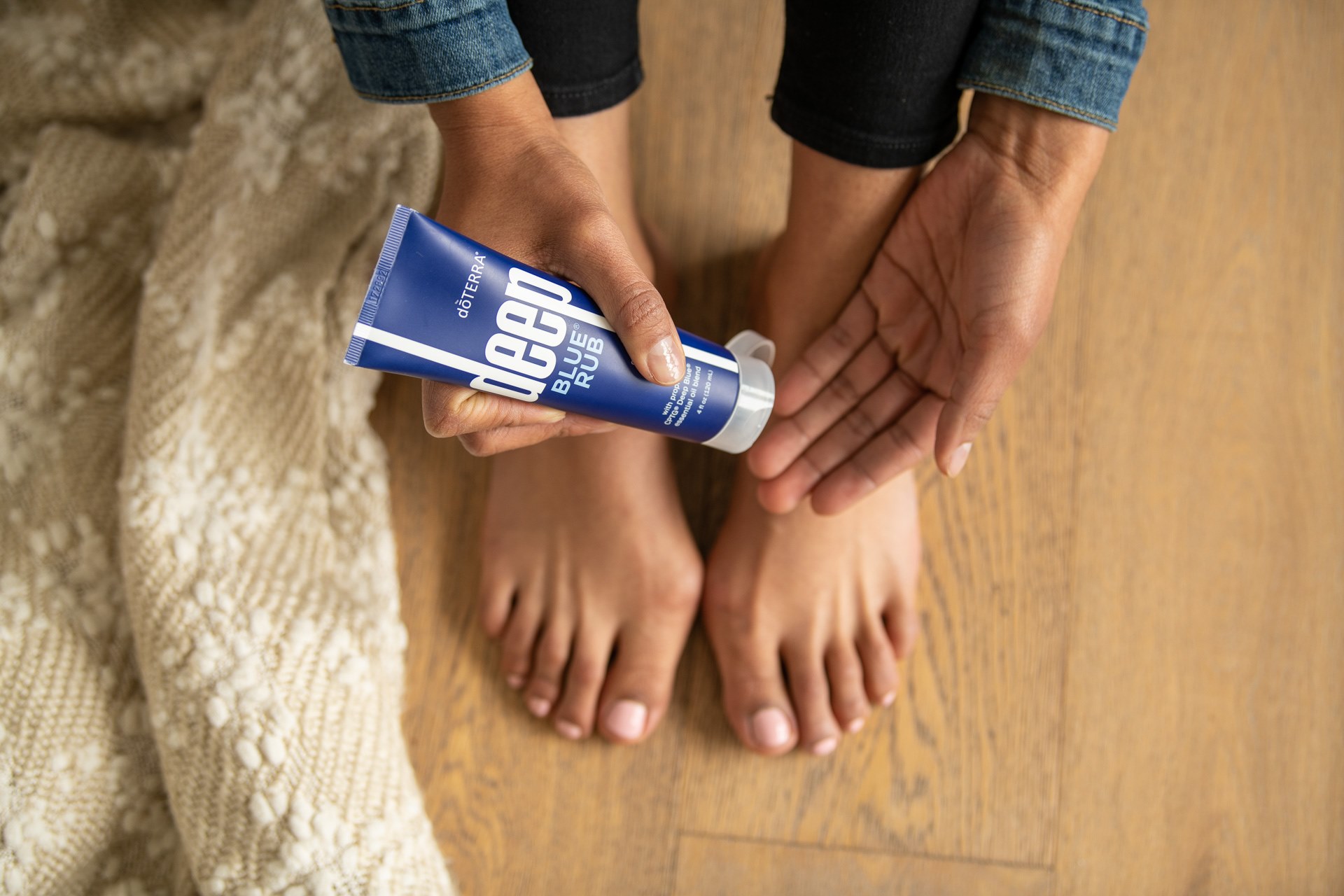
#5 – Deep Blue Rub – soothing blend

This blend includes camphor, wintergreen, and helichrysum and other powerful oils to relieve muscles aches and pains

What would summer be without sore muscles after hiking, swimming, kayaking, playing baseball, volleyball, surfing, walking around cities and through metro tunnels, and so many other activities?

Apply directly to areas of muscle and joint discomfort. This is also a great blend just to rub on tired feet at the end of the day.

#6 – Serenity Restful Blend

This blend smells so good instantly makes me happy. It promotes relaxation and deep restorative sleep. Add a couple of drops to a cotton balls and put it under the pillow. Add a few drops to a bedtime bath or diffuse in the bedroom in the evening. This restful blend can be especially helpful to help the kiddos unwind when they’ve had a very stimulating day. 

#7 – Balance Grounding Blend

This earthy blend is useful for managing stress levels. It can come in handy when feeling a sense of overwhelm and it helps to bring harmony to the body and the mind. In my experience this support is most welcome when sharing close quarters in a hotel, having houseguests, or being a houseguest.

Rub on wrists and inhale, rub on bottom of feet, or diffuse in a room.

#8 – DigestZen Digestion Blend

I always keep this one on hand for any sort of tummy issues. Supports digestions and relieves discomfort from nausea, gas, diarrhea, constipation, and even motion sickness. DigestZen also controls digestion and other symptoms that occur after eating rich foods and drinking alcoholic or sugary drinks.

Rub directly on the stomach area and it absorbs through the skin. Alternately, take 1-2 drops with a small glass (I use a shot glass) of water.

#9 – Breathe Respiratory Blend

This blend combines eucalyptus, laurel, cardamom, peppermint and more to promote open airways and provide relief from allergies and asthma.

Inhale the oil directly or rub the oil onto the chest area.

Add a couple drops to a bath or shower.

#10 – Frankincense

The King of Oils is used to superpower anything when you need an extra boost. Add to deep blue rub for extra muscle support; combine with serenity blend to boost sleep and relaxation; use together with melaleuca to counter bacterial, viral and fungal infections. Mix with lavender for extra sunburn support.

Frankincense promotes healing on a cellular level for physical and mental challenges and encourages peace and calm when energies are overly heightened. Rub into the temples of on the neck and enjoy the feeling of being alive.

Wishing you all healthy, safe, and enjoyable summer vacation filled with new adventures and great connections with family and friends.

For more information about the essential oils products that I use, go to https://www.mydoterra.com/sheilaroconnor/.


Eating a Banana Helps – Electrolytes are essential

When I was younger I experienced rapid heart palpitations that seemed to be triggered spontaneously and without rhyme or reason. This happened for several years starting as a teen. Everything would be normal, then, suddenly my heart would be racing up to 200 beats per minute for as long as two hours. I went to the doctor and had several tests done. I even had to do an overnight EKG with a cassette recorder strapped to my body in an attempt to record an incident. Unfortunately, nothing happened during the recording. In the end, I was told that nothing was wrong, sometimes this just happens, but people have reported that “eating a banana helps”.

I now understand clearly that I was deficient in electrolytes, causing my heart to beat erratically. The doctor was right and eating bananas did help because they are a dense source of potassium, but he didn’t seem to have any idea why. Other foods can help too, and the foods that I craved and preferred during that time were all high in potassium. My body intuitively understood what it needed.

Electrolytes are salts and minerals found in the blood that conduct electrical impulses in the body including sodium, potassium, magnesium, chloride, and calcium. They are essential mirconutrients for a number of bodily functions. The circulatory system is sometimes even be referred to as the heart’s electrical system. When someone’s heart stops, we use electrical stimulation to start it up again. This stuff is important!

Each electrolyte has a particular role and books have been written about them individually, so here’s a brief overview. In general, fruits and vegetables in the diet are great sources of electrolytes.

Sodium or Salt is so important historically that people were once paid in salt, that’s the origin of the word salary. Sea salt and Himalayan salt have the highest mineral content. Salt controls body fluids retention, blood pressure, and muscle functions. Sodium also helps to balance other electrolytes in the body. If you drink too much water without enough sodium/salt, you will potentially flush out important minerals.

Potassium plays an important role in cardiac conduction, bone health, and muscle contractions. Low potassium can be easily remedied by adding potassium rich foods to the diet. Best food sources of potassium are bananas, squash, papaya, leafy greens, oranges, melon, prunes, dates, avocado, kiwi, and coconut water.

Magnesium contributes to nerve and muscle function, supports healthy blood sugar levels, contributes to optimal immune function, helps keep the heartbeat steady, and allows muscles to relax. It can be found in dark chocolate, pumpkin seeds, legumes, nuts, and some fatty fish. Epsom salt baths are also a great source of magnesium absorbed through the skin.

Calcium, as many of us already know, is essential for strong bones and teeth, managing nerve impulses, influences muscle contractions, and plays a role in preventing blood clots.

Chloride helps maintain fluid balance and pH balance in the blood and cells of the body. It is found in sea salt, sodium chloride, and in higher concentrations in seaweed, rye, tomatoes, lettuce, celery, and olives.

Phosphate participates in bone and teeth repair, nerve functions, and healthy muscle contractions. It can be found in high protein products such as meat and dairy and also nuts and whole grains.

In order for electrolytes to do their job, hydration is critical. Be sure to drink plenty of water throughout the day, especially during the hot summer months. Spring water is a great choice because it has it’s own mineral content including important electrolytes. The label on the bottle with show the mineral compositions.

Low levels of potassium, magnesium, and calcium often lead to symptoms and imbalances. It’s important to recognize that the electrolytes need to be balanced and we need all of them. This is especially true of calcium and magnesium in relation to each other and can also be true between sodium and potassium. For example, if there’s too much calcium in relation to magnesium, the muscles will have strong contractions, but have less ability to relax which unknowingly puts us in a continual stress response. This is why it feels so good to soak in an epsom salt bath to relieve sore muscles. Excess calcium can also lead to calcifications in the body, which can occur as fibroids, kidney stones, or benign cysts or tumors.

Symptoms of electrolyte imbalance can include and are not limited to:

  • Rapid or irregular heartbeat
  • Nausea
  • Lethargy
  • Fluid retention
  • Chest pains
  • Muscle cramps
  • Headache
  • Fatigue
  • Weakness

There are specific dietary causes of electrolyte imbalance, and there are also many lifestyle and general health factors that contribute to electrolyte depletion. If you have a lot of stress for example, you will benefit from paying attention to electrolyte intake and replenishing them frequently.

Electrolytes depletion can come from:

  • Stress
  • Low-level emotions such as shame, guilt, apathy, fear, anger, grief
  • Intense physical activity
  • Drinking alcohol
  • Poor diet high in processed foods
  • Antibiotics
  • Illness
  • Sweating
  • Vomiting or diarrhea
  • Constipation
  • Eating disorders

If you suspect you may have an electrolyte imbalance, a simple blood test will inform of any deficiencies. If you have severe symptoms and concerns, it would be advisable to discuss this with your doctor. In my case, when my heart would start racing and I followed the informal advice of the doctor to a banana, I would get immediate feedback as my heartbeat regulated quite quickly, although there are plenty of other options to choose from.

Electrolytes are essential for the body’s optimal function and are continually being depleted. Replenish these important nutrients by eating lots of fruits and vegetables, drinking plenty of water, and using high quality salt. Avoid processed foods and commercial electrolyte drinks that are highly processed and full of sugar. Balanced electrolytes will contribute to maintaining optimal bodily functions and attaining good overall health.


Intermittent Fasting (IF) for Health and Vitality

What you need to know about Intermittent Fasting

IF, or Intermittent Fasting, is a popular practice these days and with good reason. In case you are new to the game here, intermittent fasting is extending the period of time between meals each day. So instead of eating during a 12-hour window, from 7 am to 7pm for example, the total hours of eating during the day is reduced to 8 hours or less. For most people this means skipping breakfast and eating brunch or lunch later in the morning or midday.

What are the benefits of IF?

There are a multitude of known benefits to gain from practicing IF on a regular basis and more studies are being published each week. Some highlights include:

  • IF promotes caloric efficiency leading to enhanced cellular repair. Too many calories too often accelerate the aging process due to constant and excessive caloric energy needing to be processed. This leaves little to no time for digestive, hormone, and other systems to regulate and repair.
  • IF stabilized insulin levels and can be a tool for preventing and even reserving T2 Diabetes.
  • IF removes waste material from the cells making it great for detoxing.
  • IF gives you more energy leading to more productivity!
  • IF promotes brain health. When the body isn’t occupied with digestion, more resources can be sent to the brain leading to improved focus, better memory, and increased clarity and efficiency.
  • IF reduces sugar craving and hunger sensations. This may not happen instantaneously, but after practicing over time, there will be noticeable changes.
  • IF and longer fasting is being used as a part of cancer treatments as studies show it to slow tumor growth and limits the spread of cancer
  • IF is being studied for protecting against Alzheimer’s Disease and Dementia
  • IF reduces the risk of obesity promotes healthy weight maintenance.

Isn’t breakfast the most important meal of the day?

This is a tricky one because it’s been so ingrained in our collective psyches that breakfast if the most important meal of the day. That is the power of propaganda my friends. Historically, it was always a common practice to do work upon waking and eat the first meal later in the morning or even midday. This began to change during the era of industrialization when people would be away from home all day and would need to consider meals on the go or kept to a strict schedule.

The real culprit of our flawed thinking traces back to cereal companies in the early 1900s. They wanted to increase sales of the newly available processed food and the marketing began encouraging the masses to consume cereals for breakfast (and even for lunch) because “breakfast is the most important meal of the day.” This article published in the Daily Telegraph in August 2018 explains some of the history of breakfasts and how the Kellogg brothers and lifestyle changes stemming from industrialization changed our collective perceptions of its role in our nourishment.

What time should I eat my first meal?

The word breakfast comes from the two parts, Break + fast. Whatever time is the first time that you eat in the day is when you are breaking the fast from the night before. While it’s more common to practice intermittent fasting with a shortened eating window lasting from midday into the evening, it’s also possible to eat from morning to afternoon, as in from 8am-4pm and then skip dinner. It really depends on personal preference and scheduling considerations as to whether it’s easier to skip breakfast or dinner.

How often should I practice Intermittent Fasting?

Some people have great success practicing IF every day and become accustomed to increased energy levels, easily maintained weight regulation, and reduced cravings. For others it works best to practice IF 1-2 times per week. It is recommended to start moderately and build up as your body becomes more used to it.

Additional benefits of IF

Since IF basically means skipping a meal or two, it’s a great economical option for improving overall health. No need to buy expensive supplements or fancy ingredients, simply don’t eat. You’ll get all the health benefits and spend less money.

Furthermore, Looking at the list of known benefits, there’s no reason that everyone shouldn’t be doing IF at least on occasion to support health and vitality. At the end of the day, it’s a very low-risk experiment. Head out in the morning with either a packed meal or a plan to grab food whenever you get hungry. Since everyone is a little different you’ll need to try it to see how it works best for you and your lifestyle and routines.

Where can I get more information on Intermittent Fasting?

IF is so popular that a will get a full download from a simple Google Search and there are even Facebook groups dedicated to Intermittent Fasting. Dr. Jason Fung is considered to be an expert on Intermittent Fasting. He has written several books and articles and also has videos available online to learn more.

When should I start Intermittent Fasting?

Start anytime, but I suggest starting on day that you are very busy and occupied with plenty of tasks. It’s much easier not to think about eating when there is a lot going on and many distractions.


21-Day Primal Challenge

It’s that time of year again that I feel ready for a reset. One of the keys to my sustained success with maintaining a healthy diet is by having periods throughout the year that I really focus on what I’m eating and paying attention to how my body is feeling. I used to do it just once a year in a longer chunk in January, but in recent years, I’ve been doing it several times a year for shorter periods of time. While a four-week or six-week program can seem daunting at the get-go, twenty-one days somehow feels a little more manageable and able to complete the course. The good news is that 21 days is long enough to make some changes in habits and be on the path to even bigger shifts toward your ultimate best self.

Let’s face it, we all know what we need to do and I know for me the more I spend focused time doing what I “should” be doing, the more that becomes the default in terms of daily choices related to food, movement, sleep, technology, and more. Knowing what to do isn’t good enough and isn’t going to give any results. What’s lacking for so many of us is DOING it. Have you been wanting to make some changes in your diet and lifestyle habits? Are you feeling sluggish after a long winter with plenty of comfort food? Want to feel fresh and energized for the long days of summer? Starting May 1, I’m offering a Free 21-Day Primal Challenge.

Join me for a Free 21-Day Primal Challenge starting May 1!

During the course of the 21 Days, you will receive daily emails exploring a variety lifestyle aspects including movement, diet, technology, sleep, stress, sunlight exposure, and  much more. You will learn the foundational tenants of Primal Health (aligns very closely with Paleo and also referred to as Ancestral Health). You will have an opportunity to see for yourself how this lifestyle supports our vitality and wellness based on science like biochemistry, molecular biology and nutrition; and is not really a “fad diet” after all. There’s a reason athletes, actors, CEOs, and celebrities and opting for primal, paleo, and keto diets (you’ll learn more about the nuances of these during the challenge.) Even the Queen of England is said to “sometimes go paleo”. While the Queen is not on a low-carb diet, she avoids starches when dining alone. “No starch is the rule,” said McGrady. “No potatoes, rice or pasta for dinner. Just usually something like grilled sole with vegetables and salad.” (Link to article here.

Truth be told, many years ago a close friend of mine was on a similar Paleo challenge with her gym. That got me curious. I went to the library and got a book to learn about it. Once I read about it, I decided that I couldn’t make all of those eliminations in my diet and I promptly returned it. As time went by, this diet kept coming onto my radar until eventually our family had some mental health issues that needed to be supported and we decided to give it a try. Fast forward to now, I’m certified as a Primal Health Coach and spent the last few years researching and learning why this works and how we can continue to improve our vitality each and every day. I have a vision to share what I’ve learned so others can experience to vast array of benefits available to us all.

This program reaches far beyond weight loss and I consider it to be a lifestyle program. This is about feeling good, feeling strong, reducing inflammation, clearing the brain fog, regulating a positive mood throughout the day, reducing stress, feeling rested, improved insulin sensitivity (potential to reverse pre-diabetes and T2 diabetes), improved memory, hormone regulation, healthy skin, improved GI function, reduced muscle and joint pain, and more. I won’t promise you will have all of this in 21 days, of course, but if any of these ring true for you, there is so much potential to support yourself with a nutrient rich diet and a more mindful perspective on daily routines of movement, sleep and other lifestyle habits.

Join me for a Free 21-Day Primal Challenge starting May 1!

In addition to the daily email message, you’ll be a part of a private Facebook Group to share experiences, ask questions, get recipe ideas, and know that you’re not alone in this challenge. This online community is a great way to both give and receive encouragement and accountability with others in the group. The group is private, so you’ll have the freedom to share within the group knowing that it’s a safe space to share both successes and also challenges. Many participants have found that they often same the same struggles and support each other to work through the tough patches. Most importantly, it’s a place to show up for yourself and participate with others. I’ll be posting some of my favorite recipes in addition to how to navigate restaurants and social occasions and answering any questions that you have.

Join me for a Free 21-Day Primal Challenge starting May 1!

Here’s what others are saying about the 21-Day Primal Challenge:

“I was surprised at how easy it was to follow the primal challenge. I like carbs, sugar, and wine, but once I made it past the first several days, my body responded and I found it easy (mostly!) to make healthy choices. Sheila’s support and the bite-sized chunks of information meant that I wasn’t overwhelmed up front. It was great to be able to share tips with the Facebook community too. After the 21 days, my stomach felt noticeably less bloated and I had lost several pounds. I felt energetic and unlike other challenges, I wasn’t eager to go back to my old eating patterns because I felt better!”
-Sara, Graduate Student

“I was skeptical at first to try yet another diet…until I lost almost 5 kilo during Sheila’s 21-Day Challenge. I found Primal Health to be an inspired nutrition and lifestyle behavior program that’s easy to slot into your life without drastically changing your daily routine. I’m very grateful for how Sheila has transformed my way of thinking about food by suggesting recipes, menu ideas, and ways to navigate all my food allergies. The best part: I’ve kept the weight off.”
-Susana, Financial Advisor

“I really appreciated this challenge.  I was not able to do it exactly as suggested, but it did give me new ideas for what to eat and how to exercise.  I liked having something new to try every day.  It kept my mind on my health.”
-Christina, Special Education Teacher

Join us for the challenge starting May 1. My goal is to our biggest group to date and spread the health far and wide. Your body is your vessel for all of things that you love to do in life, and it’s amazing how good you can feel when you are acting on what you already know to be the “right thing to do”. It’s a process and by joining me for 21-days, you’ll have some great tools to be more mindful about so many parts of your daily life that contribute to your overall well-being. Furthermore, this may be the last time that I’m offering the challenge for Free, so if you’ve been thinking about joining, now is the time. To sign up, click on one of the links, or complete for form included below.

Finally, if you know someone who would benefit or be interested in this program, please pass this on so they will have the opportunity to sign up too. Even better, consider doing the challenge together with a friend or family member. You’ll have each other and the Facebook group for an abundance of support and accountability.

[ctct form=”516″ show_title=”null”]

Summer Strong: Fun and Functional Movement

This article was first featured in April 2019. I’ve made some revisions and the current version includes updated links for the 2021 session. Use the code RESTORATIVELIFE and save $20 of either a 6-week session, or the whole season.

Now that spring is in full swing and you’ve packed away (hopefully) the long johns and the heavy jackets, time to look ahead to summer adventures. This week I am featuring a spring training program called Summer Strong to guide you to have the most fun and be the most prepared to participate for all all kinds of activities this summer. The new session starts April 19, so don’t delay.

Now that things are opening up again, you may be considering what’s next? While we are all excited to get out and about again, I will continue to do my workout at home because it saves so much time. No need to pack a bag and travel to the gym and back. I’ve always liked working out at home starting with the videos in the 1980s and then moving onto DVDs and now it’s easier than ever with all of the recordings online. The Summer Strong program really showed me that virtual workouts can be more than maintenance and can offer a real progression in strength and capabilities. 


Sarah Histand is a personal trainer extraordinaire and mental health counselor. I met Sarah a couple of years ago and as a fellow health and wellness advocate, we hit if off right away. Soon after we met she started her online training programs just as I was in the process of an international relocation. It was perfect timing for me to give it a try as I was finding it challenging to maintain my usual workout schedule during the transition. I was also gearing up for a weeklong backpacking trek Sarah’s home state of Alaska and I needed to be prepared for hiking on Alaska trails while carrying a 15-20kg (35-45lb) backpack. I took a leap of faith that this program would be the answer and I stuck to the schedule. These three short workouts each week really paid off. When the time came, I felt so strong carrying my backpack and that really did made the week so much more enjoyable!

There are so many reasons that I love the Summer Strong program.

  • First of all, it focuses on functional fitness. For each of the moves in the workout, Sarah reminds us of a real life purpose. This literally came alive for me on the backpacking trip last summer. I had to step across water or up onto a rock with my pack on. I had practiced this in the workouts and been told specifically that this would prepare me for these situations. It was all amazingly seamless.
  • Secondly, Sarah is so inspiring and her energy is contagious. Her main job has been as a mental health counselor and she really brings that to the table in these sessions. Feeling sluggish or unprepared to carry on with the program? Sarah is full of insights and mantras to keep you on the straight and narrow and successfully follow-through with the six-week plan you set out to complete. 
  • And there’s more! In addition to the workouts each week, there are nutrition and mindset modules. Sarah shares practical tips that are both easy to integrate and flexible according to various dietary preferences.
  • There are tons of bonuses including exercises for specific strengthening such as ankles or wrists and partnerships with other leaders in fitness. 
  • Sarah is in Alaska and I started training with her from California. Now I’m in the UK and I have friends from all over working out “together”. It’s a fun way to stay connected with friends and family who don’t live nearby,
  • Finally, Summer strong is for EVERYBODY. Even if you tend to stay close to home and want build strength and add some more movement to your week. Through this series of workouts that can be done in a small space at home according to your own schedule, Sarah builds on unique personal mobility and there are plenty of modifications for all levels. I’ve done workouts from home a lot and consider in more maintenance than really making huge progress and to be honest, I had my doubts how much could be possible in an online program, but she is expertly shares variations from those just getting started in a fitness program to those who are looking for a greater challenge and everything in between. After participating her the winter Ski Babes program, I was stronger than ever before on the slopes.
  • Besides all of this great value, Summer Strong is FUN. You get a sticker chart with gold stars in the mail to track your progress and there are dance move rewards at the end of each workout. So, you’ll be ready to bust a move at the dance club after a long day of activities! New session starts on Monday, April 19,  so you can get started right away.
  • Use the code RESTORATIVELIFE and save $20 of either a 6-week session, or the whole season.


If you’ve been thinking of getting back into a fitness routine, take a minute to see if Summer Strong will be good for for you. It’s just 35-45 minutes 3 times per week and you will be building up to be strong for your summer activities. I don’t know yet what in store this summer and how far I’ll be extending my adventures. Before the pandemic, Summer strong supported me to prepare for backpacking in Alaska carrying my gear along the way. In 2019 we were hiking, river rafting, and surfing in Costa Rica. It felt great to keep up with our 15, 17, & 19 year olds

Whatever you are preparing for and even if you just want to build your strength and work on extending your range of motion from where you are, I know this program won’t let you down. What are you preparing for?

Reclaiming sleep – your health and longevity depend on it!

“Amazing breakthrough! Scientists have discovered a revolutionary new treatment that makes you live longer. It enhances your memory and makes you more creative. It makes you look more attractive. It keeps you slim and lowers food cravings. It protects you from cancer and dementia. It wards off colds and flues. It lowers your risk of heart attack and stroke, not to mention diabetes. You’ll even feel happier, less depressed, and less anxious.”      -Matthew Walker, Why We Sleep

Healthy diet. Check. Exercise. Check. Positive attitude. Check. Meditation. Check. Sleep. Ummmm…

Sleep is likely the most important thing we aren’t doing enough of.

Last year, I decided to take a serious look at my sleep habits. I was in the habit of staying up late since back when I was in high school and college. More recently, I had been staying up late regularly working on plans for my clients including recommendation for them to improve their sleep to support their health goals. The irony was not lost on me and I realized that I need to go through my own process and get a deeper understanding of sleep, as well as to model good sleep habits.

The first thing that came to my attention was that in our modern high tech fast-paced world, good sleep requires DISCIPLINE. Just like eating and exercise, we will automatically revert back to our normal habits unless we make a plan and a commitment to stick to it. Yes, changing sleep patterns requires a lot of focus and attention just like changing any other habit.

So of course, that begs the question, is all the effort really worth it? We all want high returns on our investments. Remember the phrase, “I’ll sleep when I’m dead.“ that was popular in the 80s? And somehow that sense of pride when pulling all-nighters and “surviving” on very little sleep. The key word here is survive and according to sleep research, you’ll be dead sooner than later if you don’t get enough shut-eye. Consider what your health and your best daily performance is worth to you and you will soon understand why prioritizing sleep is possibly THE most important thing for your well being. UN the 2017 book, Why We Sleep, Matthew Walker puts it very bluntly, “The shorter your sleep, the shorter your life span.” In other words, if you don’t snooze, you lose.

Citing numerous research studies in recent years, Walker catalogues that sleep is beneficial to all mental, physical, and emotional functions including immunity, cognitive performance and memory, creativity, mood regulation and social cues, digestion, circulatory health, weight regulation, exercise recovery, cellular repair, and hormone balance. He explains that “sleep dispenses a multitude of health insuring benefits” and that we are missing out on when we short change our sleep. It’s literally true that “Sleep is the best medicine”.

So how much sleep do we really need? We tend to get stuck on the average figure of 8 hours per night, but as Nick Littlehales points out in his book Sleep, that’s just an average. The main idea is that you feel rested and have energy after sleeping. Many people will be at their best at nine hours per night and some may do well with between seven and eight. In her book Lights Out, T.S. Wiley elaborates on the relationship between sleep and our circadian rhythms. She suggests that most of us are more likely to require more sleep in the dark winter months and much less in the summer months with long hours of daylight. We are programmed at a cellular level to be in rhythm with the natural cycles of day and night.  The invention of the electric light bulb along with a constant drive for achievement and productivity at all costs has jolted us from that natural tendency.

Want to start enjoying all the health benefits of sleep? It’s time to make a plan. Just like diet and exercise, most of us already know that our sleep habits can be better. The first step is noticing how you feel in the morning and what are the various reasons that you may not sleep when you are actually tired. Also, take note of times during the day that you tend to feel sluggish and tired. Here are a few tips to steer you in the right direction. See which ones will work best for you and notice how you feel as your sleep habits are improving.

  • Set a bedtime that allows for plenty of sleep and use an alarm to stick to it. Be sure to allow time to prepare for bed so that you are not rushing to get in bed at the chosen time.
  • If you have been staying up very very late, try going to bed 10 minutes earlier each night until you reach the desired bedtime. This will be less of a shock to the system and more likely to lead to successful results.
  • Turn off electronics 1 hour before bed. Just like bedtime, build up to it gradually.
  • Be sure that electronics block blue light after sunset – be especially mindful of big tv screens – wear blue light blocker glasses if necessary.
  • Write in a journal or jot down a to-do list to clear your mind to prepare for sleep
  • Limit alcohol, sugar, and food before bed.
  • Cut off caffeine after 2 pm.
  • Take a warm bath in the evening.
  • Use calming essential oils like lavender or cedarwood to help you relax.
  • Open a window to keep the room cool. Studies show we sleep better in a cool room.
  • Make the room really dark or wear eye shades.
  • Allow yourself to take a 30-90 minute nap in the afternoon if your schedule permits.

Books related to sleep and habits
Duhigg, Charles, The Power of Habit; why we do what we do and how to change
Huffington, Ariana, The Sleep Revolution
Littlehales, Nick,  Sleep
Pang, Alex, Rest; Why you get more done when you work less
Walker, Matthew, Why We Sleep
Wiley, T.S., Lights Out