The Days Fly By

When moving last year, I found this poem that I wrote exactly twenty years ago in February 2000. I was expecting our first child at the time. We chose not to find out the gender opting for the big announcement at the birth. It’s a girl! would be exclaimed when she arrived a few months later. She will turn 20 this year in June and it really feels like the days are flying by.

What I remember specifically about this poem is that it wasn’t written to my unborn child, even though it seems so. I was very clear about that at the time, but I couldn’t explain it. Looking back, I can see that it was primarily written to myself and somehow encapsulated my hopes and dreams and fears as we were starting our family and I would soon become a mother.

What a life full of moments and emotions and what a gift to wake up each day and LIVE.

THE DAYS FLY BY

We are all born to a world of change
Though we may never know why
We grow and learn, despair, rejoice
Wonder and laugh and cry
And the days fly by.
Some look back with little more
Than regret and a wistful sigh
Or worry away the future
Or do their best to deny
That the days fly by
Each moment in time is a
Gift that comes
And goes in the blink of an eye
We question as always
The meaning of life
And “to live” is the only reply.
So I celebrate you in the here and now
May you live as well as life will allow
And may your spirits be ever high
So they too will fly
As the days fly by.

S. R. O’Connor, 2000


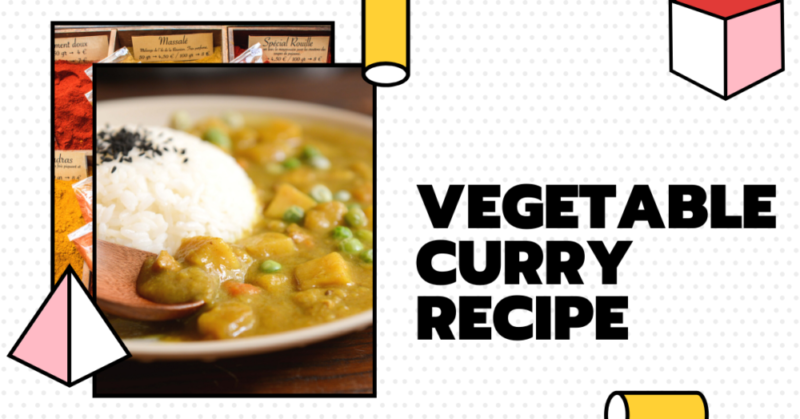
Quick and Easy Vegetable Curry Recipe

Here’s a simple recipe that we like to make when we need a quick tasty meal. The best thing about it is that you can customize it according to whatever veggies you have lying around and it’s vegan so it will work for everyone. If chopping veggies isn’t your thing, then buy a bag a prepared mix veg at the store or get the family helping out.

In this recipe I used onion, carrots, red peppers and green beans. You could just as easily use potatoes, leeks, zucchini, eggplant, peas, broccoli or whatever is available. *Note – if using potatoes or sweet potatoes, it’s best to cook them separately and then add them at the end due to the longer cooking time. Additionally, if you prefer more protein, add some diced tofu or chicken.

Ingredients:
1 Tablespoon Coconut oil
1 small onion sliced
1 garlic clove minced
1 teaspoon grated ginger (optional)
½ cup diced carrots
½ cup broccoli cut into small florets
½ cup sliced red pepper
½ cup green beans
1 can Coconut Milk
1-2 Tablespoons Curry Powder (according to taste)
1 cup of chopped tomatoes (I use canned)
1 cup of Vegetable Broth
1 can of garbanzo beans (optional)
Fresh herbs for garnish – I like cilantro (fresh coriander) or basil
Salt and pepper to taste

Rice, riced cauliflower or quinoa to serve.

Directions:

Prepare rice, riced cauliflower, or quinoa according to directions for serving.

For the curry:

  1. Heat coconut oil in the pan. Add the onions. Stir until coated and cook for 3-4 minutes until they start to soften.
  2. Add the garlic, ginger, carrots and curry powder, continue to sauté. Add a little more coconut oil if necessary.
  3. After 3-4 more minutes, add the red peppers, green beans, coconut milk, and vegetable broth.
  4. Stir it all together and bring to a simmer.
  5. Put the lid on and simmer for about 10 minutes.
  6. Remove lid and add the tomatoes.
  7. Stir all together and check that vegetables and cooked to your liking. Continuing to cook a few more minutes if necessary.
  8. Serve in a bowl with rice, riced cauliflower, or quinoa and garnish with fresh herbs.


Just one day at a time

One Day at a Time – What’s your mantra?
(3rd in series of working towards achieving New Year’s resolutions. Future additions to this series will be posted the last week of each month as we work our way through 2020 all together.)

We have come to the end of January and moving right along into February and beyond.

How’s it going? Are you on track for your goal? Great!

Off track? Then it’s time to get back on. The great thing is that every time we fall, we have the opportunity to get back up again.

A few years ago, I wanted to improve my skiing abilities and I took a ski lesson. I ended up on a slope that was beyond my level. I became frozen in fear. Steep, off-piste, trees, powder, and a long way to the bottom, everything scary. I became filled with doubt; how would I manage? My instructor sensed my hesitation and the others in the group had already begun to tackle the challenge. She asked me, “Can you do 3 turns?” I thought about it, assessed the terrain immediately in front of me, and replied, “Ok, I think I can manage that.” After successfully completing those three turns, she said, “Now do three more.” And that’s how I did it, three turns at a time. Once I recovered from a fall, I got right back to it. Three turns, then three more turns. I kept that mantra with me for the rest of the day and throughout the week. Then, interestingly and to my great satisfaction, a few days later, I no longer needed that mantra and became more comfortable on the more advanced terrain.

I was able to overcome what felt insurmountable because a well-knowing instructor helped me to break it down into chunks that were possible. It is said that anxiety is rooted in feelings about the future. Most goals are too big to deal with all at once, they have to be made into manageable pieces. We must proceed one day, one hour, one minute, on step, three turns at a time all while facing in direction of the goal and moving forward in confidence. My friend Sarah Miller Histand, an online trainer from Anchorage, Alaska, encourages participants with the mantra Moving is winning. No matter the pace; when you are moving you are winning. Because what’s the alternative? Not moving; staying the same place you have been and making no progress. Sometimes, we have slow way down until we feel more comfortable and are more able to stay on course. A baby starts to stand, then toddle, then walk, and finally accelerate to run. Many times it’s simply the case of wanting too much too fast. Whether you are learning to play a musical instrument, starting a fitness routine, learning a new language, or consuming less sugar we will make progress by showing up every day, even the days when it’s clumsy and messy and we miss the mark. Remember that moving is winning.

In the book The Slight Edge, Jeff Olsen discusses how it comes down to the small choices that we make each day. We can choose to work out or not work out in one day and in that singular moment it won’t really change anything. But remember that a habit is established by doing the same thing repeatedly over and over again. So each day we have the opportunity to establish foundations for “good” or “bad” habits. Really, it’s just a gift to be able to pay attention and to hit the reset button every single day if necessary.

Olsen also elaborates on the power of time. We live in a world that values speed at all costs. Our lives are filled with hi-speed trains, wifi, express delivery, quick fixes, rapid recovery, accelerated programs, non-stop action, and it goes on and on. He uses the geological creation of the Grand Canyon as the ultimate example of the potential of time in one of his many success equations:

Consistently repeated daily actions + time = inconquerable results

It’s true. If you do the same thing every day, over time, there will be some results.

Olsen suggests to aim for a 1% improvement each day from the day before towards a specific outcome in a targeted area of your life. At the end of the week, you can expect a 7% improvement from where you started. Then the next week you start again from that new place and with the potential to increase exponentially in a way similar to compounding interest.

One month down, and 11 more to go in this big and exciting year 2020. It’s a great time to evaluate what has worked and what hasn’t so far. What’s you’re mantra? What are you aiming for this week to get closer to the goal?

Stay focused. Time is on your side and you are on your way one day and one step at a time.


It starts with a habit…

“We are creatures of habit, and leveraging our habitual tendencies is one of the best ways to develop discipline.”  -Ernest Cadorin, The Arrows of Zen

Establishing a new habit or shifting a current habit is a great place to start when making changes to better our lives, but it is so much harder that is seems it should be. Why is it such a challenge? The reason is embedded in the definition itself.

A habit is defined as a “routine behaviors done on a regular basis. They are recurrent and often unconscious patterns of behavior acquired through frequent repetition”.

Our habits started off as learning something new, like driving a car. Eventually, we do it with so often that it happens on autopilot. This capacity allows the brain to focus on something else, which is mostly a good thing. The problem is that is that when have developed a habit that we no longer want, like smoking or eating sweets in the afternoon or getting angry too quickly, then it takes a lot of conscious effort to change it. We have to really pay attention.

A great deal of each day passes according to our habits. Checking our phone for messages, brushing our teeth, getting dressed, putting a spoonful of sugar in the coffee, the route to work, ordering fries with the burger, browsing the news when we should be doing research online, the path through the supermarket, hanging our jacket when we get home, pouring a glass of wine while preparing dinner, and much much more.

Any of these surprise you? Pouring a glass of wine is a habit? Yep, you bet it is. After much repetition, it’s become part of your routine; it’s done without even thinking. When it comes to new habits, you are developing new neuropathways in your brain. Fortunately, you can use what it already there to assist in the shift.

In his book, The Power of Habit, Charles Duhigg describes a Habit Loop. Once a habit has been identified, it can be broken down into a cue, a routine, and a reward.

CUE–>Routine–>Reward

For example, if you have a routine of getting a brownie for an afternoon pick-me up; then the cue is that it’s time for a break from work; the routine is going to the snack bar to buy and eat the brownie; and the reward is the dopamine hit from the sugar in the brownie. In order to successful change the habit, you must interfere with this loop starting with the cue. What if at the indicated break time you took a walk instead and get the reward of some fresh air? You will also need to assess if you are actually hungry at this time and be prepared with a healthy snack like an apple or some nuts to have at your desk upon return from the walk.

What are your habit loops and how will you disrupt them? Here are a few examples: Put your gym bag at the front door so you remember to take it with you for the day; Substitute herbal tea or sparkling water for a glass of wine on weeknights; Instead of watching tv or Netflix after dinner, read a book or take a bath in improve sleep routine; Instead of buying coffee, prepare it at home and add the money to a jar each morning.

Interestingly, a habit is also defined as “a distinctive set of clothing often worn by a religious order”. While it has historically been used in literal context, it can be used figuratively as well. In many of his books including Breaking the Habit of Being Yourself and Evolve Your Mind: The Science of Changing Your Mind, Dr. Joe Dispenza explains how simple things in our daily lives subtlety evolve into major parts of our lives, even a personality can have developed as a habit. Certain behaviors and emotions move into a general mode of operation that happen unconsciously. Fortunately, we are able to change this and in the book he describes how to become the new person you desire to be. Including visualizations and meditations, essentially, you dress or habit yourself as the new person you are becoming and that itself sets into motion the process of change.

As we endeavor to change established routines and habits, we must become conscious. That means paying attention to trigger and to the habit loops that have become entrenched in our daily lives. Change the routine or the reward in the habit loop and you will change the cycle. Studies show that habits take a minimum of twenty-one days to integrate and feel more or less routine. To move into automatic mode, it will require upwards of sixty-six to over two hundred days. What are you shifting this year? Wake up every day and remind yourself, dress yourself it that new habit.

“If you do not pour water on your plant, what will happen? It will slowly wither and die. Our habits will also slowly wither and die away if we do not give them an opportunity to manifest. You need not fight to stop a habit. Just don’t give it an opportunity to repeat itself. (67)”
-Sri S. Satchidananda, The Yoga Sutras


New Year, BEST YOU!

Happy New Year! I hope 2020 is off to a good start for you. In July 2018 I wrote a blog post about titled, “How good are you at being yourself?” Feel free to reference that when focusing on and revising what you aim to accomplish in 2020. In terms of New Year’s Resolutions and the popular expression New Year, New You, I believe it’s important to come into resolutions from a place of acceptance and desire to make incremental improvements working towards a goal, rather than the idea that we aren’t good enough until we achieve this other potential version of ourselves. For the next few weeks, the posts will focus on how to work through challenges that arise as we are trying to make various shifts in our lives, often related to health, wellness, and vitality.

New Year, BEST You!

“If you only walk on sunny days, you will never reach your destination.”
-Paolo Coelho

We make New Year’s resolutions in order to become the best version of ourselves; a new and improved version. We begin January with a vision and declare our hopes and dreams for the New Year.

The top resolutions haven’t really changed much in the last 20 years. They include: lose weight, be more organized, save money, get in shape, quit smoking, eat a healthier diet, learn a new skill or hobby, read more, spend more time with family and friends.

With such aspiration and optimism why do we fail to achieve up to 90% of resolutions and end up making the same one again next year? Most of them have already been abandoned by early to mid-February. What about the rest of the year? The resolution was made for a new year, not a new month. Therein lies the problem. We are expecting to accomplish something big and transformative in too little time. We throw in the towel and declare we have failed even when we are making progress. Ever heard of someone bail on a new diet after successfully losing six pounds just for having eaten one piece of cake? Or quit a new exercise routine because of a business trip or a sick baby during one week?

Would you behave this way with anything else in your life? Imagine some examples: A 10-mile hike that’s meant to take all day; not there by noon, so why bother? Baking a cake; got tired of waiting for it to bake so take it out of the oven and declare that the recipe didn’t work. How about a baby learning to walk? Will she give up after the first wobbly step and fall to the ground? There are infinite examples here and while they sound completely ridiculous, that’s the tendency when it comes to New Year’s resolutions.

Here and now in 2020, I challenge you to change this pattern. How many years have you made a similar resolution to the one you made this year? How’s going so far? Taking the whole year into account, on January 18, you should expect to have reached five percent (5%). Congratulations! If you make it until February 1, that will represent nine percent (9%). Well done. So far, so good. But if you stop there, it will be another fail. If you are a fan of the popular for eighty percent (80%) rule, then stick with it until October 18. Or continue to include the whole year, knowing that the remaining twenty percent (20%) accounts for 73 days of the year which averages to about 6 days per month, and definitely allows for vacations and celebrations and plain old lousy days. That doesn’t sound so impossible, right? It’s more like a marathon than a sprint. Resolutions seek transformation and require a commitment, the long haul.

How important is your New Year’s resolution to you? Is it just a January pastime? Are you willing to work on it the entire year? What will you when you inevitably fall?

We fail at New Year’s resolutions because we don’t allow ourselves to fall.

Learn from those falls and carry on. If those resolutions don’t really matter to you, then throw in the towel and get on with your regular routines. However, If you want to achieve success with those goals and move closer to being the best most vital version of yourself, know that you will do this by achieving one percent at a time. I know you can do it!

“Success is stumbling from failure to failure with no loss of enthusiasm.”
― Winston S. Churchill

Adios to a decade; and thank you

It only occurred to me last week that as we come to the end of 2019, we close the entire decade. During December, I tend to get caught up in a flurry of holiday hoopla leaving end of the year reflections dangling in that somewhat suspended space between December 26 and December 30. Then suddenly it’s December 31, the last day of the year, and just like that, a new year has arrived. The end of a decade seems much bigger than the end of a year, and worthy of reflecting upon the last ten years of life.

From 2010-2019, I have been on the roller coaster of life; the biggest one, the fastest one, at times, the scariest one that takes my breath away. Have you? I’ve celebrated the highs and trudged through the lows. There were corkscrew spins, upside down sections, the loop de loop… not to forget the free falling, climbing, plunging, and sharp turns; and and of course the thrill of speed and weightlessness and then the inevitable return to the reality of gravity. Sometimes I had to hang on tight and others I threw my arms to the sky in delight.

During the past ten years, I experienced some of the deepest challenges of my life and also participated in the most extraordinary things I could ever have imagined or thought possible. I have come through at the end with broadened perspectives, new skills, new and wonderful relationships, and an expanding outlook on what is possible. I am here on the final day of 2019 filled with gratitude for the valuable lessons that I have learned along the way that I know will leave me well-equipped for the new and exciting chapters to come.

Of course, in reality, the end of each year is the end of its own decade. We are just accustomed to thinking of decades in terms of in round numbers. To be honest, there are some things that have completed the cycle and I am beyond thrilled to have this bookend of the decade and slam it shut. Other chapters have only just begun and I’m excited to continue writing those pages to discover where these new adventures will lead and brand new chapters to be opened in the new year and the new decade. I look forward to the lessons and explorations to come.

And as I will assuredly sing Auld Lang Syne with friends and family at midnight tonight, it translates to an appropriate conclusion: “Let’s share a drink to days (and decades) gone by”.

Happy New Year!

How to navigate food at Holiday Parties

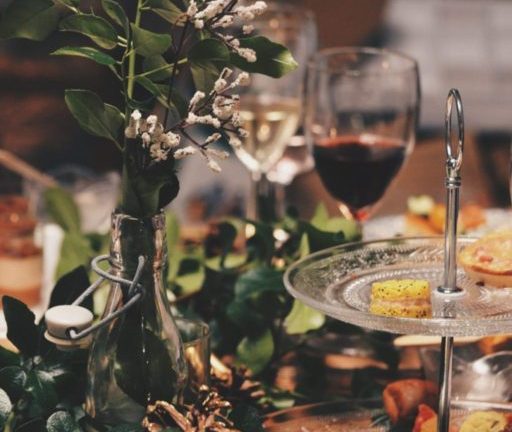
Holiday parties are the best and the worst. They’re the best because it’s fun to get dressed up and have fun together with family, friends, colleagues, and neighbors; and the worst because they can be a minefield in terms of food choices which can lead to potential weight gain and generally feeling unwell. There’s also bit of irony here because we are raising our glasses and toasting to our health!

Most food and drinks are not neutral. For the most part, what we consume either provides nourishment or contributes to some type of inflammation. During the holidays, there are so many tempting options, and they tug at our emotional strings because they are associated with comfort foods and childhood.

We need to remember that the tradition of feasting around the winter solstice originated in a time when it would be followed by a period of fasting in the barren winter months. The feasts would literally provide a chance to fatten up to survive the scarcity of food in the winter. Since we no longer suffer this scarcity, we no longer need to or desire to add more pounds in December.

It is well known for centuries and there is well-established research that sugar and starches are fattening foods. Given that’s what’s on the menu, it’s comes as no surprise that the average person in both the US and in the UK can expect to gain 5 to 8 pounds or more during the holidays. Its no wonder we are all forced into diets and detoxes in January.

With so many decadent treats, what’s the best way to get through the holiday parties? Maybe it’s time to break this cycle or at lease minimize the damage. Here are a few things to consider.

  1. One possibility is to eat before you go. Have a nice healthy meal with some protein and veggies before the party. You will be less tempted to nibble.
  2. Bring your favorite healthy holiday dish to share.
  3. Only eat if you are actually hungry.
  4. Avoid cocktails. Stick to dry wines and plain clear liquor and moderate consumption.
  5. Seek out the protein: nuts, meatballs, shrimp, cheese, kebabs, eggs, charcuterie, and such. These will be filling and provide nourishment.
  6. Crunch on the veggies instead of the crisps.
  7. Say no to processed foods and fried foods.
  8. Skip the bread basket. Just skip it.
  9. Avoid desserts that are both sugar and refined flour. Best options for sweets are fresh or dried fruit, cheesecake, custard, dark chocolate, or opt for the cheese plate. If you absolutely cannot resist, limit yourself to one or two bites and really savour them.
  10. Drink plenty of water to stay hydrated.

A few final tips:

  • There may be some events where you are just going to “go for it” and just enjoy without having to think about it. That’s great! Have fun and don’t go back regretting it later.
  • Have a buddy for accountability. Have pride in making best choices and not having to loosen your belt!
  • Don’t eat with abandon the entire month of December just because you already “blew it”. Enjoy the celebrations and scale back for other days and other meals. You will feel much better by the end of the month by enjoying the season mindfully.
  • Skip a meal occasionally. This is a perfect time to practice Intermittent Fasting to allow your body to recover form the indulgences.
  • Include movement in your days and get plenty of sleep.
  • Be present and in the moment and have fun!


Self-Care during the Holidays

The best way to enjoy the hustle and bustle of the holiday season week after week is to make a commitment to self-care and restorative practices. This is true all year, but especially true when the calendar is suddenly bursting with holiday lunches office parties, family gatherings; not to mention the assortment of traditions that must be adhered to. While it’s exciting and festive, it can also all feel overwhelming.

Restorative practices are ‘filling up the tank’ on the journey through this festive time of year and shouldn’t be considered optional. We must make opportunities to restore our energy to continue at the same pace or we will end up running on an empty tank. When a car drives faster or greater distance, it requires more fuel and more maintenance to carry-on or end up stalled in a ditch. Self-care preferences will vary from person to person. The one caveat is that they won’t work if you don’t do them!

Here are some tips to get through the season in stride:

  1. Mark it on your calendar just like any other commitment. You wouldn’t plan a trip without booking a place to sleep each night and some dinner reservations along the way. Don’t go through the holidays without booking yourself some time for restorative practices.
  2. Identify what works best for you to restore your energy and vitality. Do you like to snuggle up with a mystery novel and a cup of tea? Enjoy a bubble bath? How about meditation, journaling, a massage, working on jigsaw puzzle, playing music, or watch favorite TV with a family member.
  3. Do one thing at a time. Studies show that multi-tasking doesn’t really work and ends up taxing our brains even more in the process of shifting back and forth from one talk to another. The best way to make progress is to go through the list, focus one just one item, and then continue on to the next item.
  4. Stay positive. When you notice that your mood is shifting from the positive enjoyment of the season to feeling burdened, frazzled, or frustrated, that’s a sign that it’s time to schedule in some self-care.
  5. Say “NO”. Know yourself. Does socializing energize you or drain you? If you have more introvert tendencies and are exhausted after parties and big get-togethers, then protect yourself. Plan to make a brief appearance or don’t go at all. Find ways to connect with friends and family in smaller more intimate situations.
  6. Make gratitude a daily practice. Studies show that those with regular gratitude practice are more content with their present life situation. We don’t actually need all that stuff that the retailers tell us that we need anyway. Discover contentment in the present moment.

    Don’t bail on the basics: Sleep, diet, movement, stress management are essential.
  7. SLEEP – There is a natural tendency this time of year to more sleep as the nights get longer and darkness comes earlier. Allow for adequate sleep and even naps when there are a lot of nighttime events that interfere quality sleep. (Click here to read more about sleep.)
  8.  DIET – Ok, this one is super extra tricky during the holidays, but it’s really important. The challenge is magnified because the traditional treats that we enjoy this time of year are specifically related to the comfort and coziness that we feel and often trigger memories of delight from our childhood. (Click here to read more about holiday traditions.) As much as possible, choose nutrient dense foods with plenty of proteins. Avoid too many sweets and highly processed foods. I can’t sugar coat the fact that sugar is the enemy for optimal health and vitality. Consumption of sugar and highly refined products leads to inflammation, so don’t overdo it. Furthermore, since they share the same receptors in the body, when sugar is consumed, it hijacks the vitamin C absorption, weakening the immune system. (Click here to read more about the importance of Vitamin C.) Seasonal fruits like mandarin oranges, figs, and dates are a great way to enjoy some sweetness without contributing to the mal effects of sugary treats.
  9. MOVEMENT – An exercise routine is often the first to go when the going gets tough and the weekly schedule is filled up. You may not be able to manage a one hour zumba class, but don’t ditch it all together. Park further away from the front door and enjoy a longer walk to get the shopping done. Walk around the block after dinner or go for an ice-skating session. Hit the dance floor at the holiday parties. When at home, stand and do some arm circles, twists, jumping jacks when watching tv. Get creative and find a way to squeeze in a few minutes here and there whenever possible. (Click here to read more about movement.)
  10. STRESS – We all know by now that stress is bad, but it’s actually REALLY bad. When we are under continual stress, vital body functions like digestion and restorative sleep are put on hold and don’t work properly. Stress simulates an emergency and in order to allow the ability jump up and flee if necessary. Stress drains electrolytes and nutrients in the body very rapidly.  If you remain under continued stress with deadlines and expectations of the season, be sure you are getting enough electrolytes to support all of the body systems. (Click here to read more about electrolytes and best sources.) Maintaining restorative practices each week will further support reduction of stress levels.

Finally, while you are out and about enjoying the tasty offerings of the seasons, remember that the first restaurants were for travelers. The word restaurant comes from the French word restaurer, which means to restore. It’s simple and thrilling to dive into the variety of activities celebrating the holiday season. It’s also important to remember to refuel and restore ourselves so we can continue to sparkle.


Oh Autumn, a season to behold!

Life starts all over again when it gets crisp in the fall. – F. Scott Fitzgerald

Sweater weather, scarf season, pumpkin spice lattes, apple cider, scarecrows, cozy blankets, piping hot soup, scattered leaves, bold colors, blustery days – oh Autumn, a season to behold!

Autumn is a transitional season that encourages, and even requires us to be in the present tense. The nights become longer and cooler; and bit by bit the coolness drifts into the days. While it’s easy to long for the easy-going days of summer or think ahead to the upcoming winter and a big holiday season the enchantment really happens in the here and now because its so fleeting. Every day looks completely different. Look around and you will discover new colors, new dimensions and spaces appearing in the landscape. Harvests and rituals unique to the season insist that we pay attention or they pass us by. Back to school, pumpkin patches, persimmons, and cranberries come around only once per year; you snooze, you lose.

Autumn is bold and colorful and messy. It inspires feelings of coziness, melancholy, and nostalgia in one minute; and like any transition; discomfort, annoyance, and frustration the next. If summer represents fullness and carefree possibility, autumn begins to strip that away one day at a time. And unlike spring when we witness the adding to fill the void of winter, in the fall we are taking away. It requires that we reflect, let go, and move on. It almost seems “harder” than the other seasons, but it both tricks us and treats us into thinking otherwise because its all feels so magical.

All of this transition leads to transformation. Grapes are crushed into wine. Pumpkins are carved into jack-o-lanterns. Squash is roasted and puréed into soup. Pies and ciders and muffins and many treats are created from the bounty of apples. And with the harvest, the pruning begins allowing for a new cycle. It’s time to remove the blossoms that have wilted and the over-ripened fruit that has made the branches sag. The beauty is that despite the loss and the change in physical appearance, the essence remains. Just like all other life, we too must consider what needs to be pruned in our lives so that the best self can flourish in its essential beauty.

For many, autumn conjures images of leaves. On the coast of California, intermingled with the palm trees, there are a few token trees that change colors and shed. Now, living in the UK, I am experiencing the season on a whole other level with all of the senses. It is truly remarkable and proves that there is so much complexity to discover with fall. The leaves are fascinating for a variety of reasons. Obviously, they change colors and they fall, but that’s just the basics. The trees seem to have personalities and preferences. Some trees are early adapters. They got the memo. The leaves change colors and drop to the ground quite quickly. Some trees play it safe. They drop a few leaves, but plenty remain just in case it doesn’t work out. Other trees resist and linger. They are pretty comfortable with full branches, what’s the big rush? The wind plays a supporting role throughout it all alternating between steady breezes and angry gusts encouraging all towards achieving the ultimate purpose, going through the transition and leaving the bare landscape of winter.

It’s interesting to observe that the fallen leaves can never really be contained and freshly swept up ones are quickly dispersed by a sudden blast of wind. They swirl around on the front porch, they blow into hallways; they end up in odd places like under the sofa or in a shoe or a backpack and even on the train or in the car. Nature is going through it’s own release process, but the leaves never disappear all at once, they linger. Most of them eventually get cleaned up as winter sets in, but there are those sneaky ones that stick around in the garden and make themselves known long after they should have already been gone. It’s like the proverbial onion; as we release things in our life that no longer serve us, we peel away layers that keep coming back in different forms. Sometimes even disguised in a kaleidoscope of playful colors, like the leaves.

The falling of the leaves in autumn is far from a cut and dry process and teaches us that we should not expect that releasing things in our own lives would be either. It can take time and repetition to sever the wilted and over ripened areas that hinder developing into our best self. Enjoy this precious season one day at a time. Indulge and allow the process. When a blustery day knocks you off your feet, consider it a message that you may be holding on to something that’s weighing you down. It’s time to let go and shed what we no longer need. Take a lesson from the season and have fun with it, make that release a colorful and delightful celebration, and don’t forget the whipped cream and marshmallows on top!

Eckhart Tolle in London

The primary cause of unhappiness is never the situation, but your thoughts about it. Be aware of the thoughts you are thinking.
-Eckhart Tolle, A New Earth: Awakening to Your Life’s Purpose

It’s not often spiritual leader Eckhart Tolle turns up for a talk in London. When I found out about it, the show was sold out. Determined to attend, I checked back every day on the off chance that more would be released. I was rewarded during the second week with a standing only ticket up in the gallery of the Royal Albert Hall.

The four-hour ‘Awakening Consciousness’ event began at 5:30 on a stormy evening. Dark clouds had been accumulating and circulating around London throughout the afternoon. Any doubt of his connection to universal consciousness was released during the opening minutes when a massive thunder and lightning collided causing vibrations to ripple through the hall just as he just shared that, “the deeper dimension of consciousness is the greatest thing that can happen in your life.” Even in the warm, dry shelter of the grand scarlet painted hall, we were powerfully and dramatically reminded of the presence of Mother Nature.

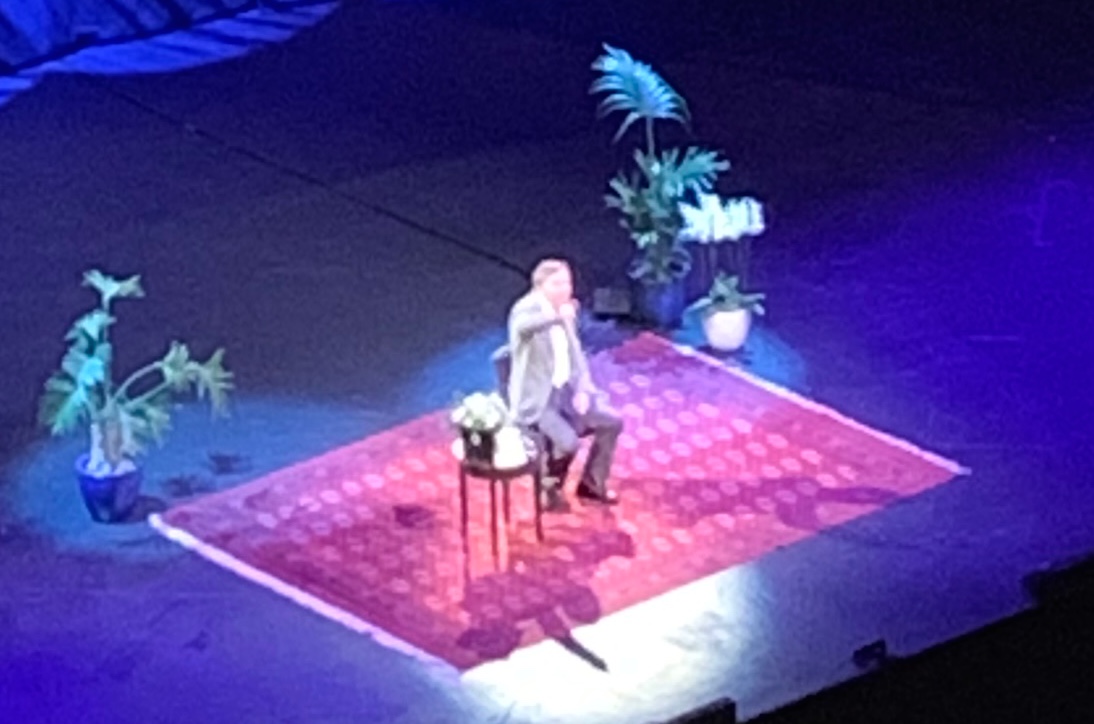
Eckhart Tolle sits simply at the center of the stage in an armchair, no reference notes, and just speaks as if a stream of enlightened consciousness is emanating through him. The sell-out crowd comes to a hush taking in and contemplating every word. He speaks slowly and pauses frequently allowing space to consider the deeper meaning of what he is saying. He portrays the idea of a space existing between words and between thoughts and forces us, the audience, to sit in the discomfort of that space on more than one occasion.

While he is serious about his purpose to lead others to a higher consciousness, he maintains a balance of wisdom and humor throughout the evening. For example, he recalled having attended a performance at the Royal Albert Hall when he was younger living in London. He mused that those seats way up in the hall and in the gallery provide a much greater perspective of the space. A laugh erupted from the crowd while those of us in the proverbial cheap seats (…if only there had actually been seats!) considered the alternate perspective of our physical location during the program. Even the humorous moments carried the thread of consciousness.

Always returning to the necessity to be and to live in the present moment, he conveys a message of universal spiritual themes such as the ego, compulsive behavior, and sources of unhappiness, enhancing the lessons with references and stories coming from Judaism, Christianity, Buddhism, mythology, Hindu philosophy, and ancient scholars. Maintaining consistency with his books, The Power of Now, and A New Earth: Awakening to your life’s purpose, the message spiraled through broad subjects in an attempt to provide a tangible explanation for something as intangible as consciousness.

“If you are trapped in a conditioned energy field you are condemned to perpetual dissatisfaction.”
Much attention focused on what he calls the “conditioned mind” and the “collective conditioned mind”. This is related to one’s dependence on external factors to achieve life satisfaction, and extends to the degree to defining one’s own identity by external markers. This can be anything from social status to material possessions to career achievements and the like. He suggests that what we have come to define as “the problems of our lives” exist in the mind and we become imprisoned by them. The real problem, he explains, is that we have become too attached to the thoughts and are conditioned to believe that those thoughts are the truth. The goal is to separate the thoughts and conditioned ideas from the reality of the present moment. The result will be a greater sense of ease in life by detaching from the thoughts and opinions that have been weighing us down.

“The situation did not create the unhappiness, it was the narrative about the situation that triggered you, put you in a state of reaction and at the mercy of the external situation.”
As he develops this theme, he uses the example of rain to clarify. Modern weather forecasting and conversations about the weather have led many of us to be conditioned to have an opinion about the rain, which will often be negative. Words like dreary, icky, dreadful, miserable, awful, grim, lousy, and so on are used to describe rainy days. Here in London when reading the Evening Standard distributed free to commuters as they head home after work, the weather forecast includes icons. A tidy pile of poop is the icon for a rainy day. But what if we take away all the judgment and conditioning about the rain? Then, it’s just rain. Ultimately, rain is as important to life as sun. The real problem is that we are carrying around preconceived notions about nearly everything we encounter and experience as we go about each day. One’s mind has been conditioned based on individual experiences, family situations, cultural, gender, and generational customs. These greater forces are considered extensions of the mind and also of what Eckhart Tolle calls, “the collective mind”. He warns to be careful with devices because they are an extension of the mind and have very addictive potential. We will become more conscious when we are able to recognize how our thoughts interact and interfere with the reality of the present moment.

During the midway point of the evening, we are all led through a thirty minute meditation by Eckhart Tolle’s partner Kim Eng. Already silent, we become still as we are instructed to close our eyes and focus on the breathing. As we enter deeper in to the meditation, we focus on various parts of the body while maintaining connection to the breath. Minute by minute there is a detachment from the mind. When the experience is complete, I am stunned that the time has already passed. I even check my watch to confirm that it had really been half an hour. I feel relaxed and peaceful with a shift in the perception of time. Following a brief intermission and Eckhart Tolle returned for the final segment.

“Become aligned with the present moment because that’s all you even have.”
Present moment practice involves perceiving the world around you without labeling the world around you. Just allowing things to be. Once there is a thought or a judgment it is very likely to attach to the ego where it will proceed on a tumultuous journey of the need to satisfy the appetite of the ego. He illustrates that Narcissus fell in love with himself and became very unhappy. The ego needs to feel superior. In this sense, any situation and thoughts about that situation create the potential to become possessed with a  sense of victim identity. This is incredibly toxic and will only lead to discontentment. Through awareness, one is able to transform worry, irritation, aggravation, anxiety, judgment, misery, and all this mental commentary to peace.

“Essence identity is not something you need to get, it just is.”
Eckhart Tolle discusses the “Deep I am”. Through meditation and awakening one discovers that consciousness is not something that you can “find” because is it already there. He describes most our lives as the ripple of a wave at the surface of the ocean that is reacting to its environment. That ripple is connected and one with the depths of the ocean and by going deeper there is stillness and peace. Babies and very young children are examples to us. A one-year old is simply aware and taking it all in. We all have the potential to connect to source energy and connect to the essence of self.

With his closing words, he thanks the crowd, stands briefly, and leaves the stage. As I make my way home on the dark, rainy night, I notice that yes, it’s raining, and really it’s just that, the state of the present moment.